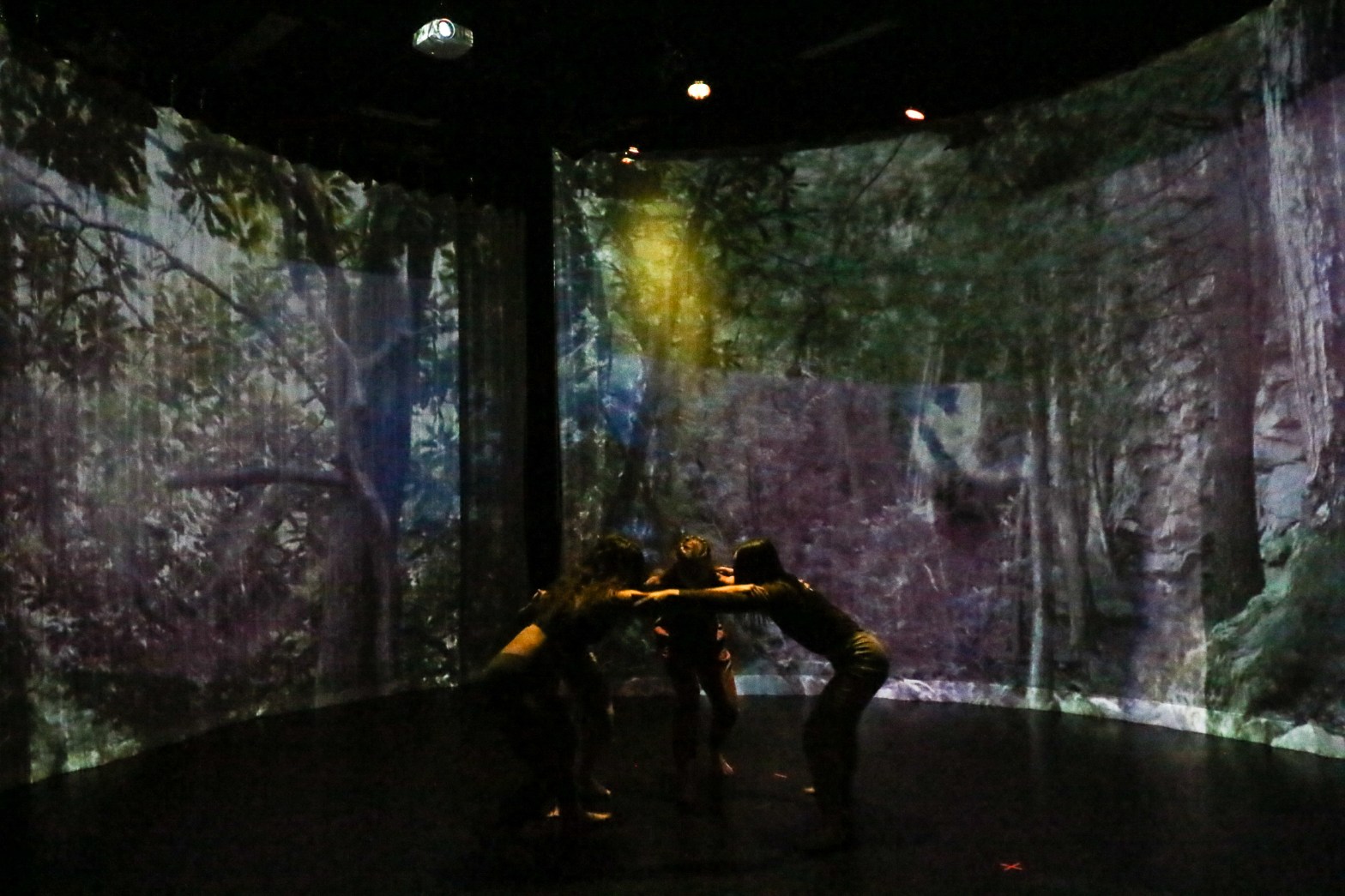
Embodied Interconnection: Intermedia Performance as Environmental Advocacy
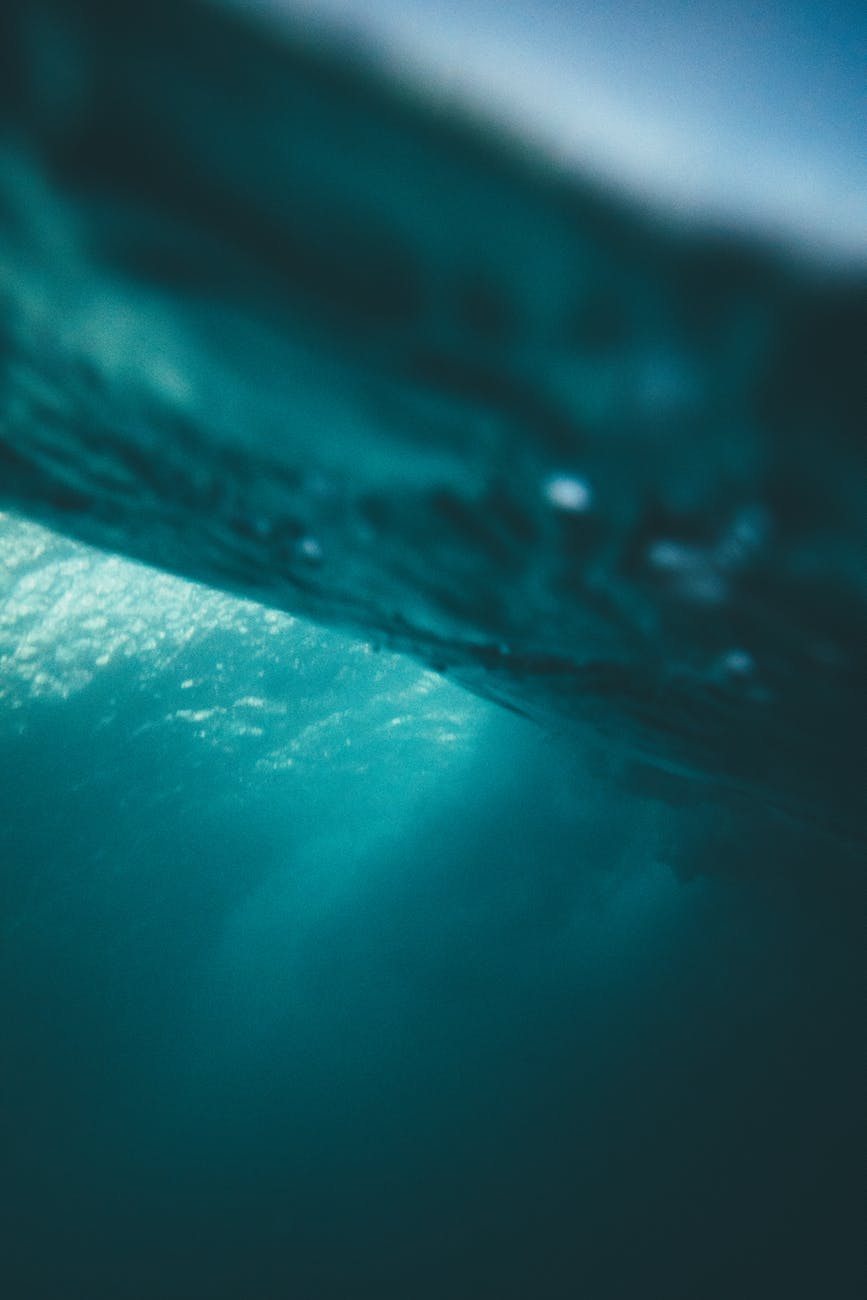
The seed of this process started in 2017 with the creation of Tales of the Deep: the first time that I explored an environmental theme with my choreography that connected to my own philosophical perspective on our relationship to the natural world. I revisited this idea with Marshland in 2019, this time experimenting with improvisational responses to videos of the ecosystem in order to develop the material. In 2020, I approached yet another ecosystem with WASTELAND that emphasized a message of harm and change. Each of these projects felt just a little unfinished and my thesis provided space to revisit these with new perspective and interconnect them in a way that tied together my interests in environmental relationships, dance, and intermedia.
As I entered this process I was influenced by the writings of Adrienne Marie Brown, Lucy Lippard, Jane Bennett, William Cronon, Terry Tempest Williams, Richard White, Jennifer Monson, Jeffrey Ellis, Octavia Butler, James Proctor, Robin Wall Kimmerer, Giovanna Di Chiro, and Robert Harrison. I arrived at a few key ideas to guide the process:
- All bodies will respond to the environment around them differently and I am more interested in how my dancers’ bodies respond than in making them try to match how my body responds.
- I want to speak for something rather than against.
- I am interested in what it looks like to embrace our relationship to nature in all of its complexity and oppose the assumed dichotomy between natural and human spaces.
- I am interested in facilitation that embraces the creativity of matter and explores the relationship between the material of our bodies and those surrounding us.
- I am interested in taking things slowly and digging deeply, taking notice of what is in the space and prioritizing that experience over the outcome.
- All boundaries are permeable.
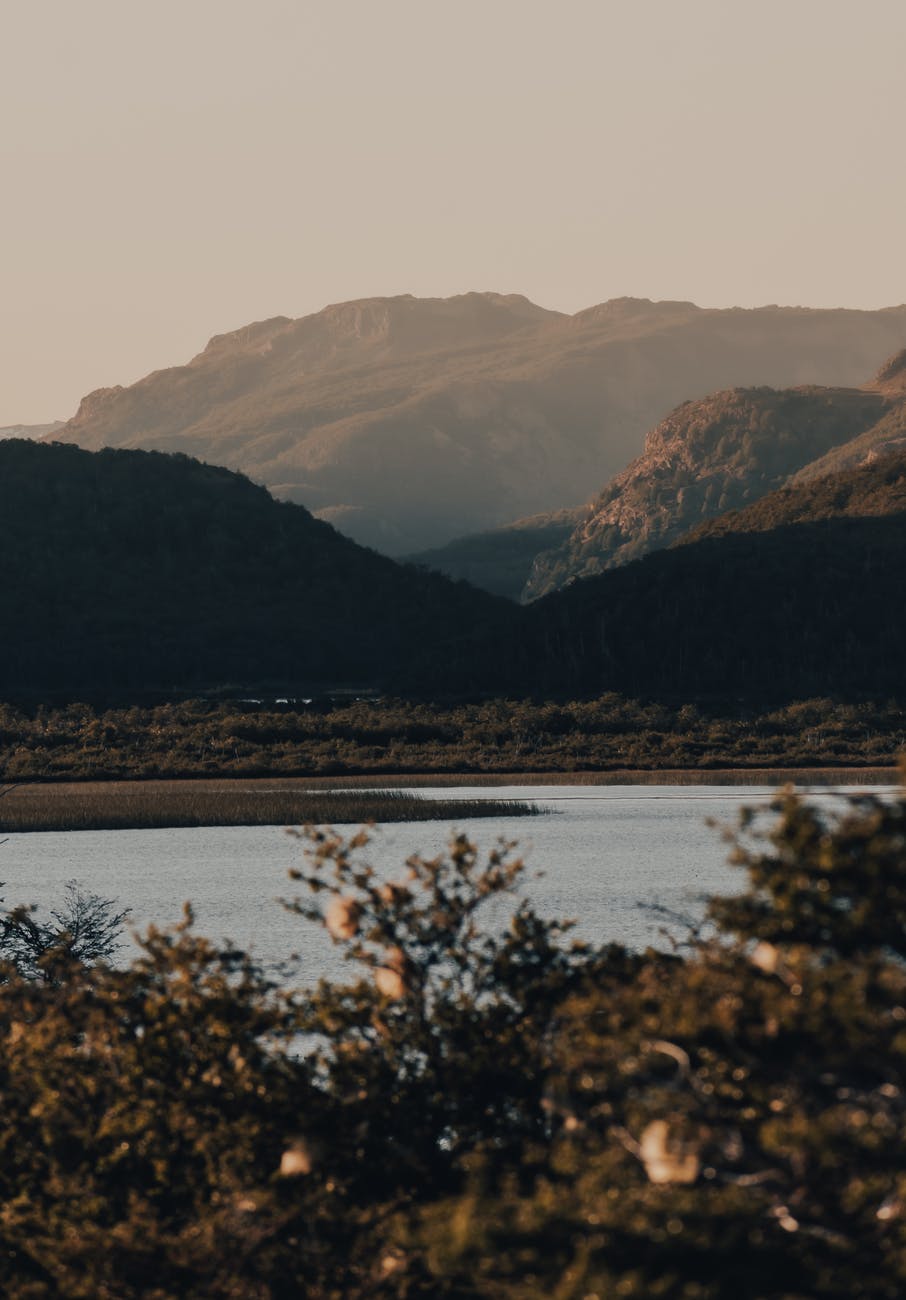
My previous projects approached three different ecosystems: coral reefs, wetlands, and temperate rainforests. I was drawn to each of these for different reasons. In middle school I was exposed to marine biology through summer camps and science fair projects that stoked my curiosity for the small and vulnerable organisms that held up the complex food webs of the oceans. When I moved to Ohio for college I lived close to the Olentangy River and spent hours watching frogs, ducks, and herons move through the riparian ecosystems that were such a vital part of the midwestern watershed and yet also some of the most highly damaged ecosystems in the country due to human impacts. Through my engagement with the Sierra Student Coalition during college I traveled to West Virginia to organize against mountaintop removal and got to experience firsthand the dichotomies in place within one of the richest ecological systems in our country but poorest human population.
As I began to interweave my thoughts about these ecosystems into one narrative it required some research into the ecological functions that they each fulfill. I discovered connected migration patterns, waterways, and uses. I kept being brought back to the question of “Where are the edges?” and realizing that there is no simple answer for these ecosystems any more than there is a simple answer for our bodies. I also discovered many long-standing problems that have been caused by human interaction with these ecosystems but that are more complicated than just ignorance or greed. I wondered what it would look like to build a new ethos of relating to these ecosystems and realized that in many ways it would mean a new way of relating to ourselves as well. At the same time I know that it will take us decades to undo damages and rebuild our relationships to each other and the planet. I wanted to focus, not on the seeming impossible journey ahead of us, but the reasons that we choose to embark upon it, the awe and wonder and presence that we gain when we realize our interconnection to the planet.
Two main questions arose that I wanted to explore with the project:
1) How can movement help increase individual and group awareness of the human body’s physical interconnectedness with the environment?
2) How can intermedia performance impact the audience’s perception of human relationships with the environment?
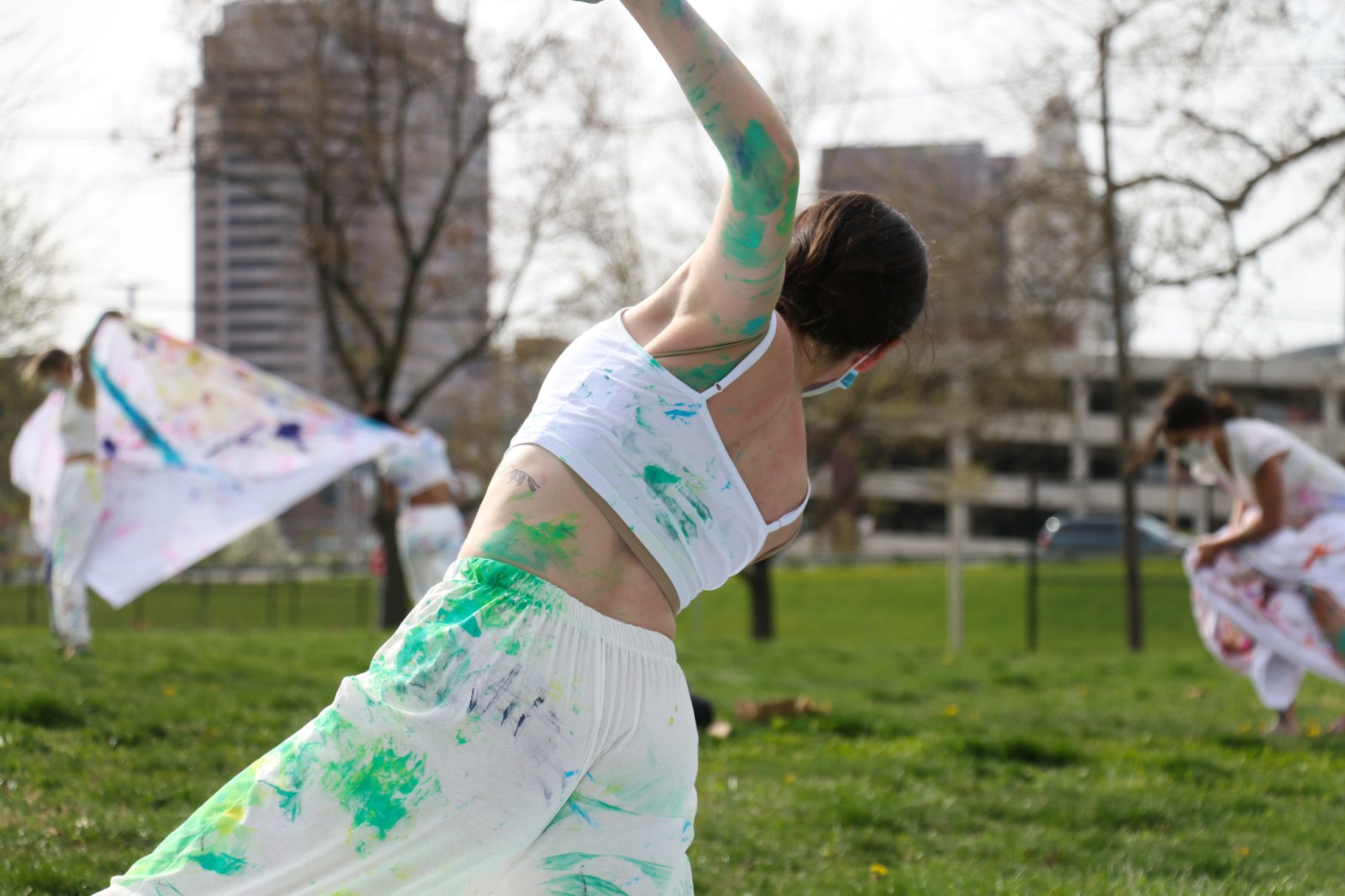
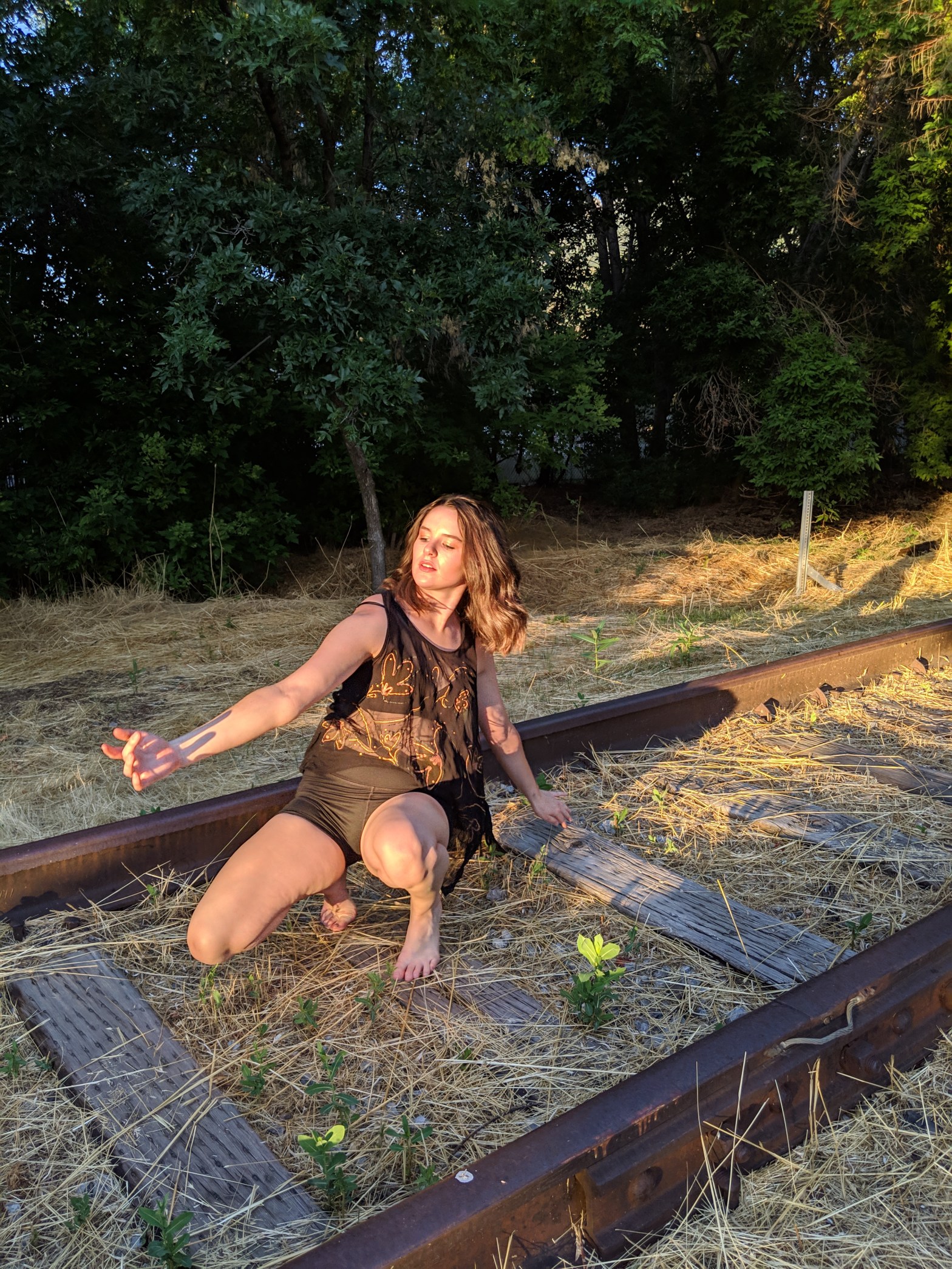
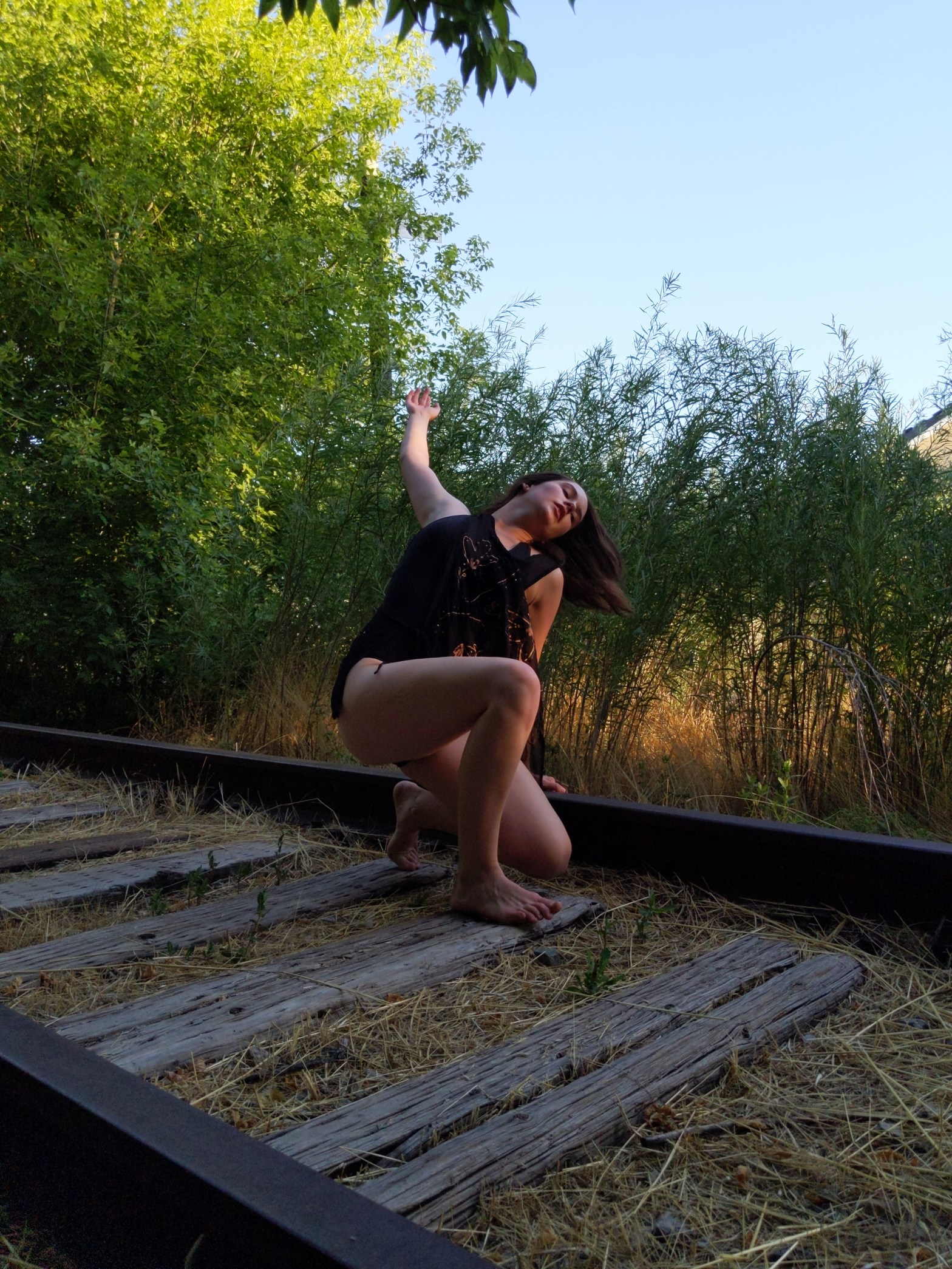
In order to investigate how our bodies respond and relate to each of these ecosystems, a vital part of the process was traveling to them and taking 4-5 hours for embodied research with each one. Using the key ideas I had developed over the summer of research and leaning on/adjusting the scores provided in A Field Guide to iLANDing by Jennifer Monson and others, I created a series of scores tailored to each ecosystem to help us explore our relationships with them. I prepared the dancers for the ecosystem with some information about it for them to read before our visit and have some context for the experience however, the main goal was to collect in the moment responses.

 Kara Komarnitsky