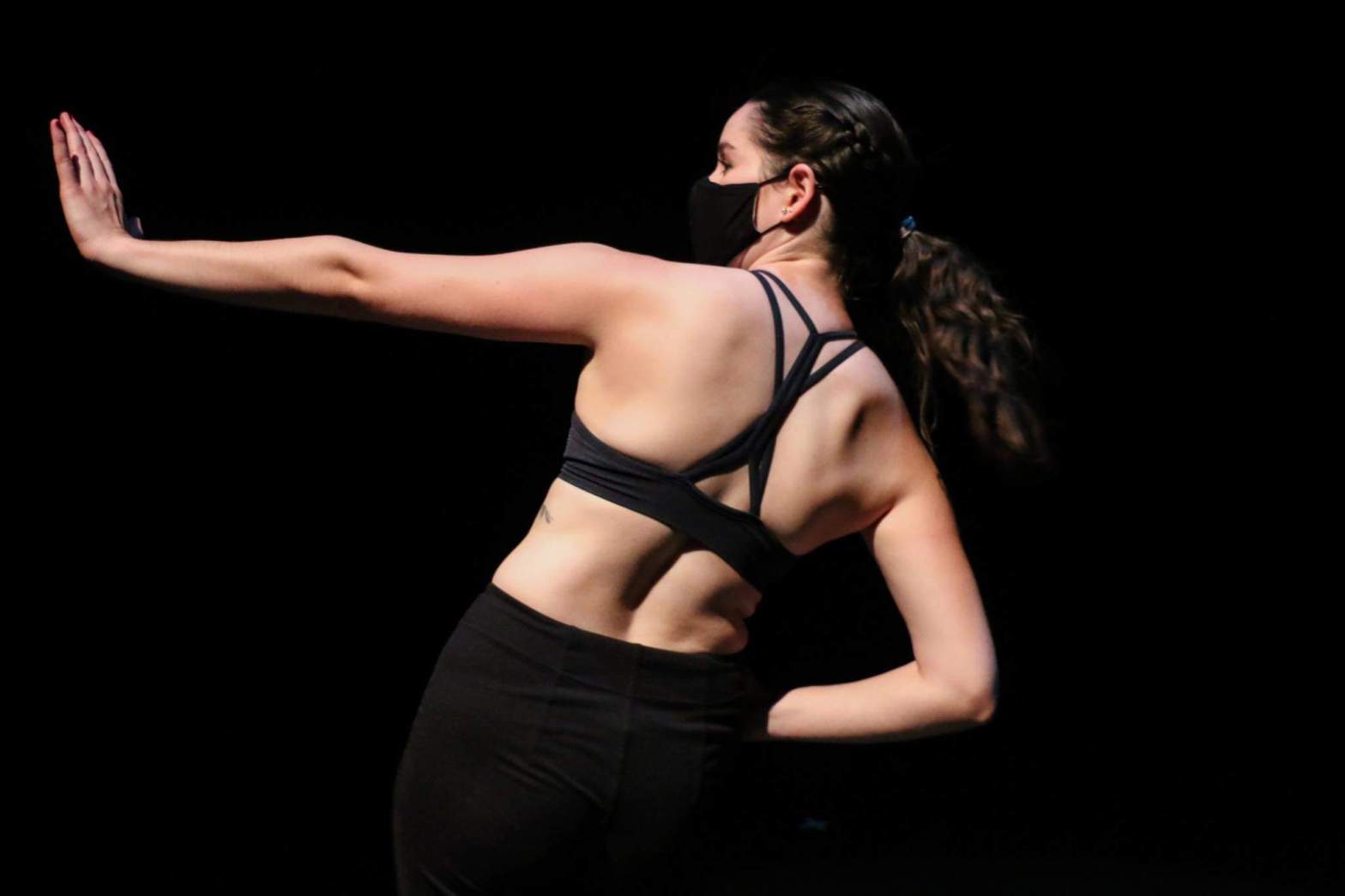
Both of these films were made by MFA candidate Katie O’Loughlin exploring ideas of privacy, fear, surveillance, and concealing.
Movement Meditation Room
I recently took Devising Experiential Media Systems taught by Alex Oliszewski and Oded Huberman. For my final project I turned a room in my house into an audio guided movement meditation experience. My goal was for the experience to be user-guided and provide feedback for the user based on where they went in the room and the movement they chose to make with their body. I also wanted to engage as many senses as possible, to allow the user to root themselves in the present and release tension. After entering the room, the user can move between the two locations as many times as they would like, creating a custom experience that lasts as long as they want it to.
This video shows a demonstration of the room’s capabilities: https://osu.box.com/s/dd5izpw890mx3330r43qgdj3fazkux6i
I think in all this room took me ~40 hours to put together. It uses a projector and 2 depth sensors, connected to my computer where I used Isadora to design the response of the room. Due to coronavirus restrictions the only people that were able to engage in the room were myself and my roommate, here is what she had to say about the experience: “The room offered me a place to reconnect with myself amidst the hectic everyday tasks of life. When in the room, I was able to forget about the things that always linger in the back of my mind, like schoolwork and job applications, and focus on myself and the experience around me. The room was a haven that awakened my senses by helping me unplug from the busy city and allowing me to interact with the calming environment around me.”
Lines on Route
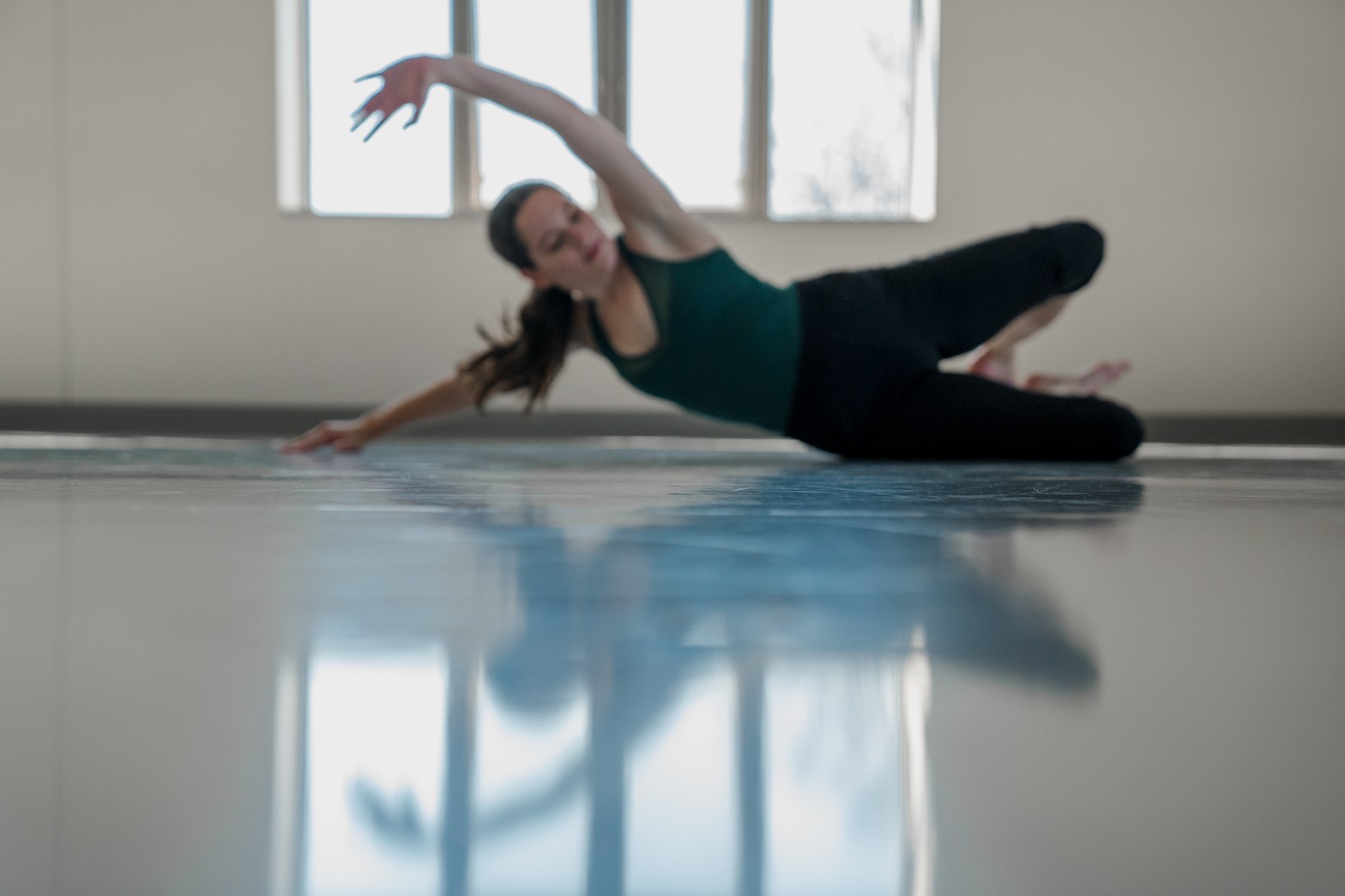
This is a dance film created by my fellow BFA candidate Rosely Polanco.
Thursday Morning Play
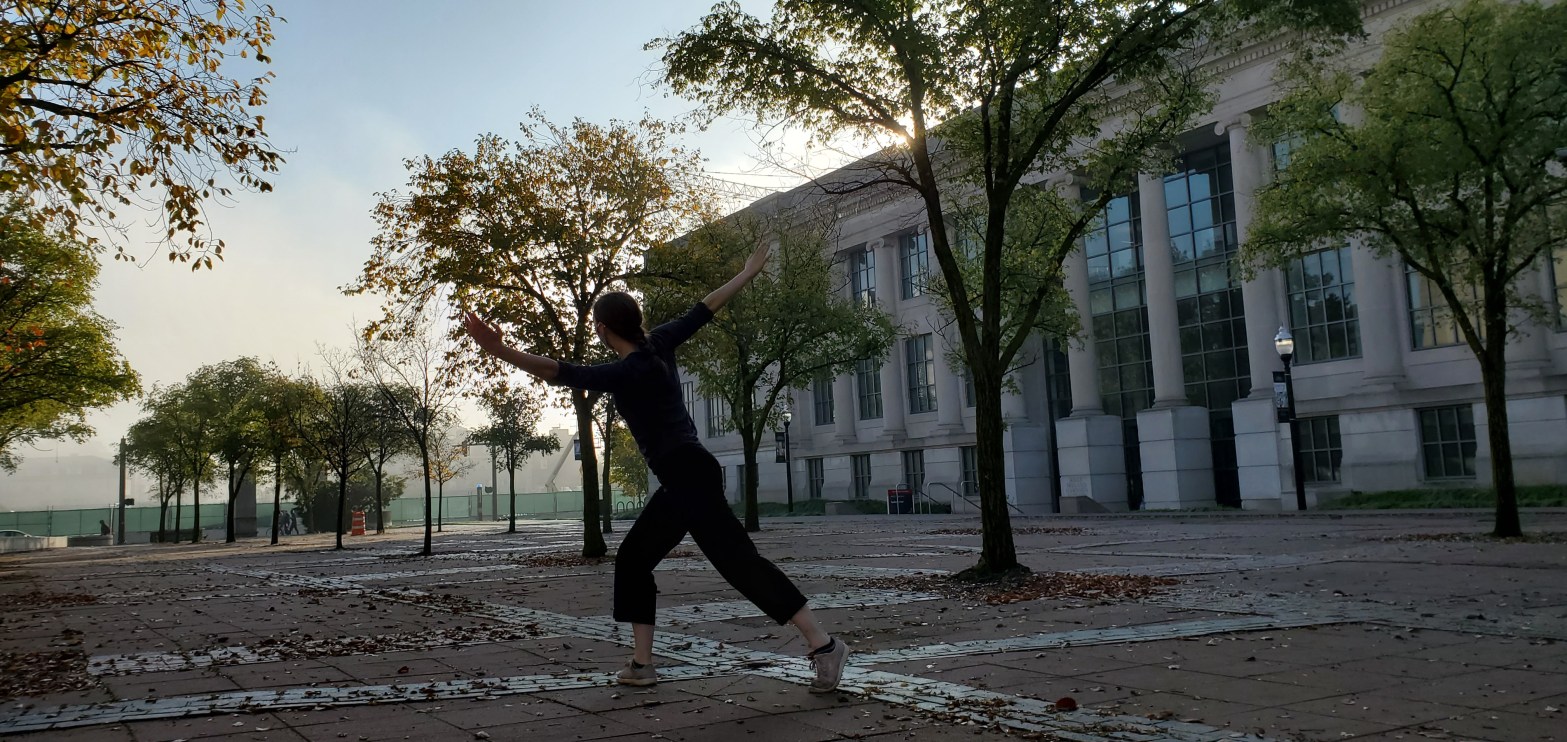
A year ago, I hoped that I would be starting this semester with a project on mountaintop removal, creating a piece to be shown in a student concert that would build one segment of what would eventually become my senior thesis. I had been dreaming of this piece since freshman year when I first went to West Virginia and saw mountaintop removal sites in person. Due to Covid-19 restrictions, I no longer felt that it was possible to build that piece. Or at least it wasn’t the right moment to do it given how much I felt would be lacking if none of the dancers could come within six feet of each other. But, I still felt a need to create something or at least be a part of a process that was creating something. The main goal of starting this process was to help me figure out ways to keep moving forward even when I don’t feel creative. I wanted to discover things that would help me sustain my practice of creating dances through the ups and downs of life. Once I started the process, a lot of other important ideas emerged as well like levels of authority, response to the environment, and listening to what is in the room.
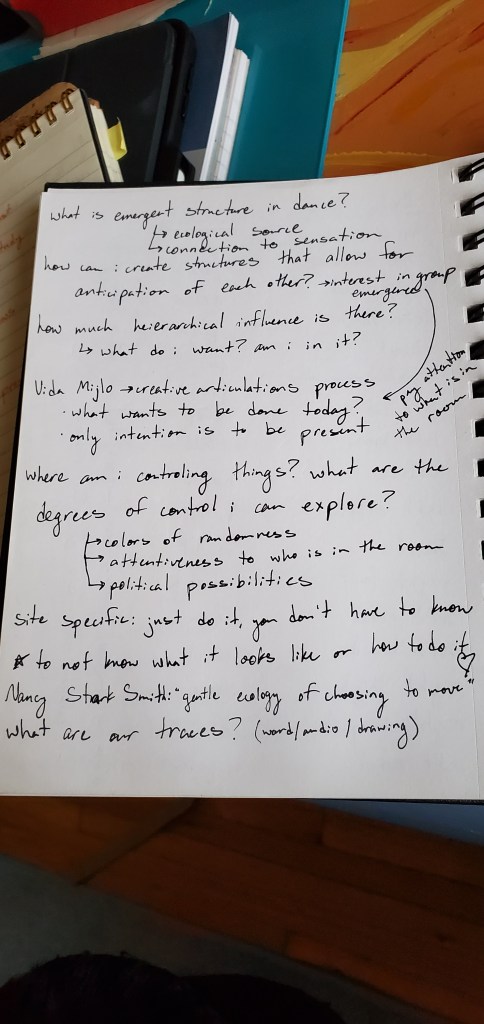
I started out with structures that I was already familiar with that I could use to create material quickly and with little effort. I used randomized nouns, verbs, and adjectives, as well as spatial designs and timing patterns to create a score for a phrase of movement. My original plan was that I was going to be the objective choreographer and all of the dancers would help me generate material, so while the score was randomized, I still had a lot of control over the process. I also created a set of random body parts from which to make duets and a random list of body parts and qualities that could be used to make another phrase. For the first few rehearsals, we entered the space together and checked in using an activity I borrowed from Gina Hoch-Stall: going around in a circle, each person does a movement that feels good in their bodies and everyone else mirrors them while they answer a question about their day or their state of mind. Then, I would pick up my notebook and lead them through one of the movement generating processes that I had planned out. We created a solo for everybody that was based on the same score so that while each person’s movement was different, there was something really striking about everyone moving with the same nuances in timing and level in space. We also created three duets this way off of the same score so each one was unique but used the same inspiration of trading energy while not touching. These chance procedures were really fruitful for movement generation and created some really interesting results without requiring me to envision it first.
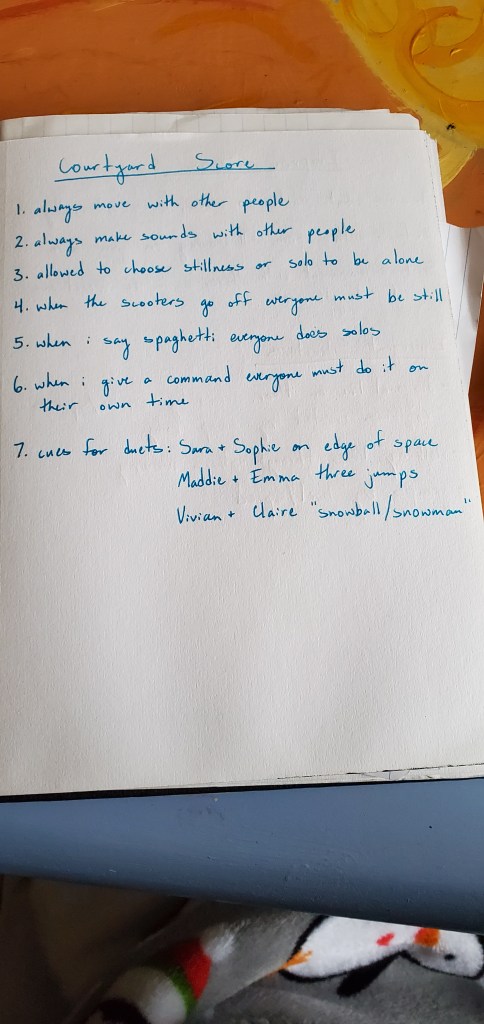
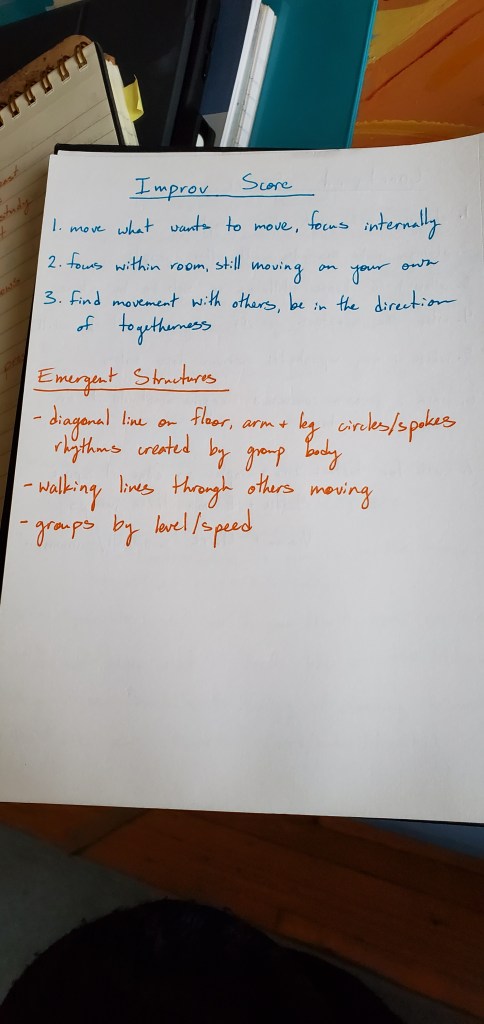
Flip through the notebook I used to outline our process:
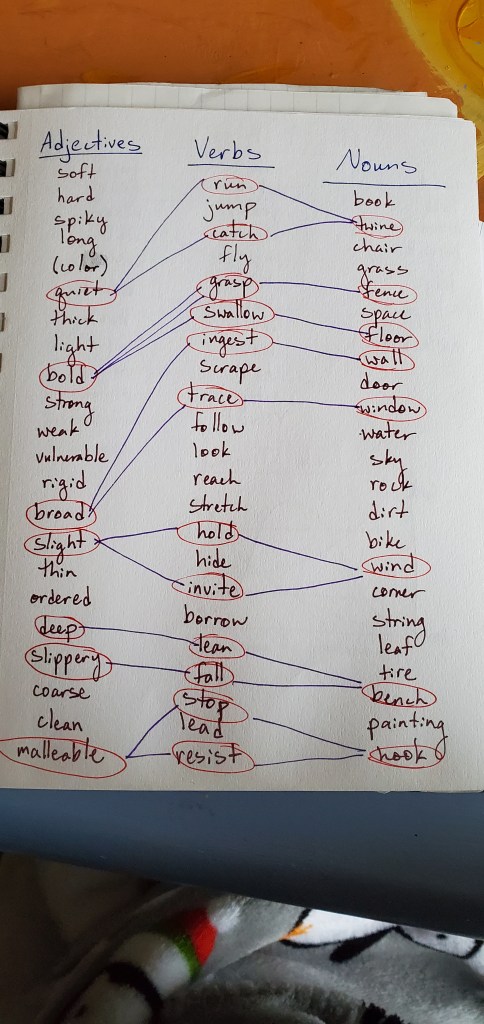


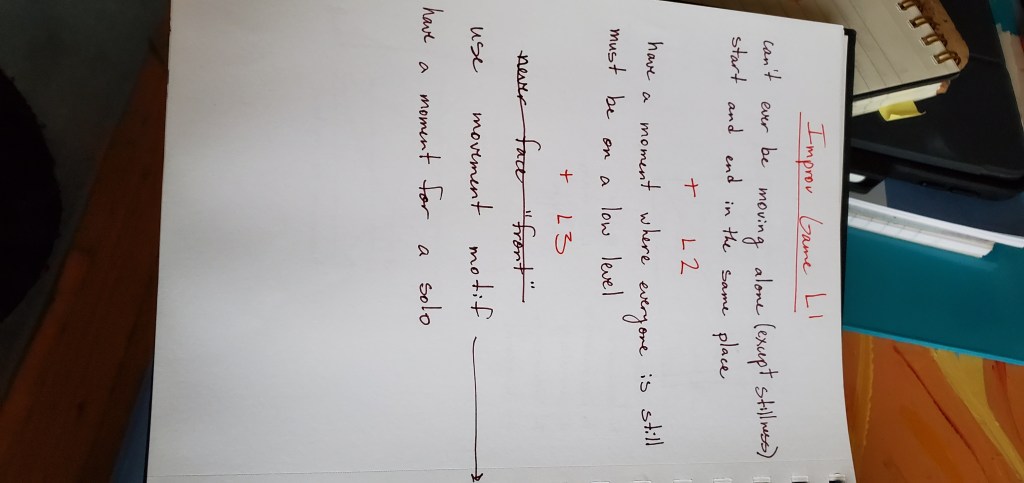
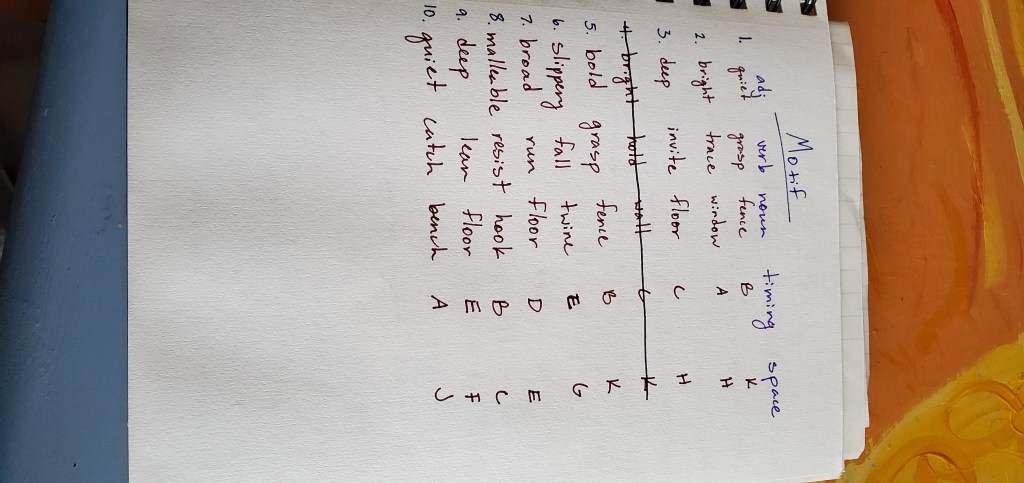

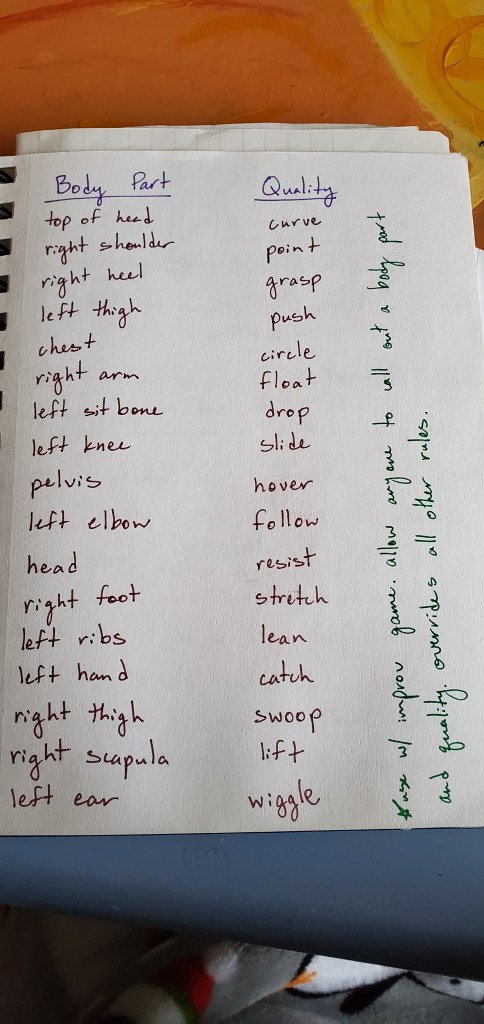
Take a look at what we created:
At this point I was able to have a meeting with my advisor, Norah Zuniga-Shaw, who challenged me to go beyond my own preconceptions of the process. With her guidance, I decided to start changing how I was part of the group and redistributing some of the control to other members. This is where the project started to shift from creating material, to creating experiences. We experimented with going outside and developing scores as a group rather than me writing them down beforehand. We even changed the use of some of my written scores and created new rules to govern our experience. Going outside introduced new factors from the environment around us into the process. We used the clock tower to time our improvisation at one point and during another iteration we used the alarm on a Lime Scooter to trigger pauses in our dance. This opened me up to the possibilities that the environment can contribute to an experience.
Listen to some of our outdoor experiments:
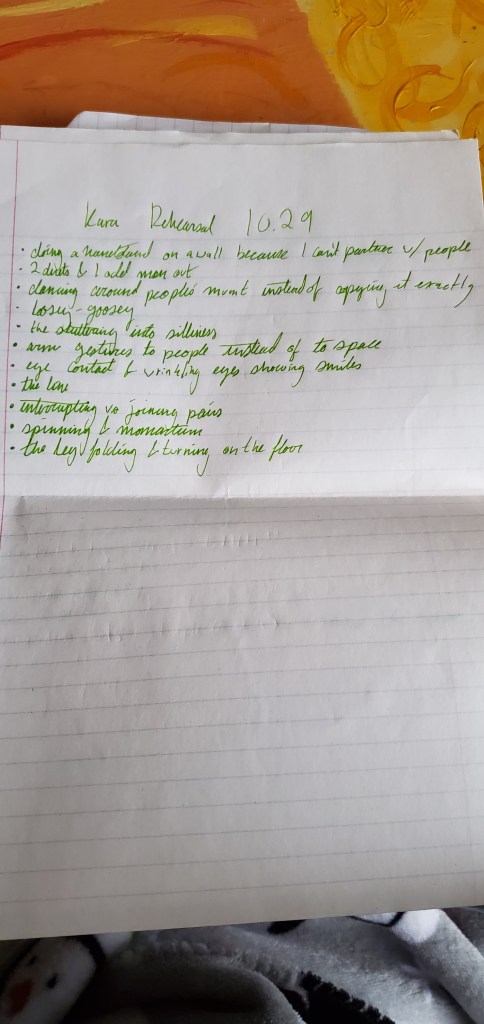
The last few rehearsals we had to come back inside because it was getting colder and there was one last part of the process that we hadn’t spent much time with, but that seemed to be an integral part of what was happening. One of the rules that had been constant is that “nobody can ever be alone.” If one person starts moving, someone else needs to move with them and you can never be moving alone, with a few exceptions depending on the score. It was the responsibility of the group as a community to make sure that nobody was ever alone. At the core of this was the basic idea of “moving what wants to be moved” which is usually what started off the improvisation. To explore this idea deeper, for the last three rehearsals we did a 40 minute improvisation. For the first 10 minutes we would focus on only moving what wanted to be moved in our bodies and keep our focus internal. For the second 10 minutes we would continue moving only what wanted to be moved but we would allow our focus to extend into the room and be aware of what other people were doing. For the last 20 minutes we would “move in the direction of togetherness” by allowing ourselves to follow the rule that had been used in previous experiments but not being too precious about it. This process was the most healing and enjoyable to take part of. As a group everybody came out of it feeling connected to each other and there were always some really beautiful structures that emerged from the improvisation without us having to force anything. This part of the process opened up the possibilities that little control and very few guidelines could provide to a group improvisational experience.
Read the reflections from the group on our improvisational experiences:
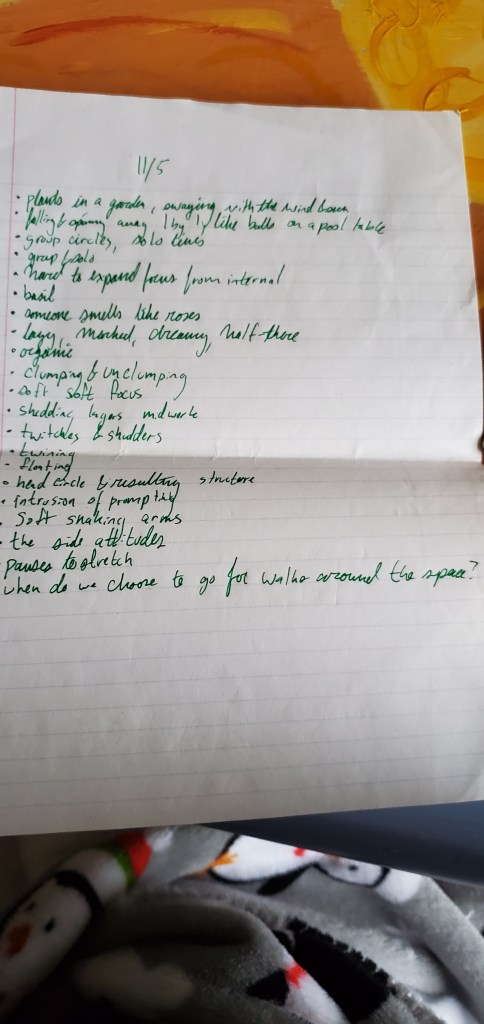


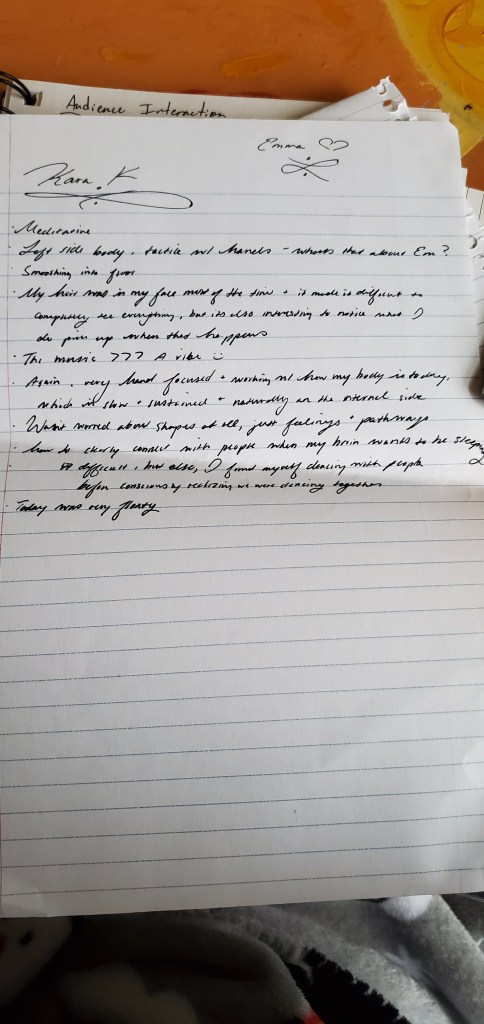
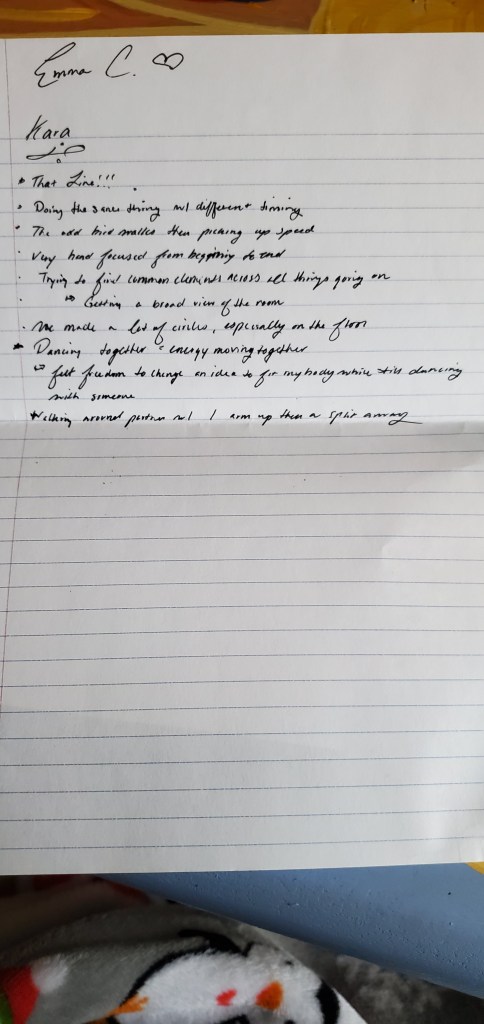
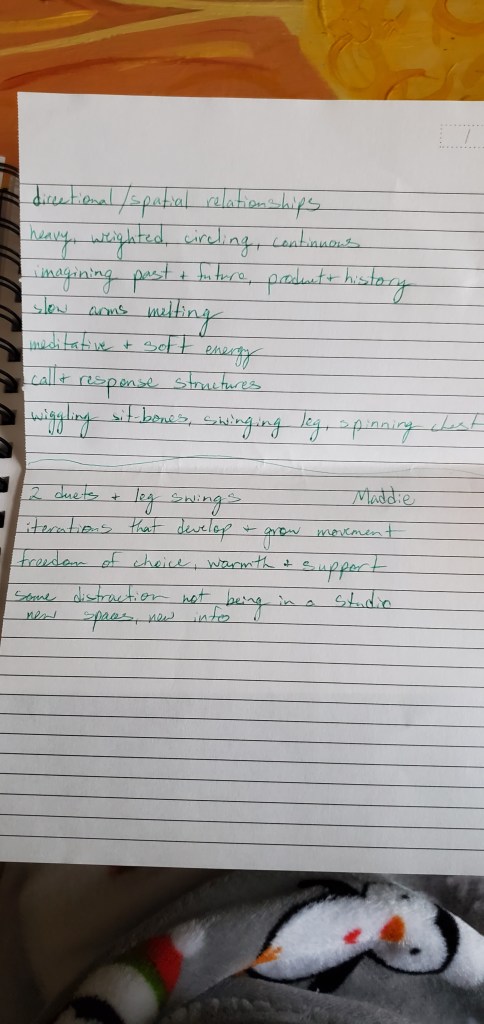
At the conclusion of the process, I submitted a video to the Virtual Student Showcase presented by the Ohio State University Department of Dance that highlighted the gems of this process and provided space for viewers to experience some of it themselves. As a whole this process fulfilled its original goal of helping me create even when I am not necessarily inspired to do so, and I was able to discover tools that can help curate choreographic and improvisational experiences in the future.
Behind the Scenes of Sonic Arts Ensemble’s “Into the Multiverse”
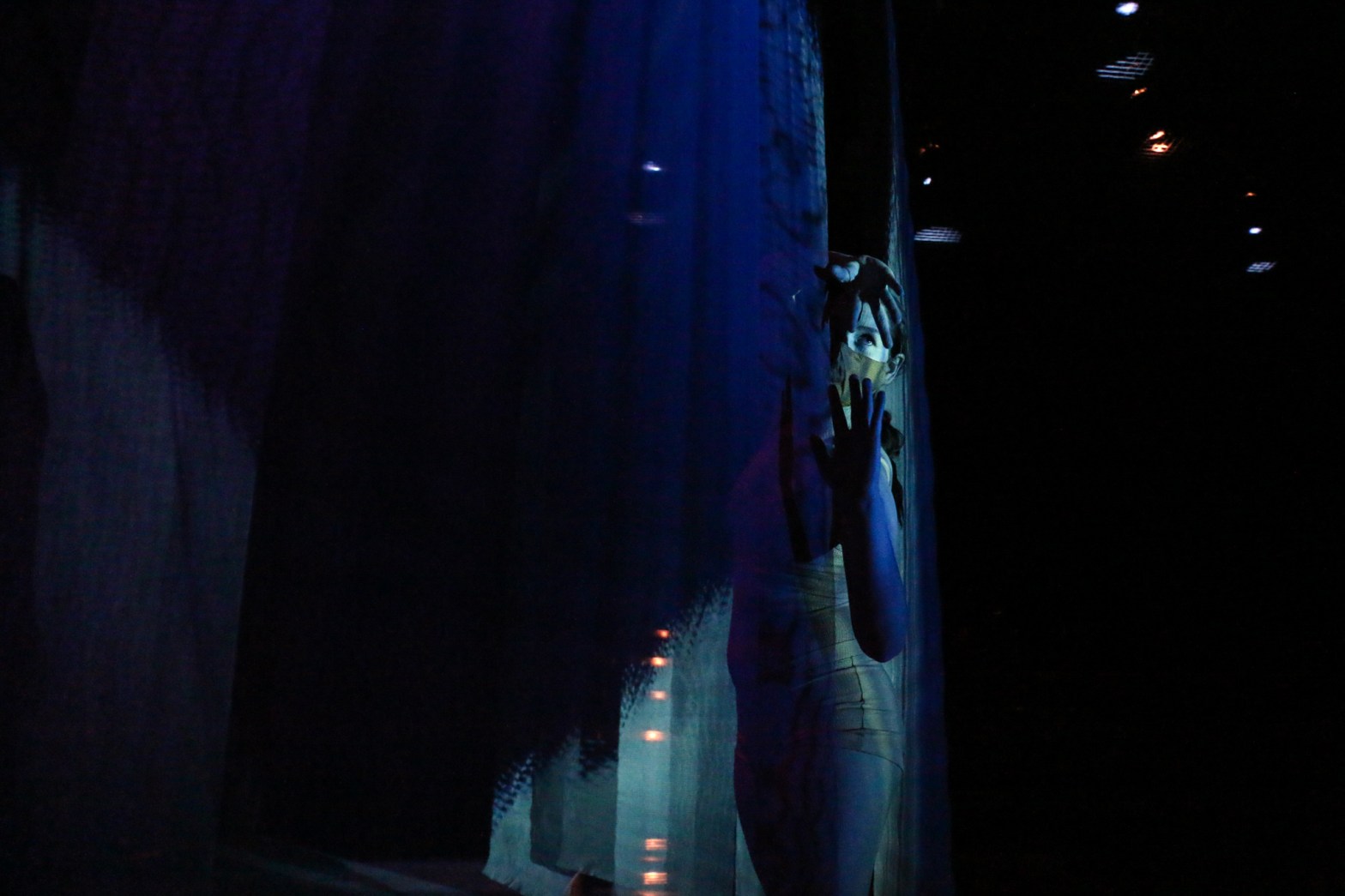
This is a piece that I wrote in response to the performance of “Into the Multiverse” by OSU’s Sonic Arts Ensemble and informed by an interview with Oded Huberman.
View the full text on the Performance, Interpreted. website: https://www.interpretartosu.com/post/behind-the-scenes-of-sonic-arts-ensemble-s-into-the-multiverse
Intermedia Portrait
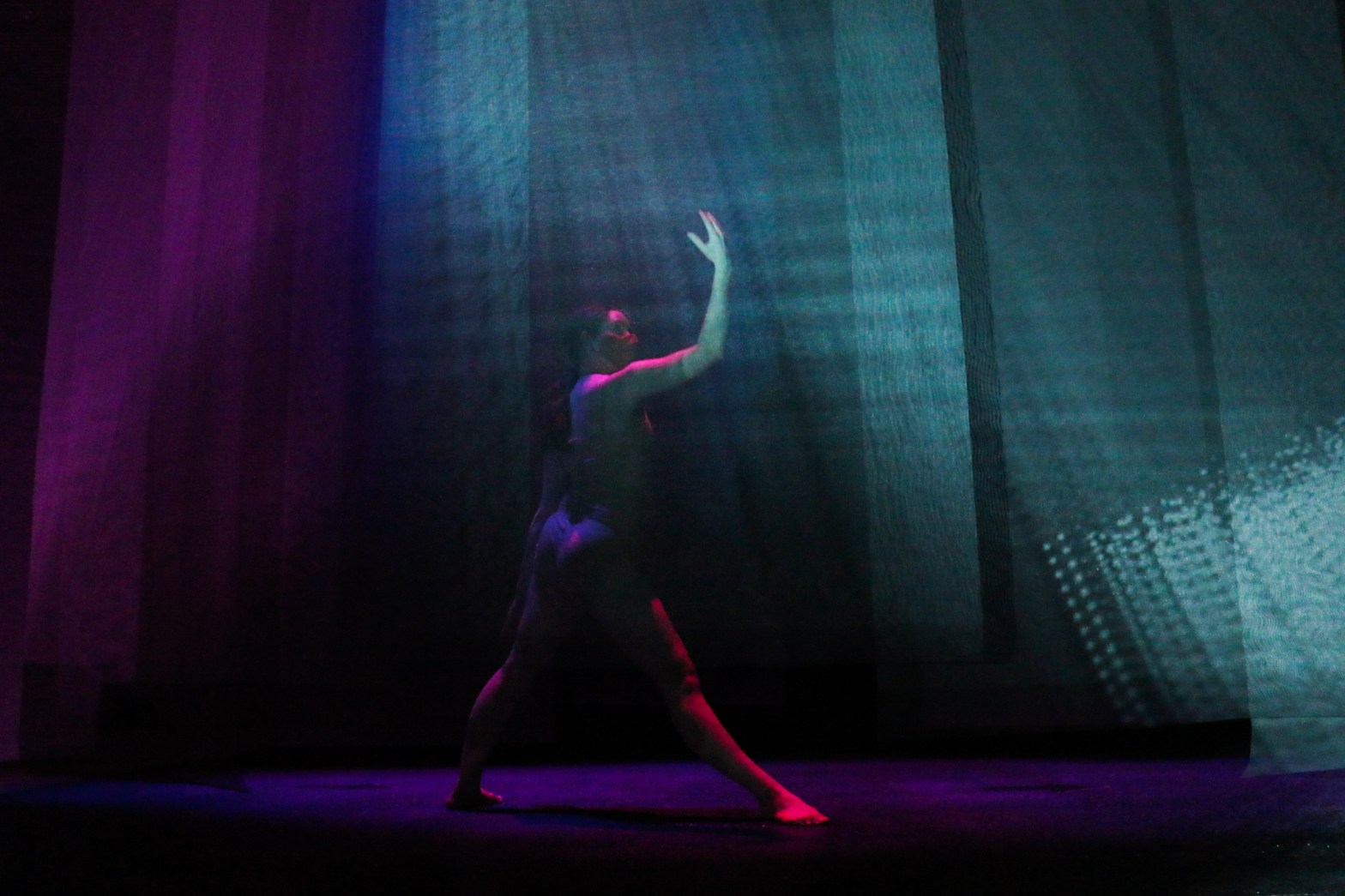
This is a digital portrait I created as part of my Intermedia course with my colleague Katie O’Loughlin. It was created and broadcasted live using OBS.
200-hr Yoga Teacher Training
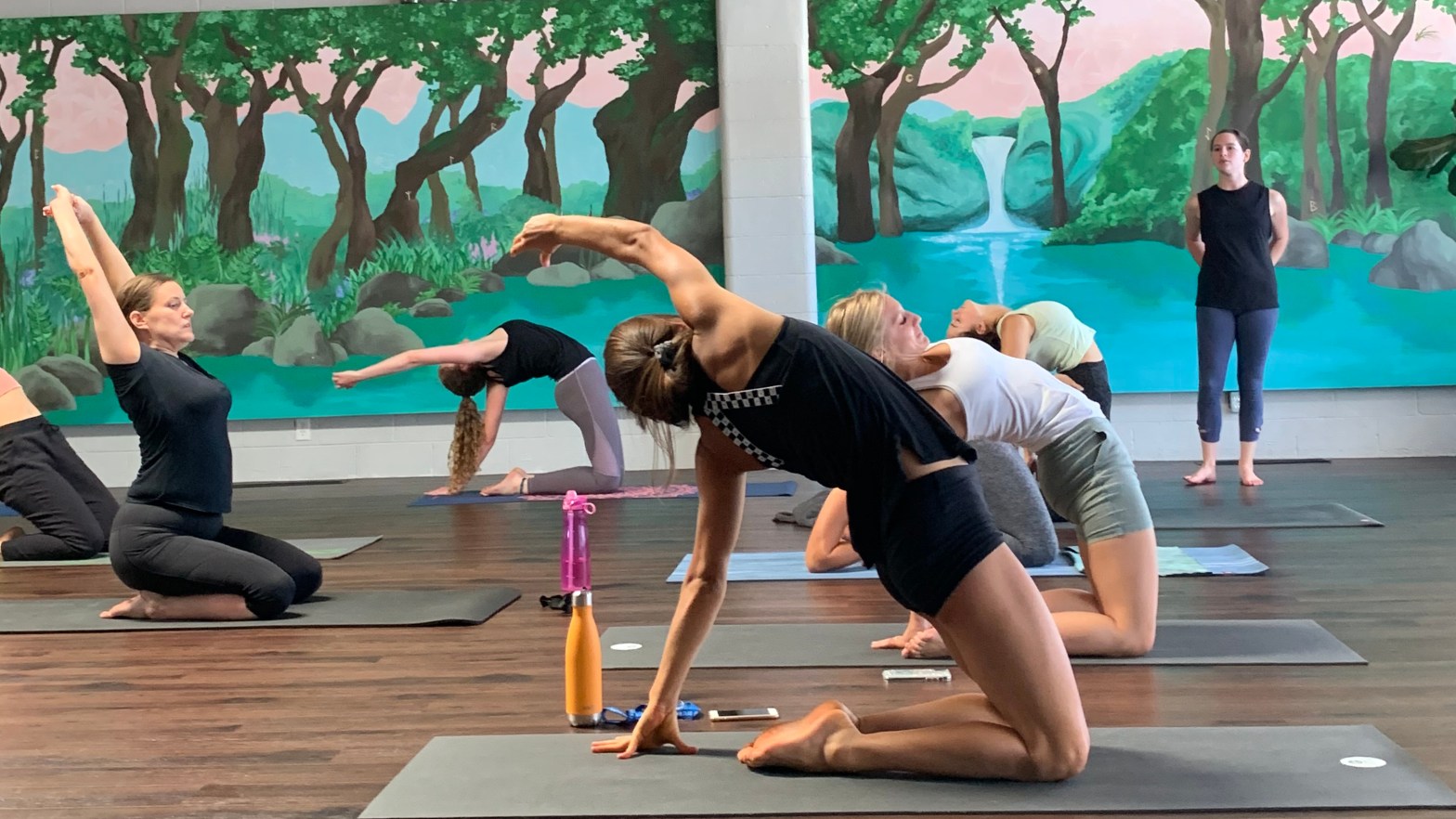
Following my participation in the STEP program at Ohio State, I decided to use the funds awarded by the program to complete a 200-hour Yoga Teacher Training program. We met five days a week in the evenings for five weeks, mostly outside so that it was safe to do in-person during the COVID-19 pandemic. We learned correct alignment of yoga postures, the philosophy of yoga practice, meditation techniques, and teaching practices that would allow us to successfully share all of the benefits that yoga has to offer an individual.
There were many things in this program that changed my perspective on myself. I feel like I have a greater sense of my own responsibility for my own life and a greater sense of my own power to go after what I want. It’s very easy to see the world as full of events that happen to you rather than events that you create and this experience helped me see how much power I have over what I do, how I respond to things, and where I go from there. What I want from my life is clearer to me and I feel like the power to achieve those things is fully within my reach. I have a more intentional perspective on my actions and how they move me toward my goals, rather than just being reactive or impulsive. As a part of that perspective, I also have more kindness towards myself so that when I make a mistake, I feel more able to learn from it and move forward constructively without beating myself up about it. This could be summed up as saying that I have more love for myself which makes it easier to support my own growth and reach for what I want.
I also feel a lot more confident in my ability to do new things and lead people into a movement practice class. In some ways this program was intimidating because we started teaching in the first week which I didn’t necessarily feel ready to do but it showed me that I can do things even when I feel like it is out of my comfort zone. I had previously assumed that I had to be an expert at everything in order to be able to teach yoga or any other kind of movement class: if I can’t do a handstand then I can’t teach people how to do a handstand. This experience taught me that leadership doesn’t always correspond with expertise. Of course you need to have at least some basic knowledge but in many ways teaching and leading is about empowering others to challenge themselves and helping them along the way, even if that means that they go in a direction that you have never gone in before. I learned that I don’t need to know everything in order to help other people achieve their potential.
The first thing that empowered me to take more responsibility for my life was our weekly meditation workshops led by a guru named Steven. We worked through a lot of different ideas about how to meditate, why meditation is useful, and different ideas that can guide our meditation practice. One of the ideas we talked about was a mandala that connected our past situations to our present and our future. When we have been in a situation, we translate that through our conscious and subconscious mind which then causes an emotion that leads to our actions to create our present situation that then influences what possible future situations we will be in. The key point here is when we translate the situation through our mind where our perception of the situation can be influenced by thinking errors, limiting beliefs, or traumatic memories which together make up our thought paradigm. Our perception, not other people, is what creates the emotional reaction and eventually leads to the physical reaction to continue the cycle of events. So, our power is in changing our thought paradigm if we want to change the situation that we are in. There were a lot of techniques that we talked about over the course of the program for confronting bad habits or negative paradigms but even just the idea that I have total control over my thoughts, feelings, and actions was enlightening for me. I was empowered to take more responsibility for my responses and create the future situations that I want to be in.
The second thing that shifted my perspective on self-love was a book that we read called You Are A Badass by Jen Sincero. It has a lot of great, specific things that you can do to confront different problems that you might have within your self-perspective that is keeping you from being able to do the things that you want to do. One of the exercises in this book was to write a manifesto of what your ideal life would look like that includes where you live, who is around you, what you are doing for the world, etc. This exercise helped me envision what it is that I actually want and get really specific about what that would look like. It was kind of scary to do that but at the same time it gave me more clarity for my life goals and challenged me to really work toward them even if they were intimidating. At the end of every chapter, she has a note about loving yourself and the constant repetition of this idea showed me how vital it is to love yourself along every step of your journey. In reaching for the life that I want to have, if each step is made with love for myself then I can’t go wrong.
The third thing that gave me more confidence in teaching was the guidance of Brittany, the woman who ran the program. She was always very open and direct about everything that we needed to know and the things that we didn’t need to stress about. She gave very clear and direct feedback that really helped me clarify my own teaching and build the skills that I needed to be able to provide the kind of class that I wanted to be able to teach. Her attitude was that people will do whatever they want, so as long as you are giving everything that you have to offer and you stay authentic to yourself, you will be able to do great things for the people who want it. She talked about how we need to let of our ego in order to teach well because it should be about helping the student grow, not proving your abilities. So, if you can’t do a handstand, that doesn’t mean you can’t help your students learn how to do a handstand and if your students “surpass” you in some way, that is a good thing. Brittany always encouraged us to find our own way of teaching and be creative and her support helped me trust my judgement.
These changes mean a lot for me as a person in terms of my own journey of self-love and trust. This is something I think everyone is working on in their own way but I got a lot more tools from this experience to help me confront challenges along that journey. One thing that I firmly believe is that when you are fully your best self is when you can give the most to the world around you so even as this experience has helped me personally, those same elements of personal growth will help me in my professional future as well. As I move into the field of professional dance, a lot of my success depends on how well I can present myself and I can do that so much better if I already love and trust what I have to offer. This love and trust will help my performance and teaching as well because it allows me to step forward with more confidence in my ability to learn and do things that are new to me. The growth mindset that this fosters is useful no matter what field I go into and will help me continue to improve any skill that I am trying to learn. This program opens up new possibilities for me as a certified 200-hour yoga teacher, but it did so much more than just give me a piece of paper saying that I am certified. It gave me new tools to grow as a human being and help others along their journey too.
How Many Ways can I Fit in This Space
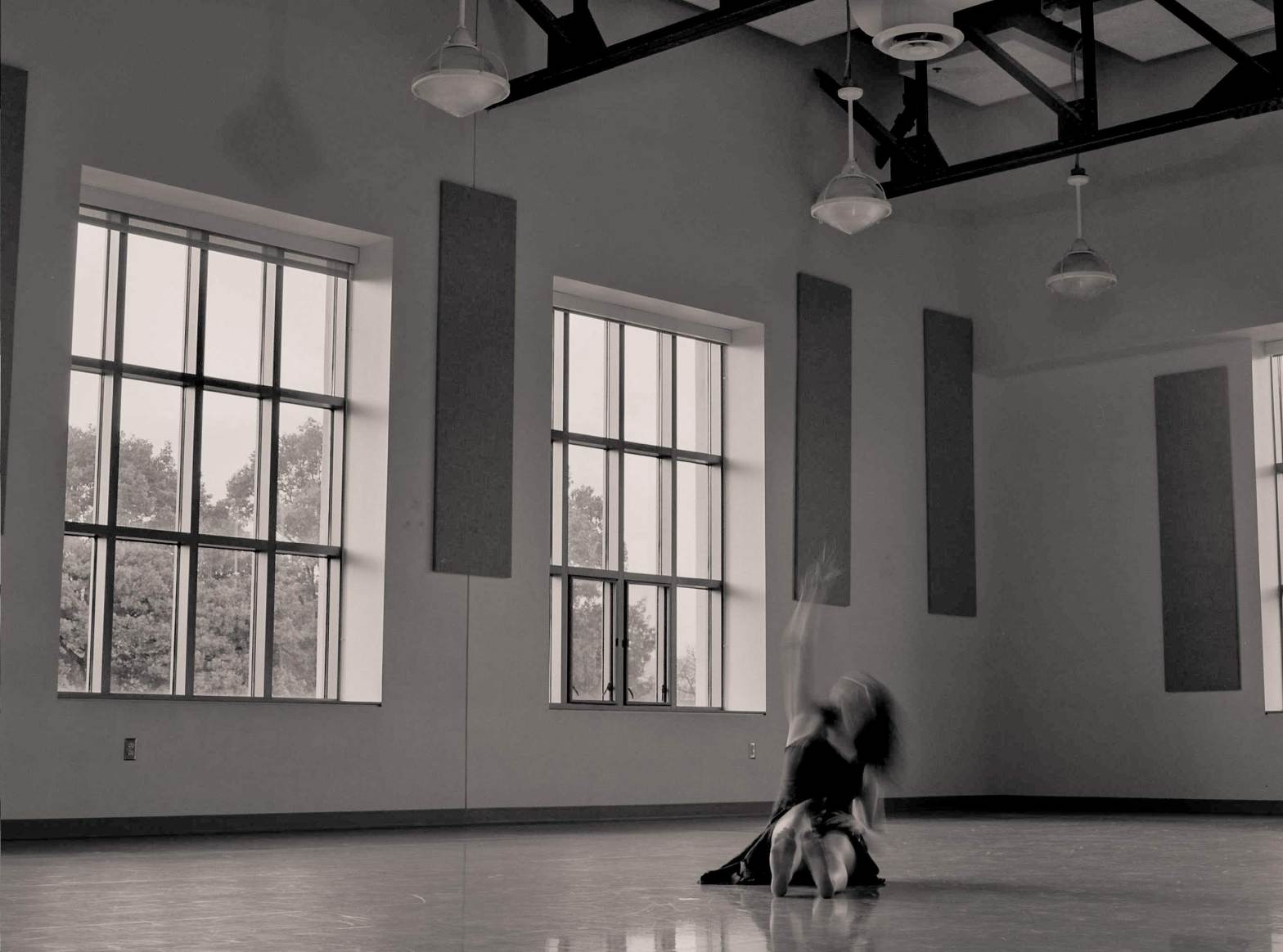
I created this project in quarantine during the Covid-19 pandemic.
This project was based on the prompt “Be the source of a headache” given by Detour Dance. I approached this prompt with the separate thought of exploring the many ways that I can fit my body into a small space. This got me thinking about the ways in which a space can literally and figuratively shape us. New spaces require new physical habits. Old spaces may bring back old physical habits. Similarly, spaces may hold power over the different shapes that we make out of ourselves in order to better fit where we are. I shape myself into a student when I am at school. I shape myself into a daughter when I am at home. I shape myself into an artist when I am at the studio. All of these shapes are within me but which one I choose to be is largely influenced by the space that I am in. Currently, our spaces have become more fixed than they previously were. I find myself in the shape of a daughter far more often than I find myself in the shape of an artist or a dancer just because I am in the space where “daughter” is the shape that fits best. Sometimes being in a shape for too long becomes repetitive, confusing, numbing, and painful. Hence, the headache.
The first iteration was just one minute long and can be found on he Detour Dance website here: http://www.detourdance.com/jukebox/can-the-brain-itself-feel-pain
I further expanded this idea for my composition class into a longer piece that included text as well.
Natural Impact
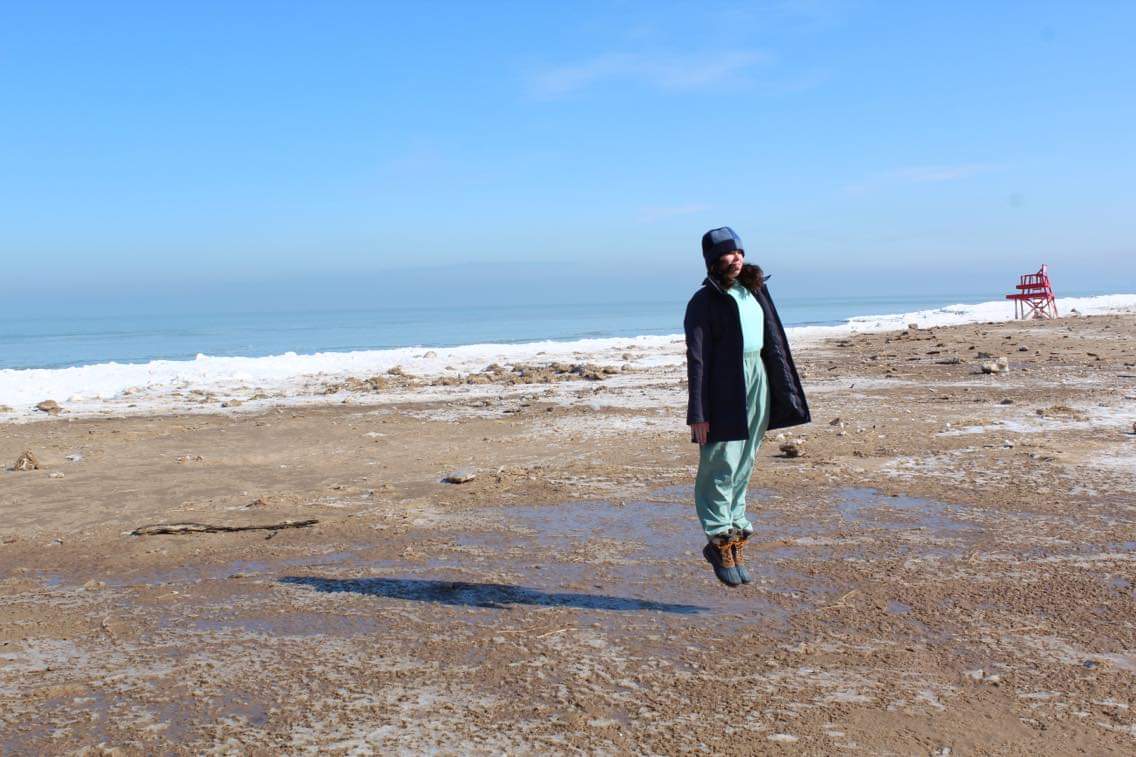
This was a dance film by Sydney Samson that was filmed in Indiana Dunes National Park in February 2020 for her senior project.
The Playdate Vignettes
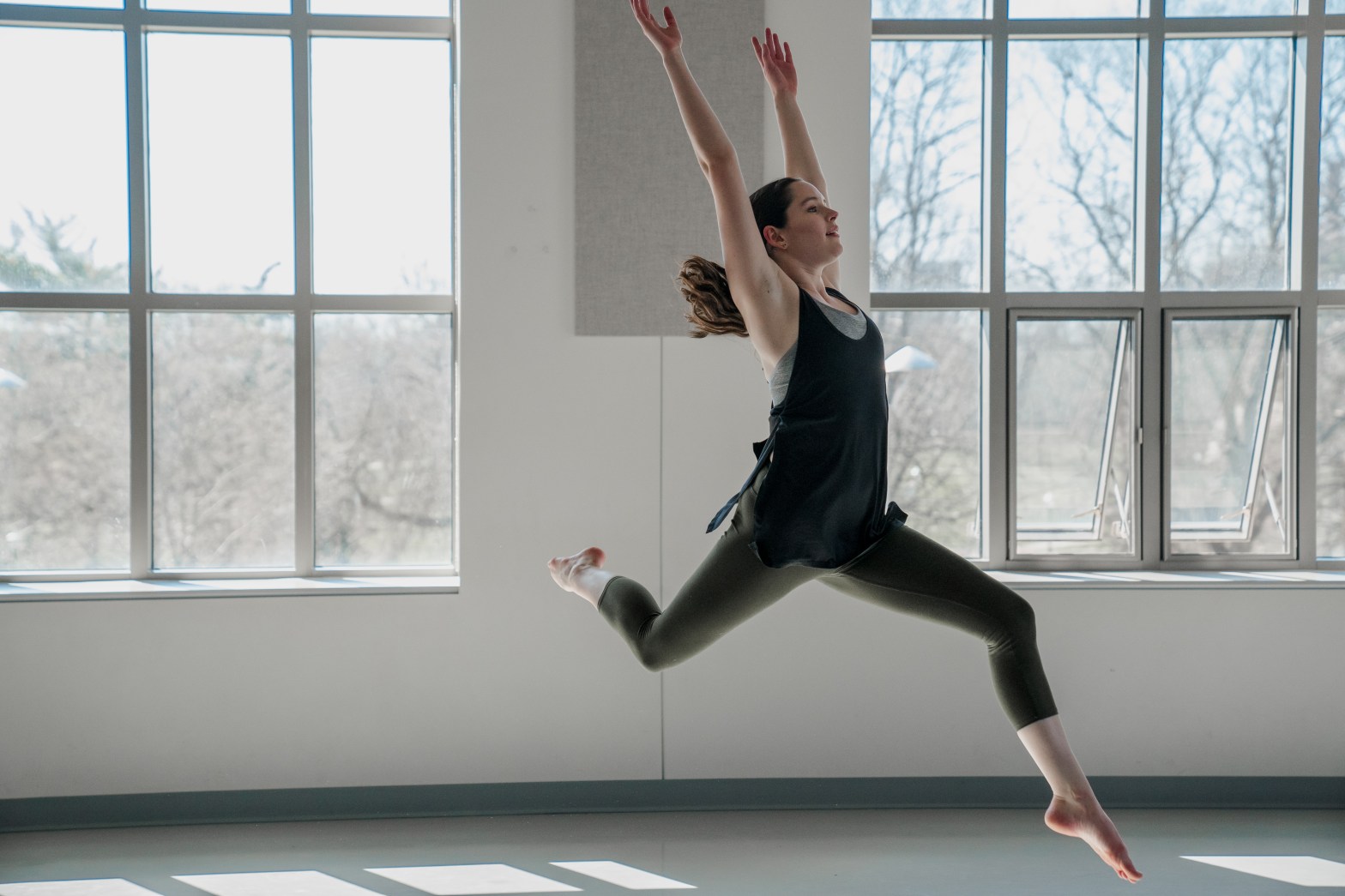
I had the pleasure of performing in Laura Patterson’s BFA distinction thesis with this amazing group of dancers. We used site-specific improvisation to develop playful movement and relationships with each other.
 Kara Komarnitsky