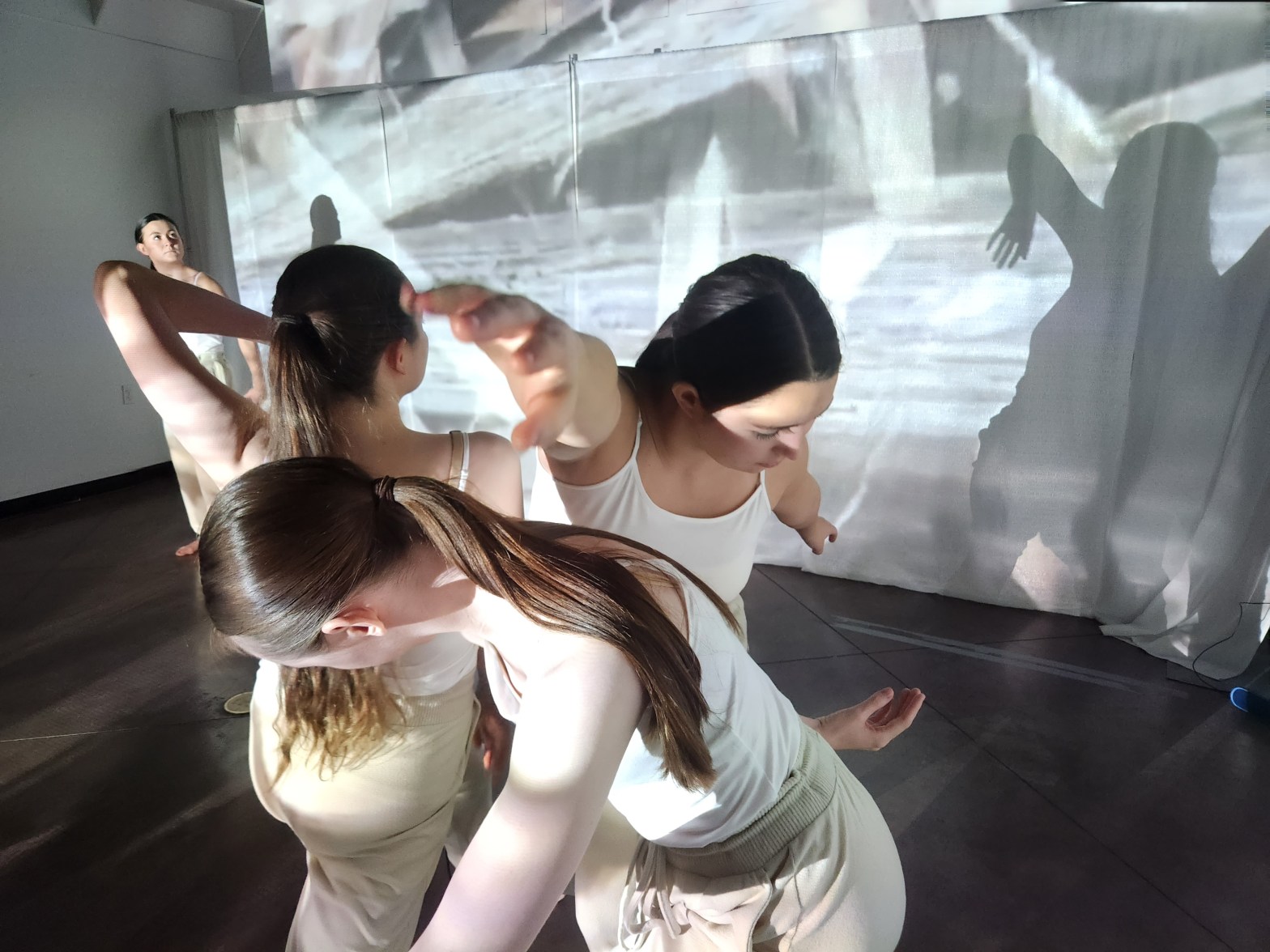
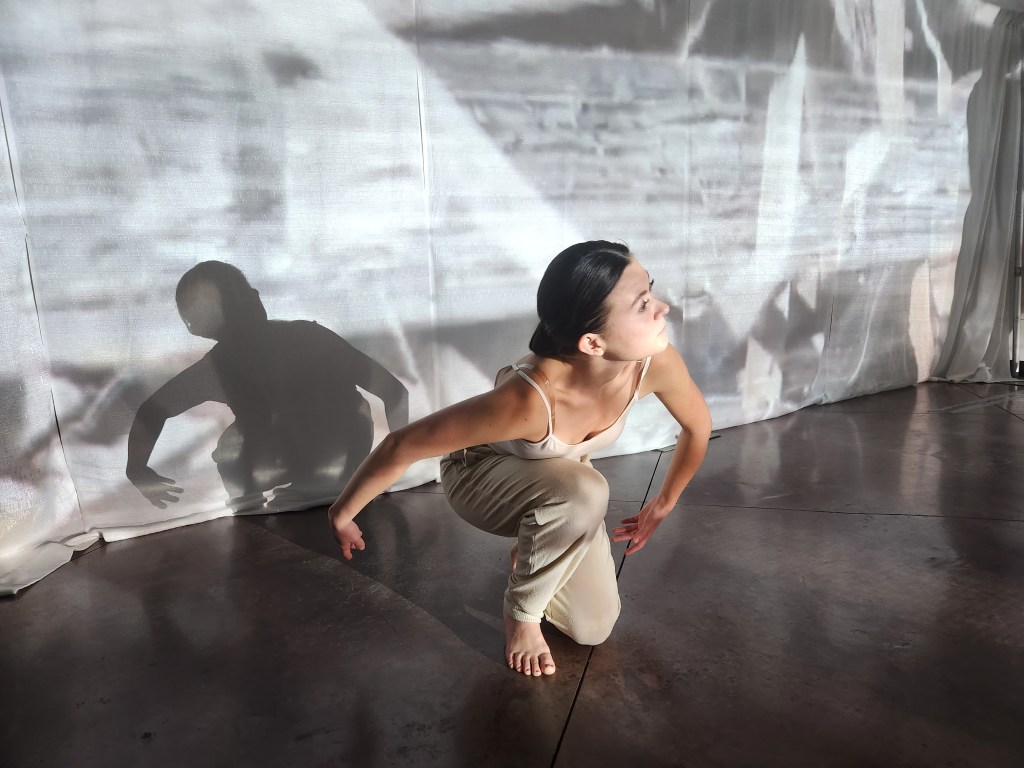
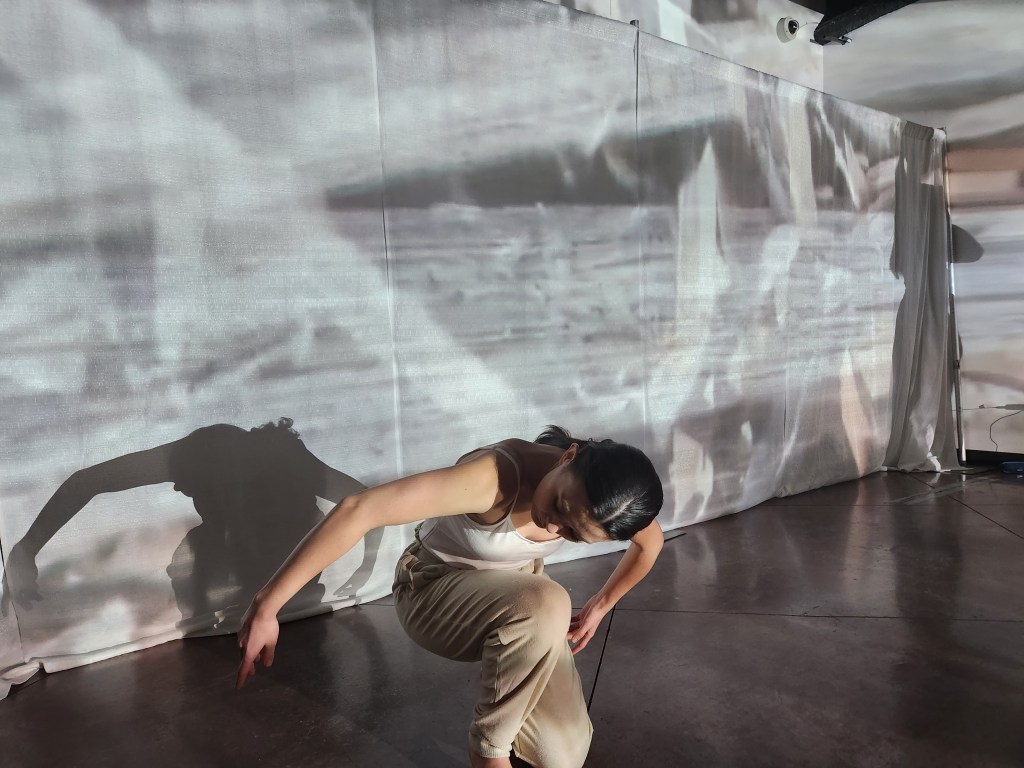
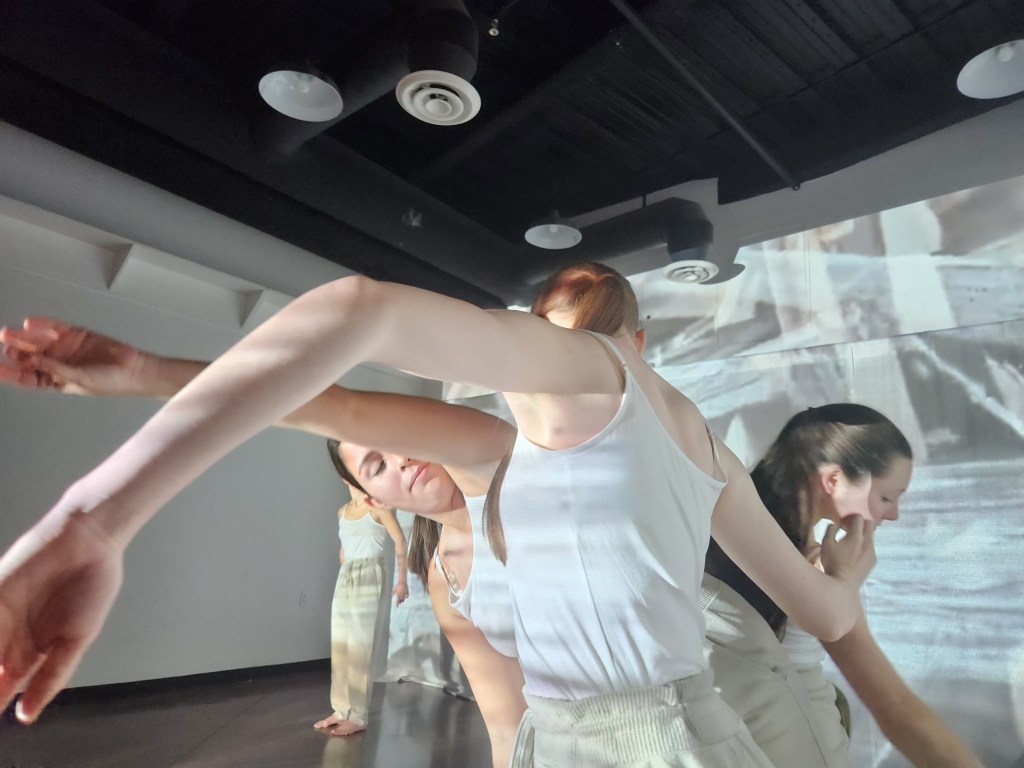
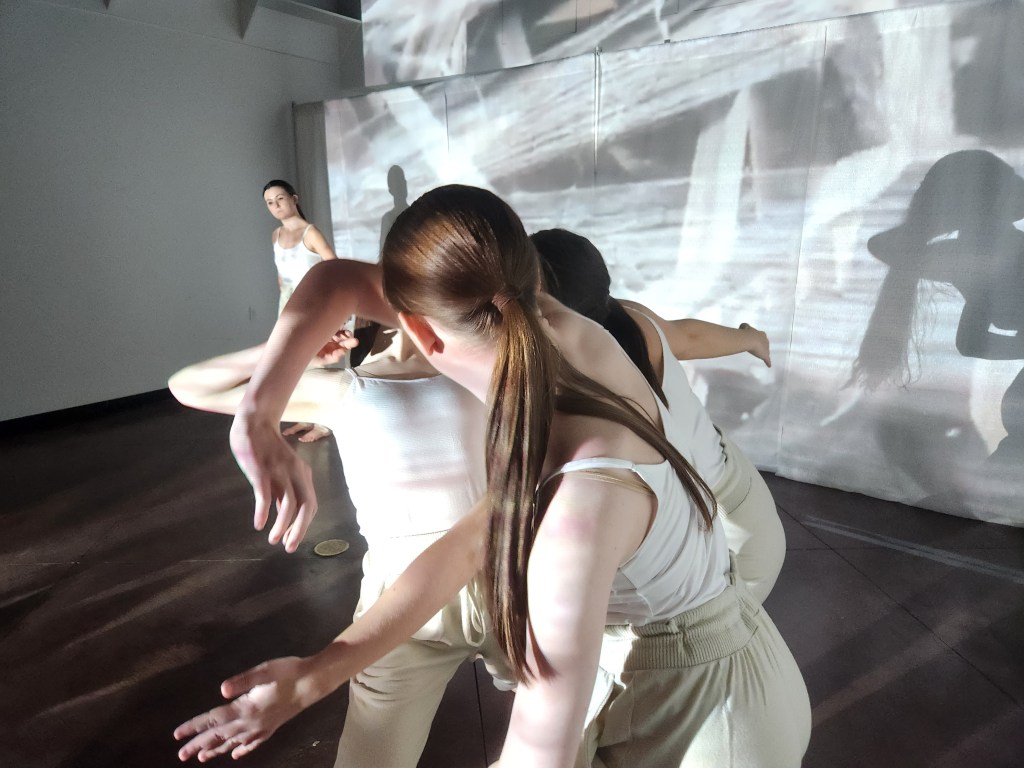
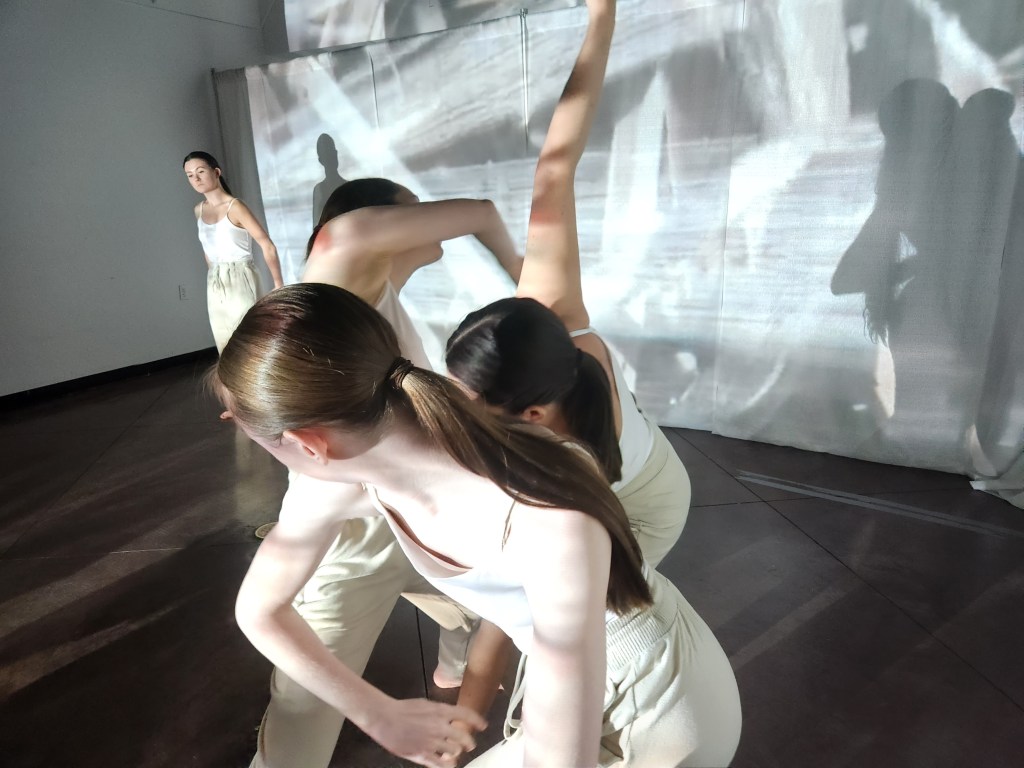
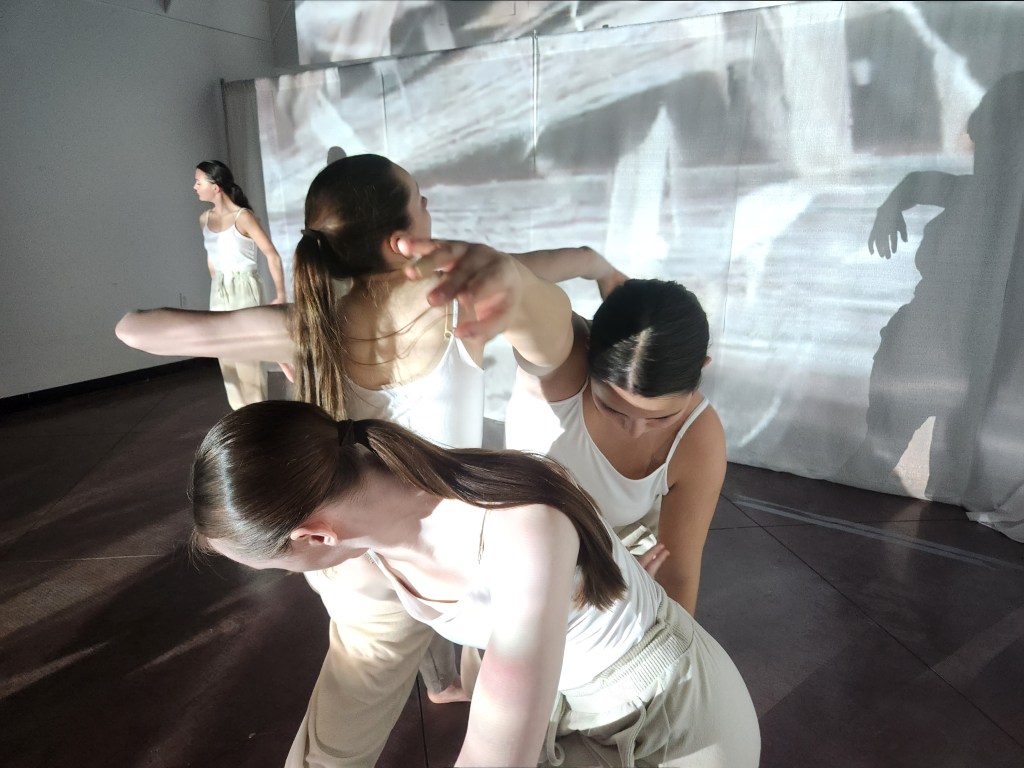
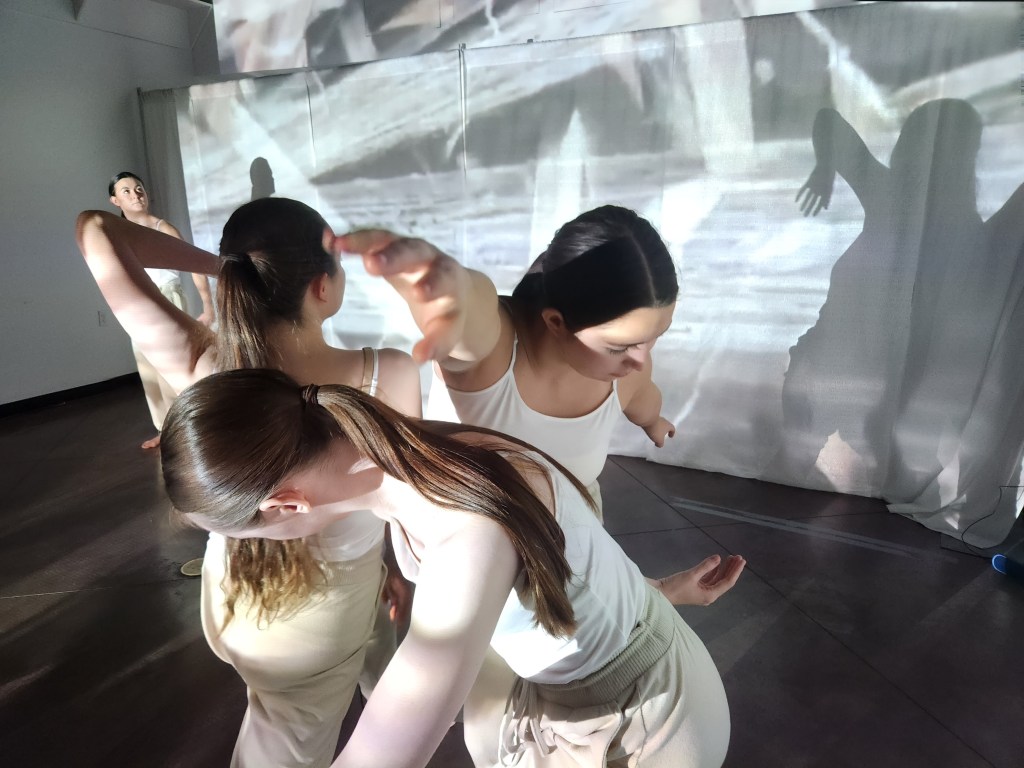
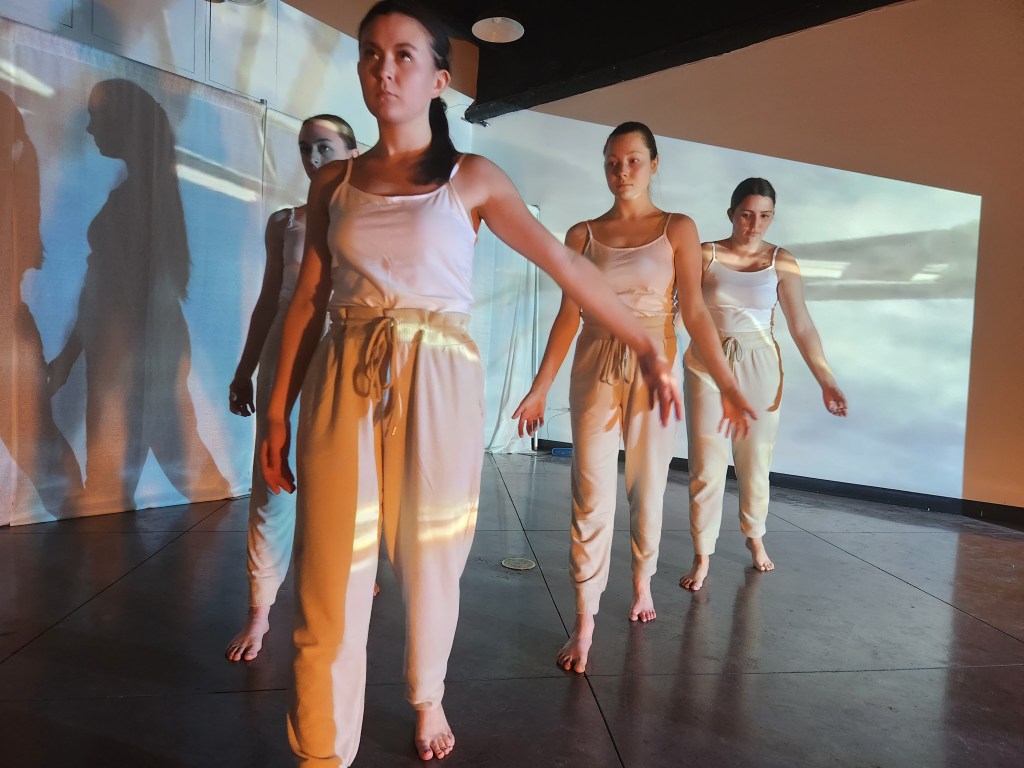
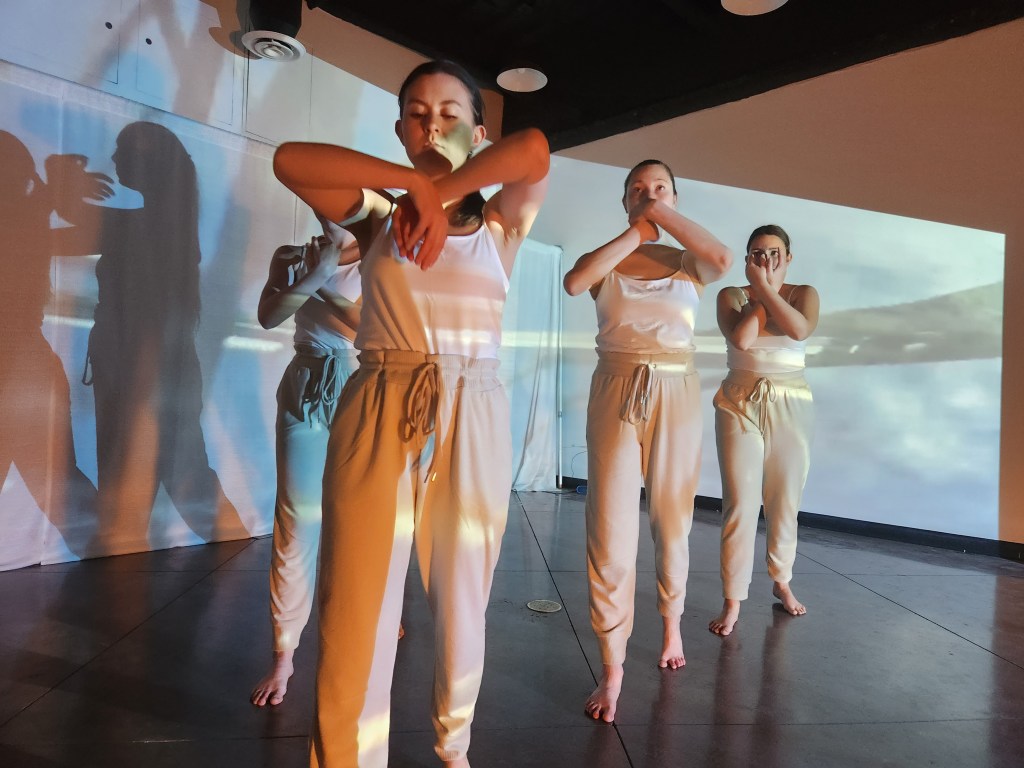
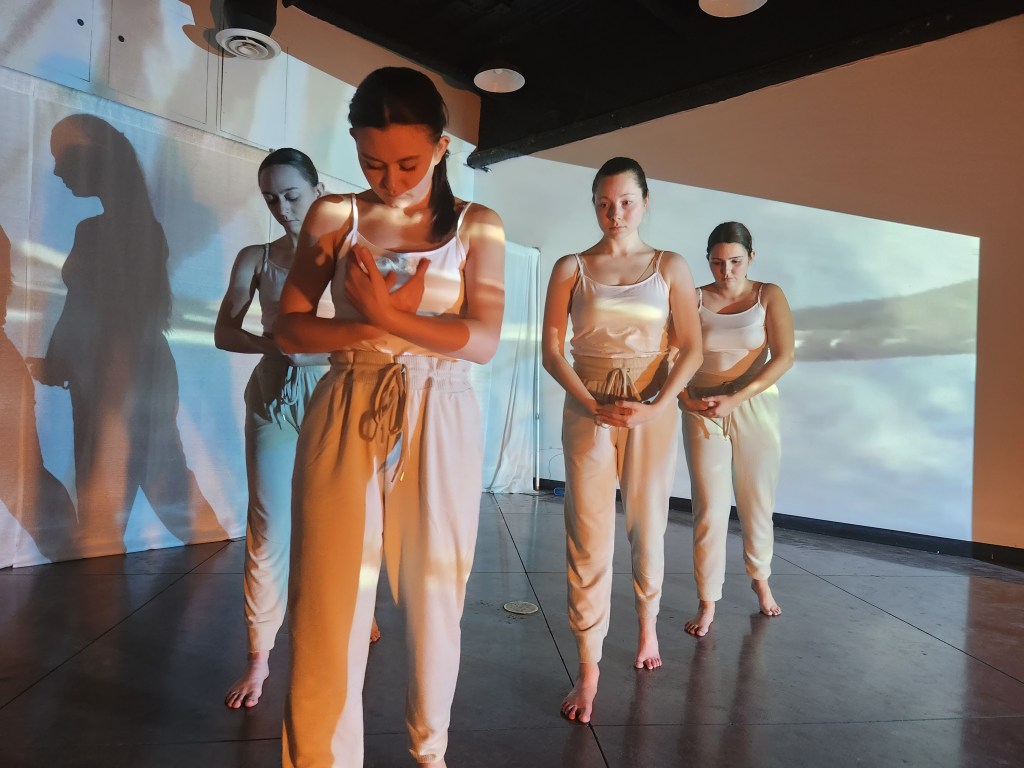
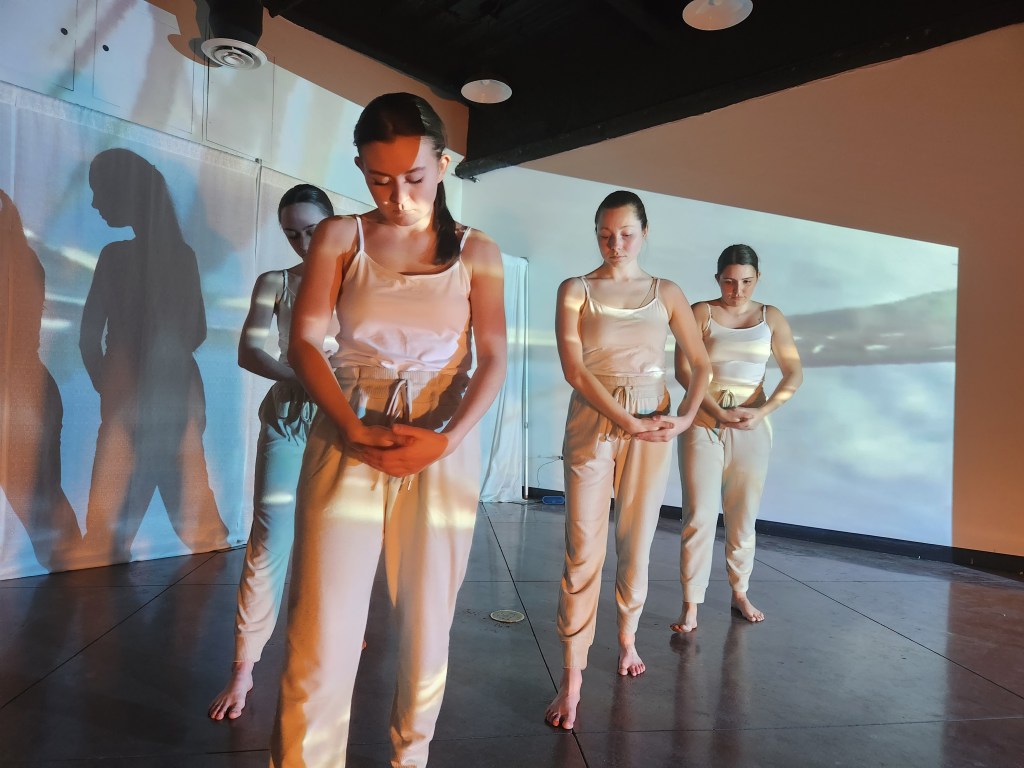
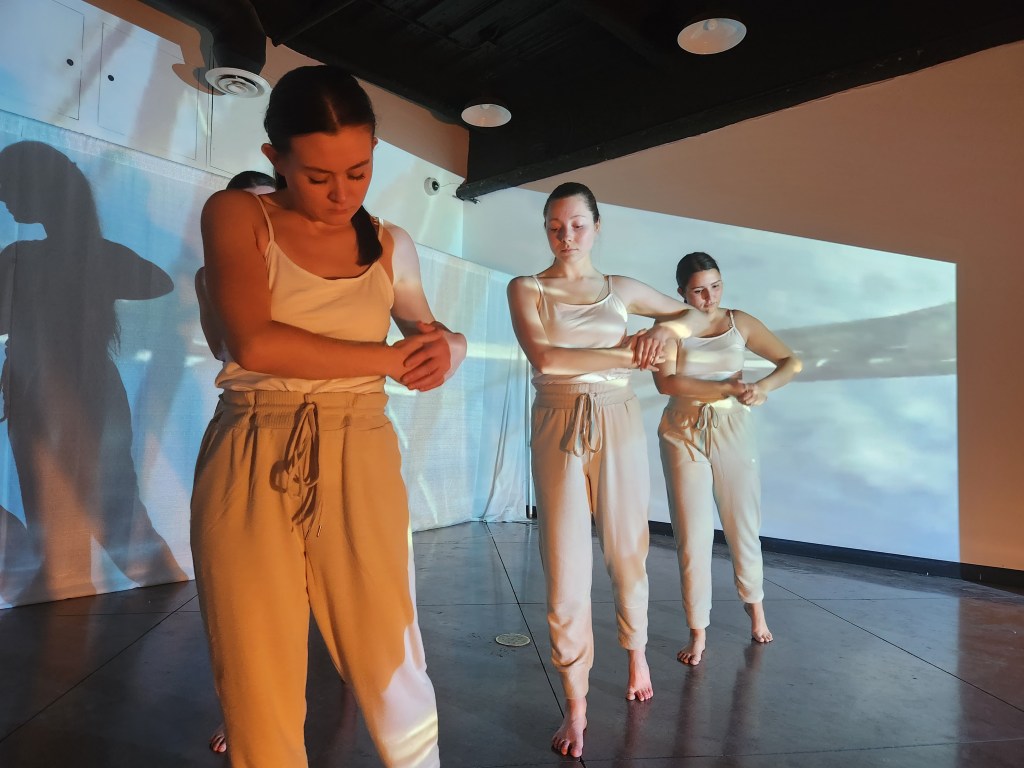
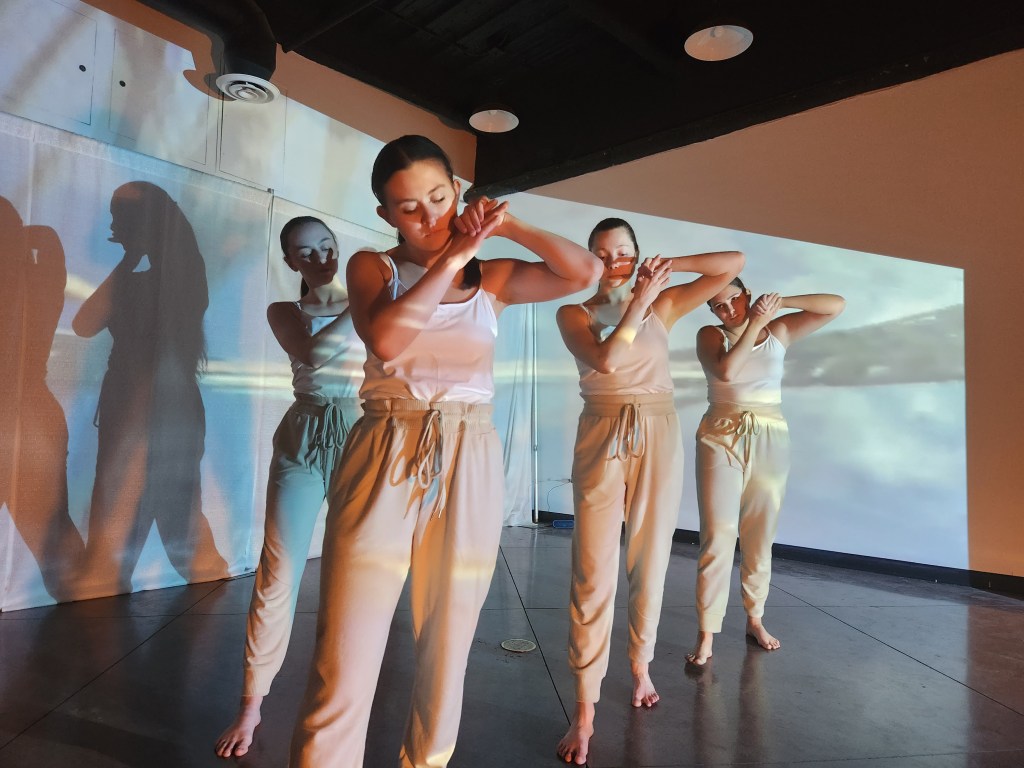
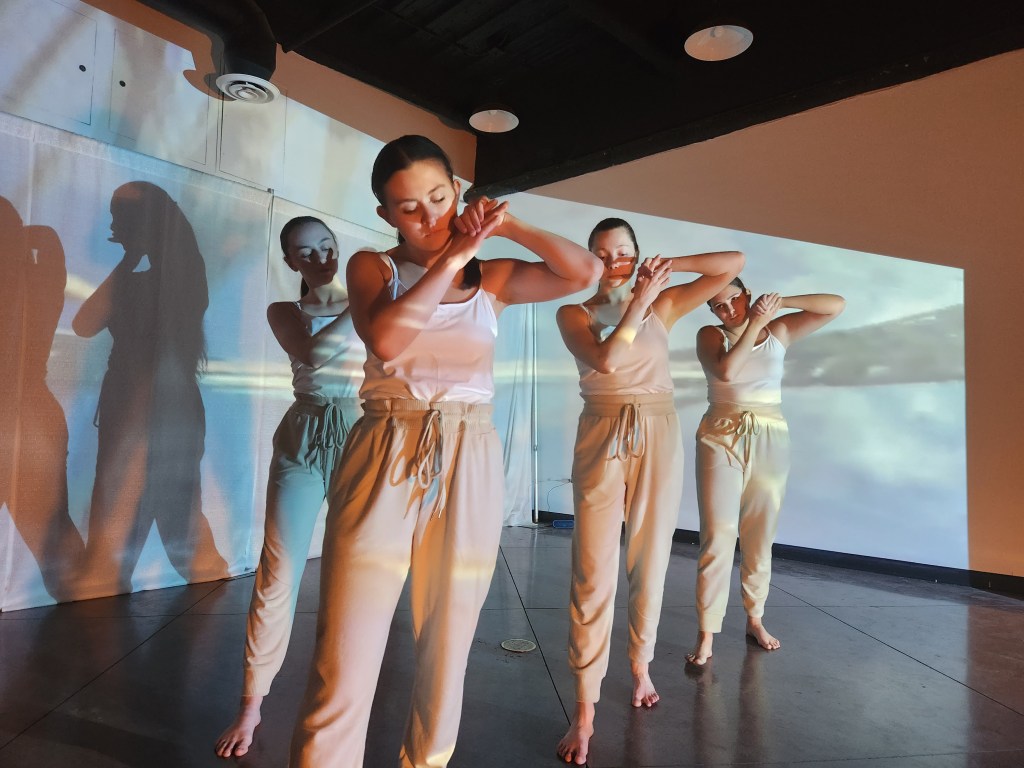
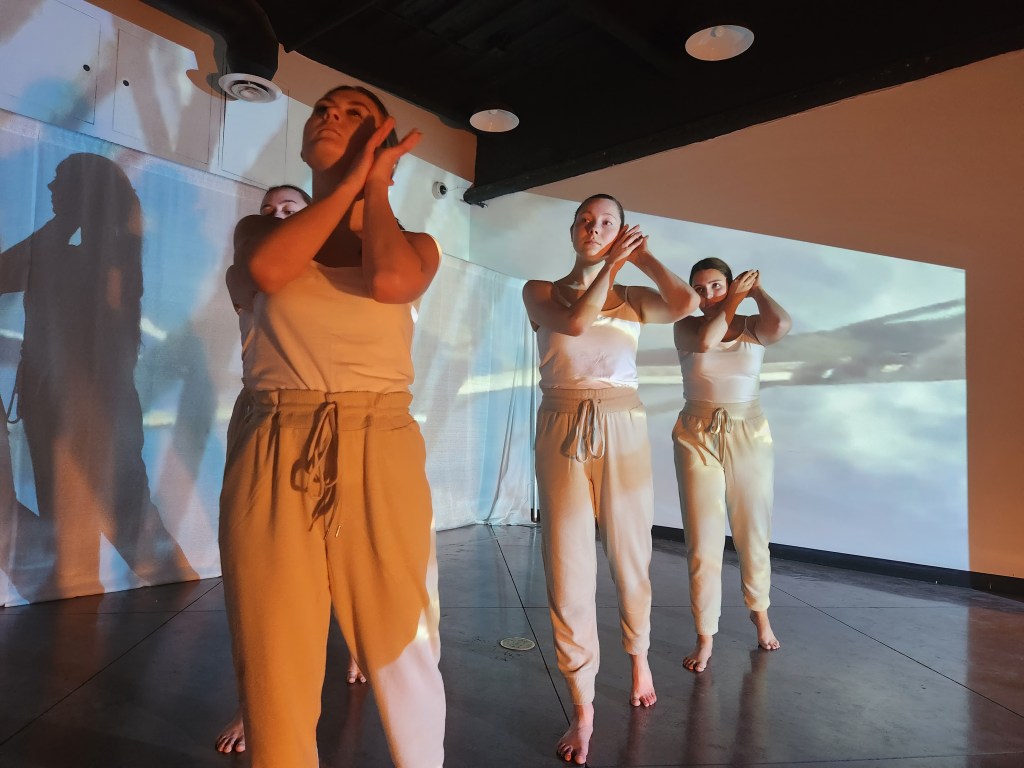
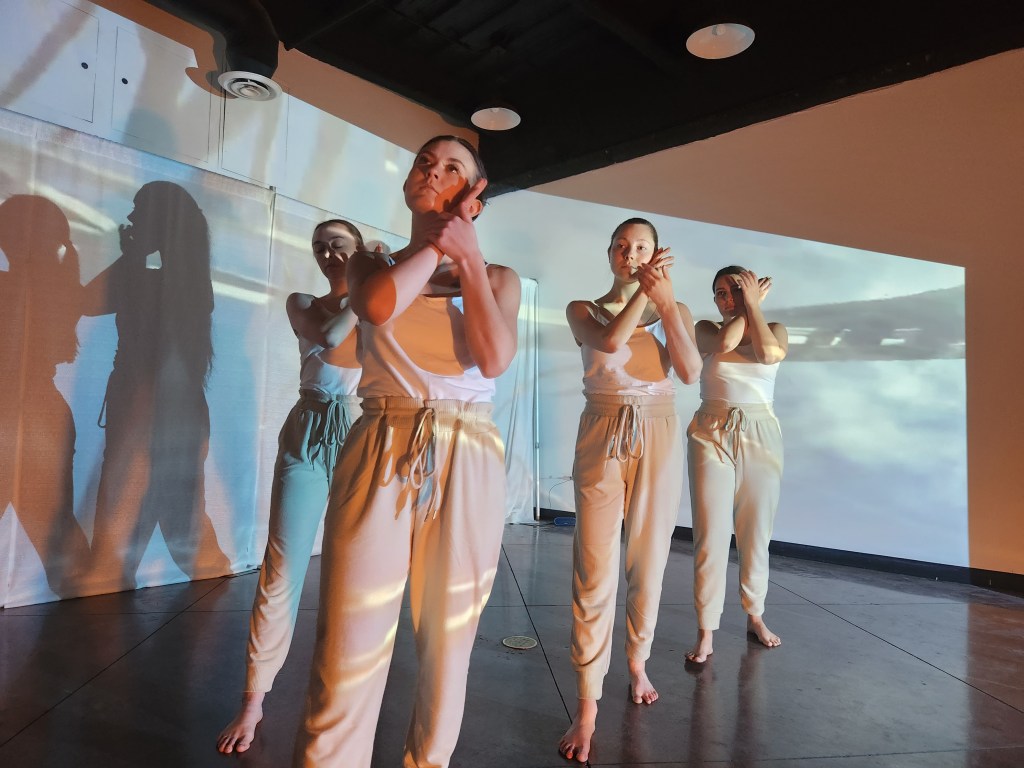
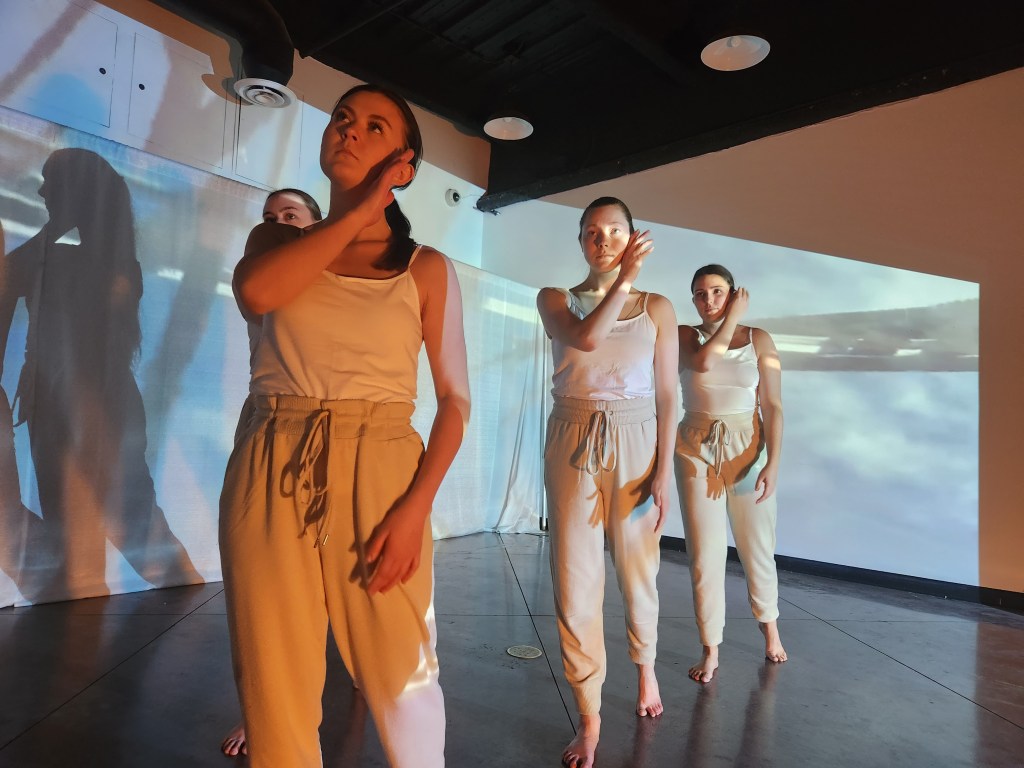
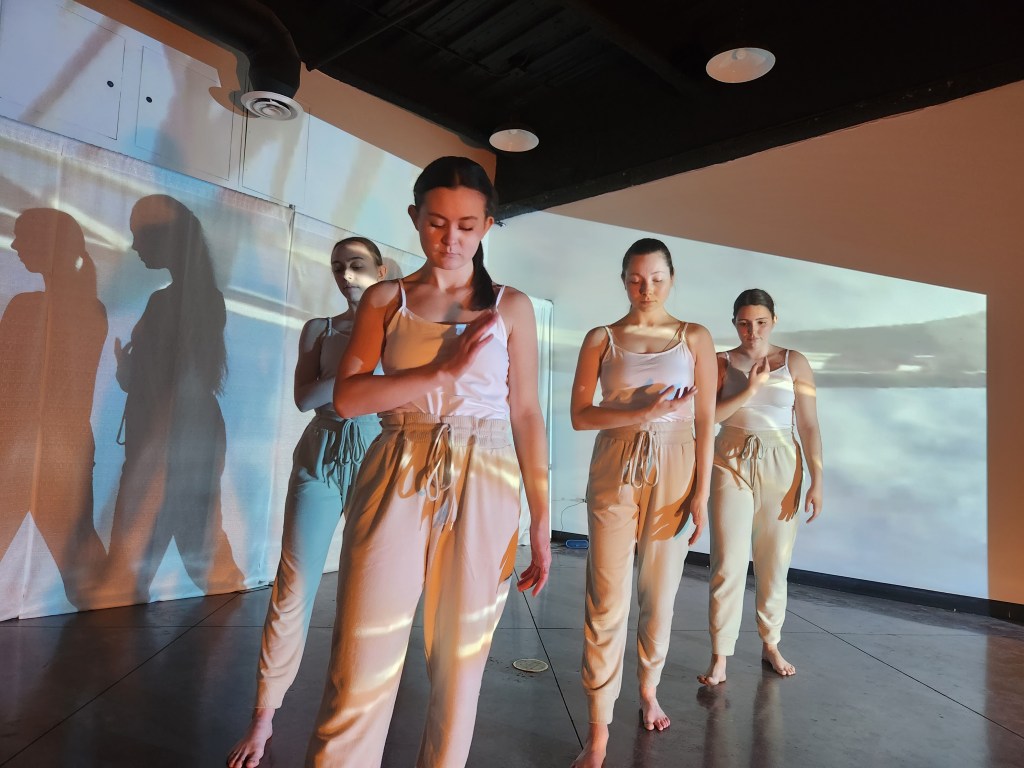
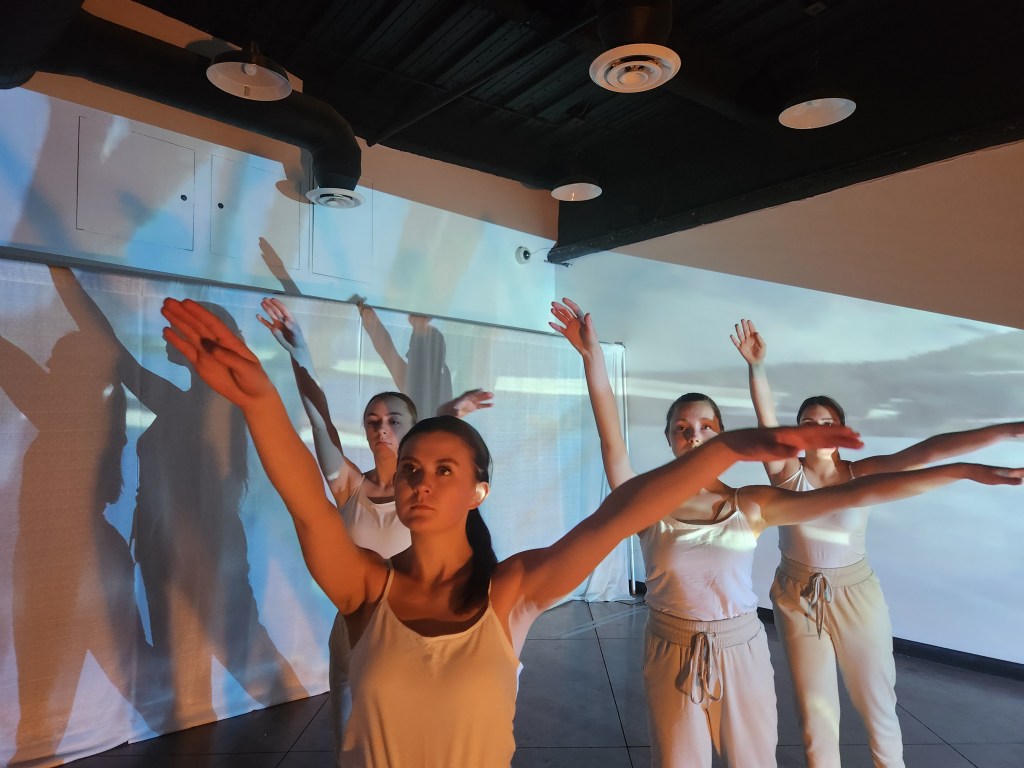
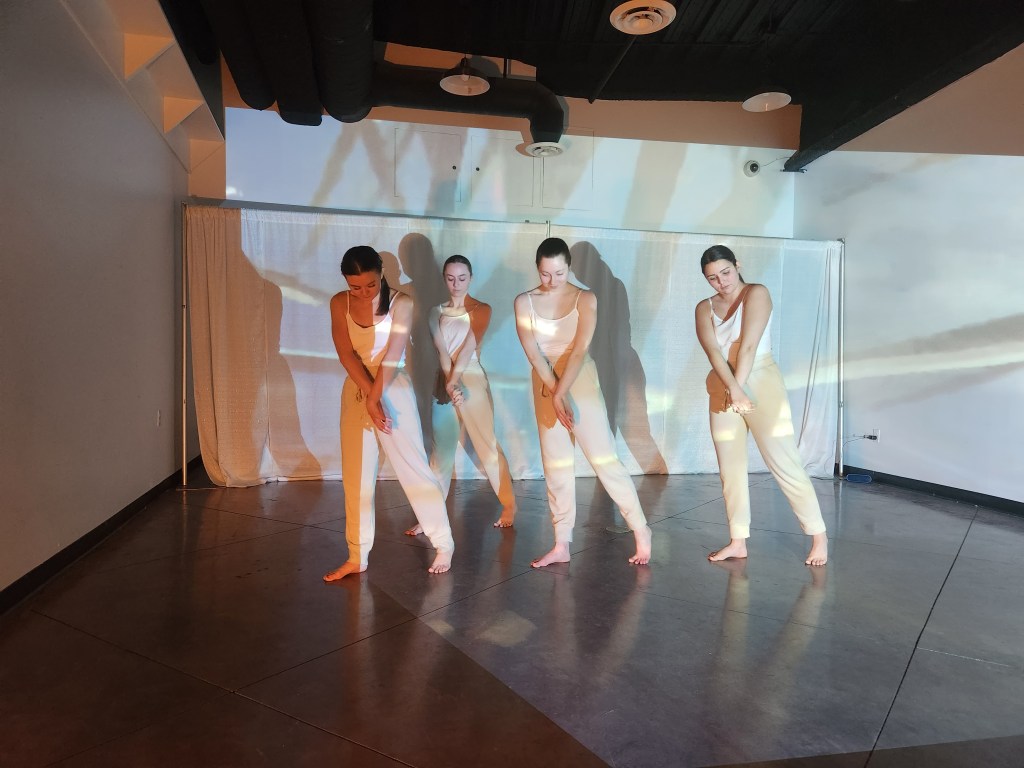
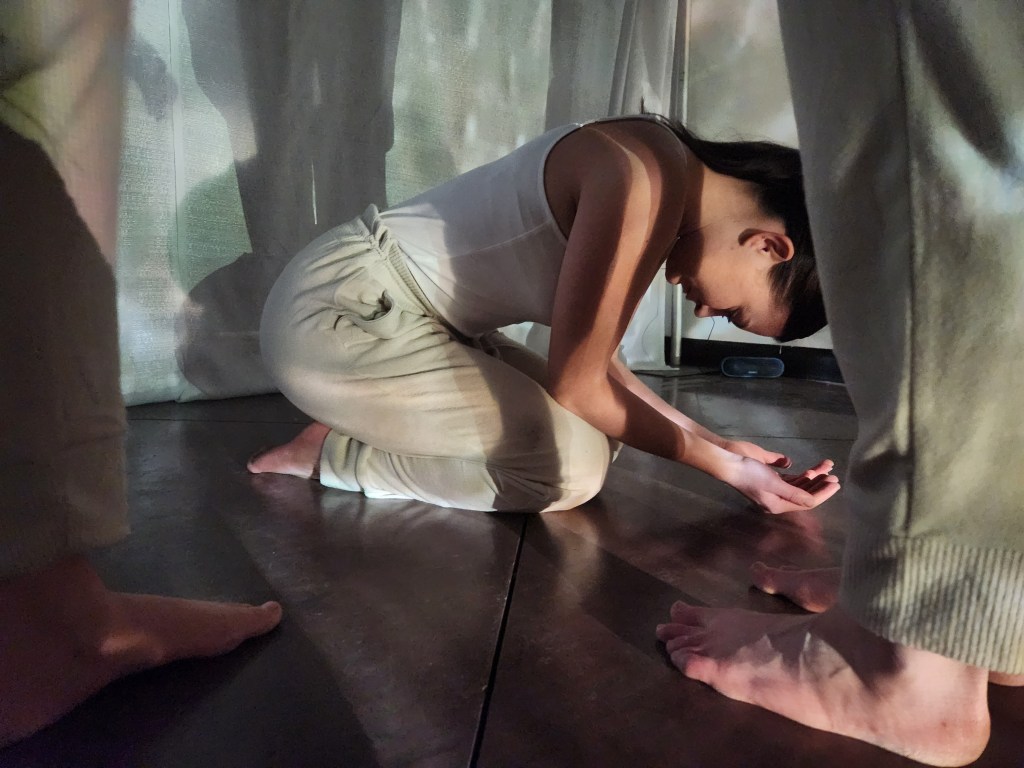
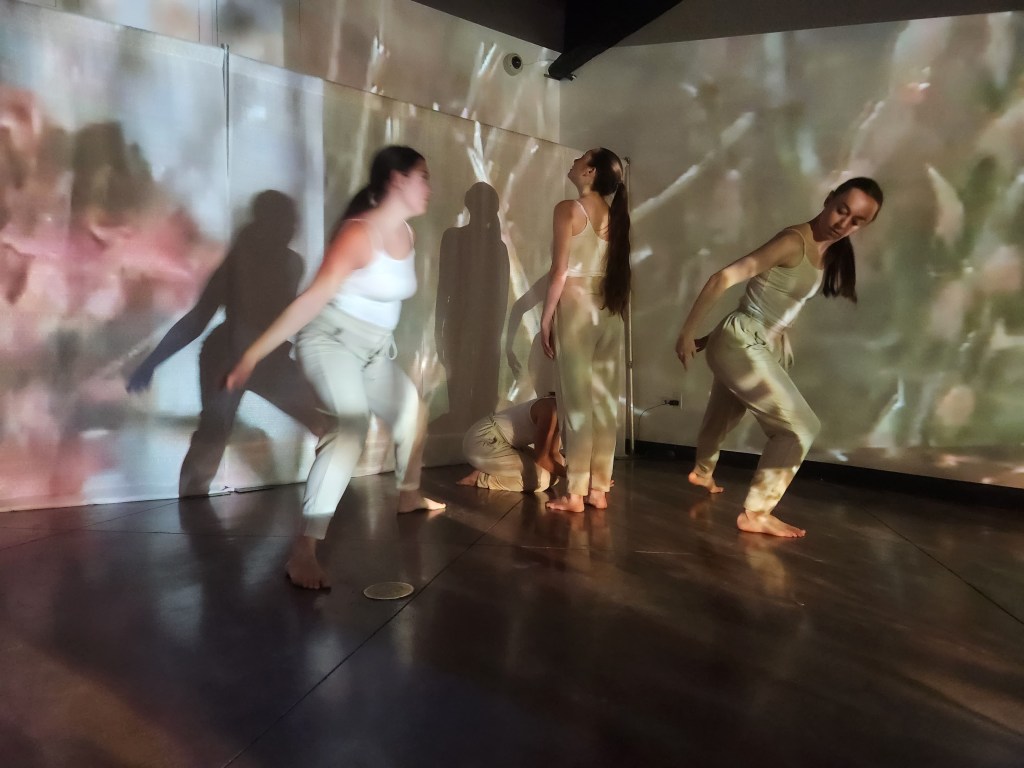
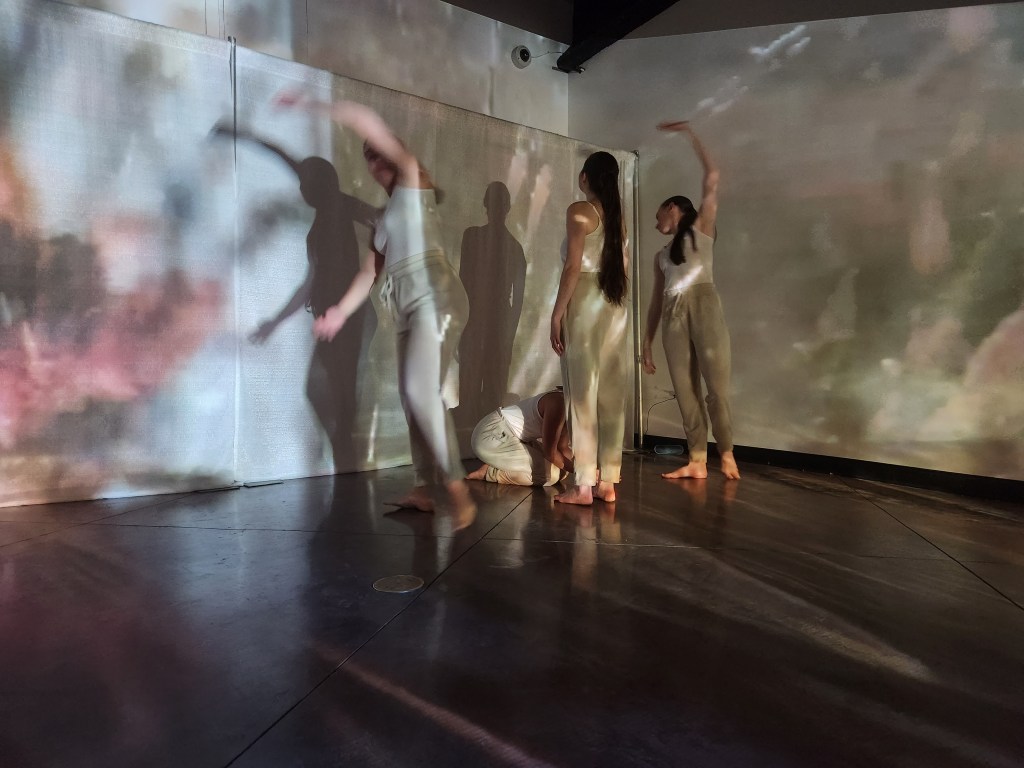
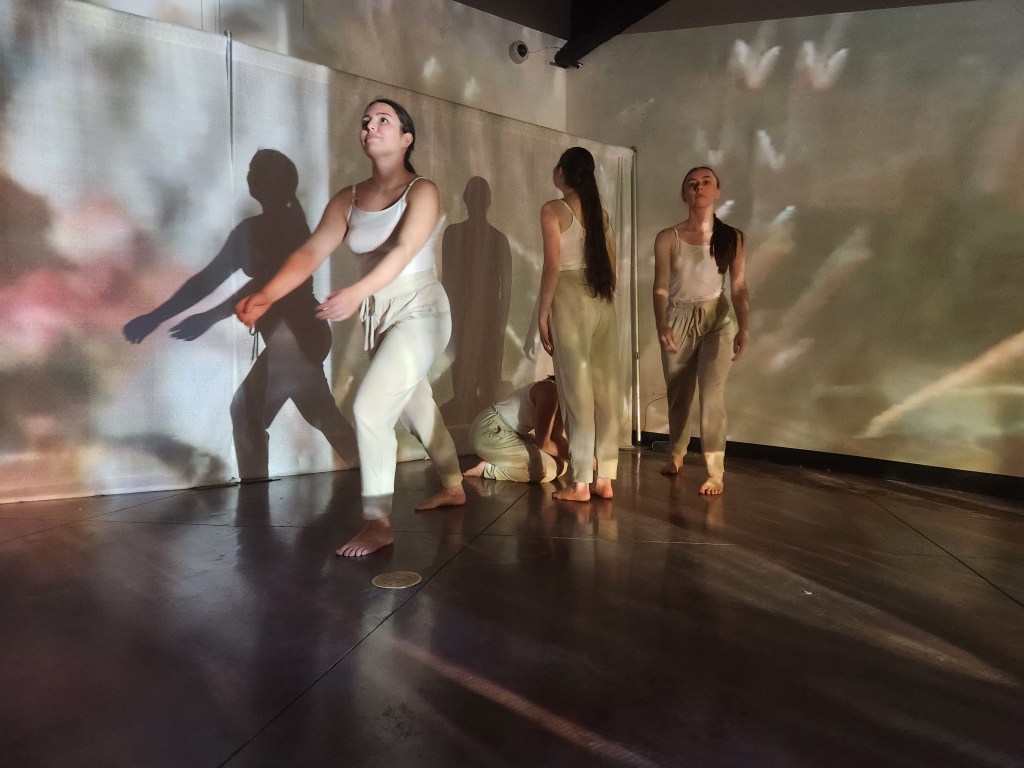
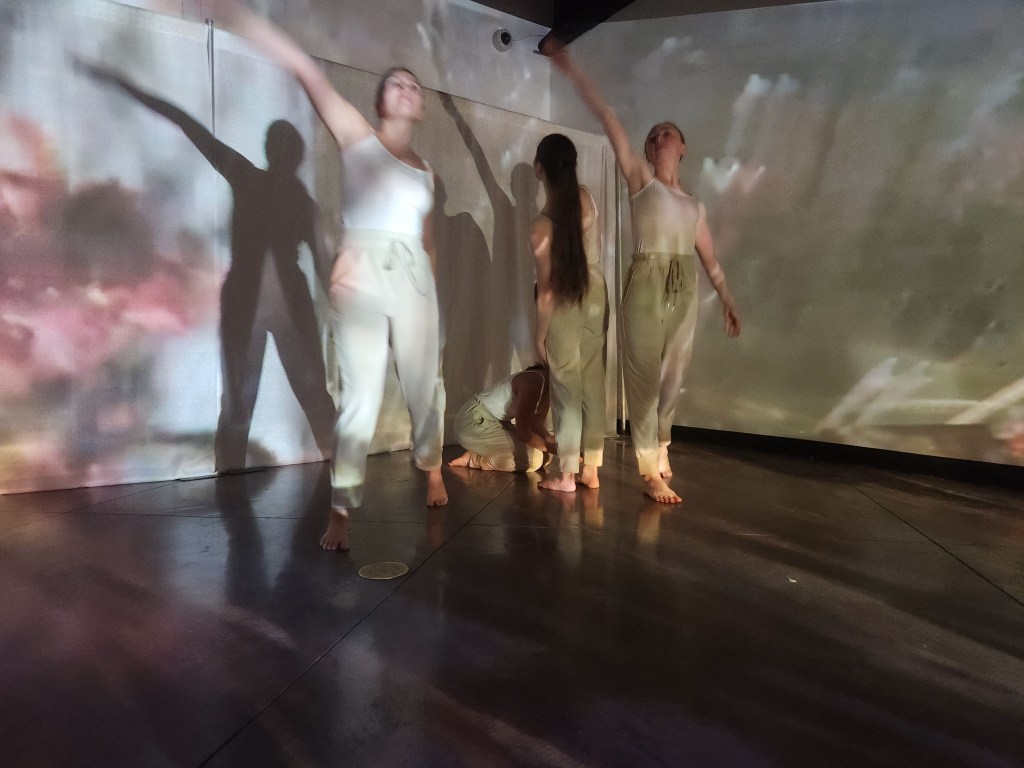
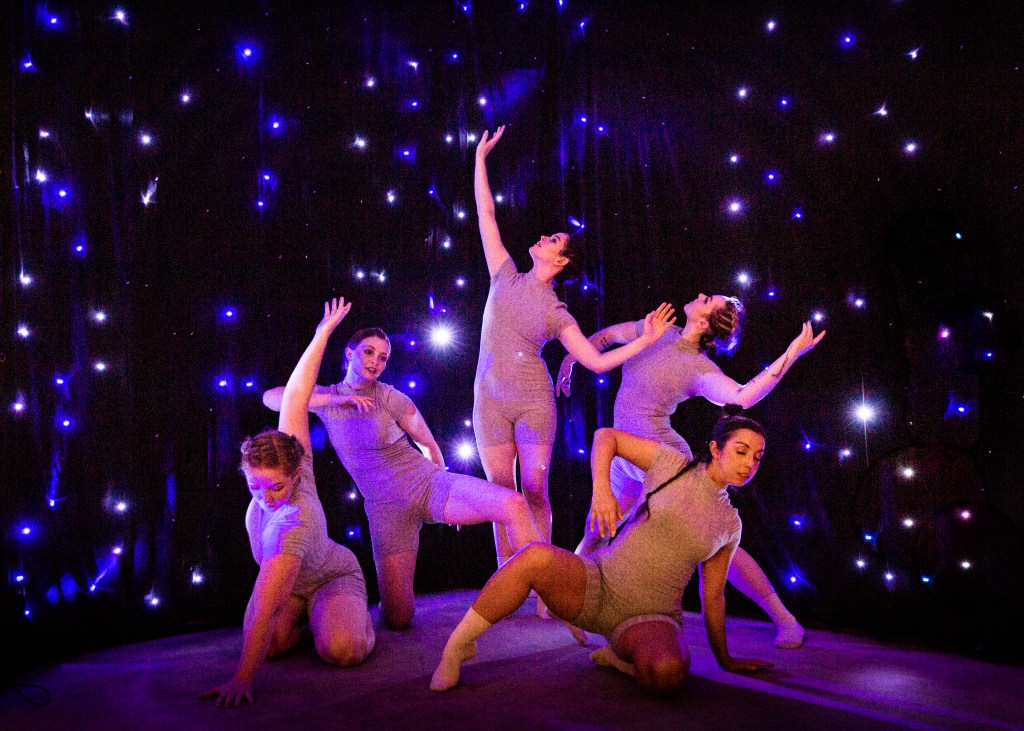
I had the opportunity recently to present a new work entitled “Returning Home” as part of the Illuminate Salt Lake Festival at the Salt Lake City Public Library.
Direction and Projection Design: Kara Komarnitsky Performance and Movement Generation: Elizabeth Chaillé, Seryna Rogers, Severin Sargent-Catterton, Rachel Miller Music: Seth Alexander, Michael Wall Technical Advice: Nickolas Komarnitsky
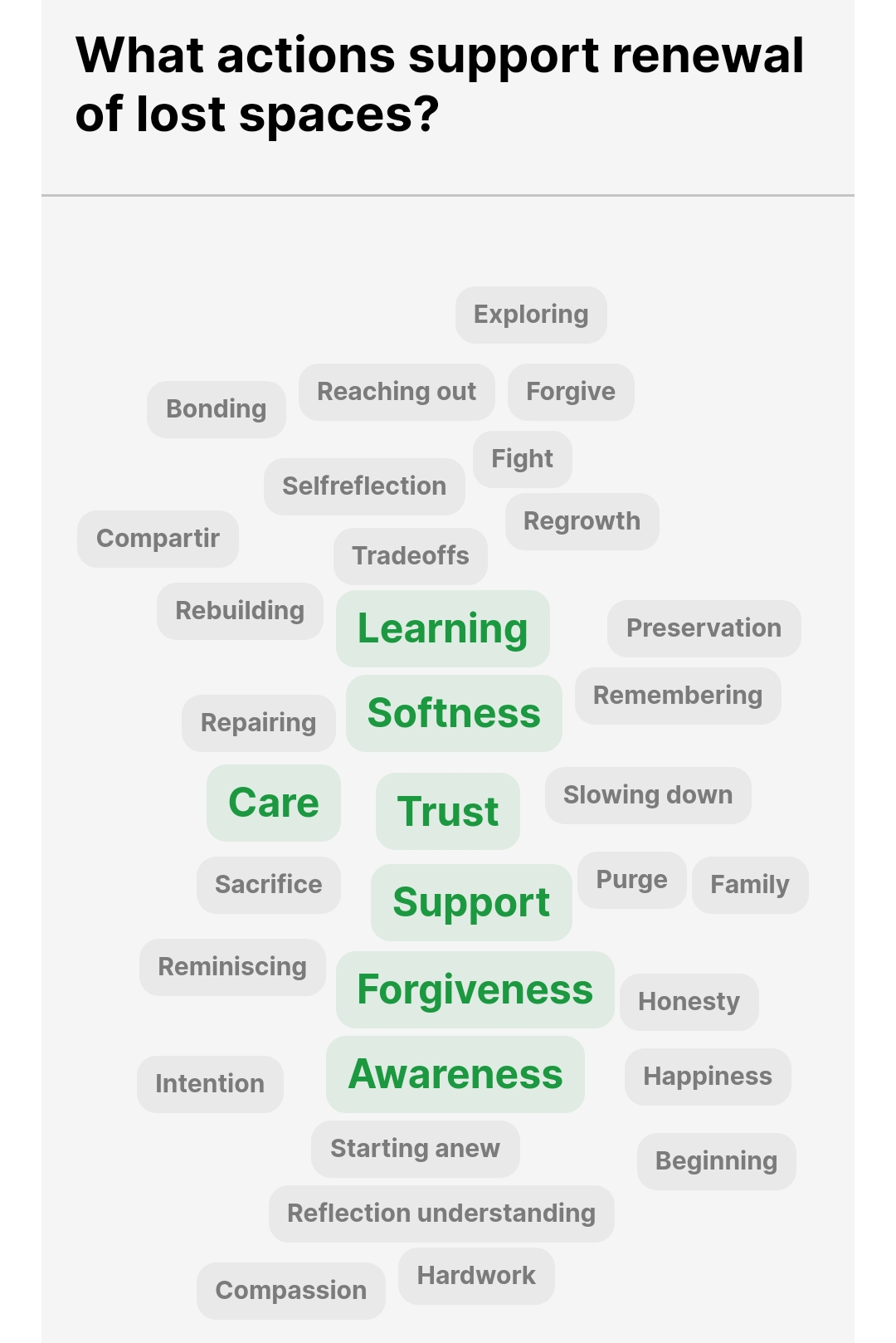
“Returning Home” is an intermedia performance piece that addresses the importance of the Great Salt Lake ecosystem to migratory birds. Projections transform the space into a reimagination of the wetlands to provide multiple perspectives on the diversity and richness of the ecosystem. Dancers weave through the projected environment telling a story of flight, struggle, rebirth, and adaptation through the lens of a migratory bird returning to its birthplace on the shores of the Great Salt Lake and finding it drastically altered. Audience members can contribute to the performance by responding to vital questions: What qualities define a home? What sensations arise in times of extreme change and loss? What actions support renewal of lost spaces? Their responses will be integrated into the projection environment in real time to offer moments of reciprocity and reflection.
In between the performances audiences could enjoy an interactive projection installation and learn more about the birds that depend on the Great Salt Lake.
The questions below were posed to the audience during the performances and an interactive website gathered their responses and incorporated their answers into the projections. The word maps below are the results of all three of our audiences.
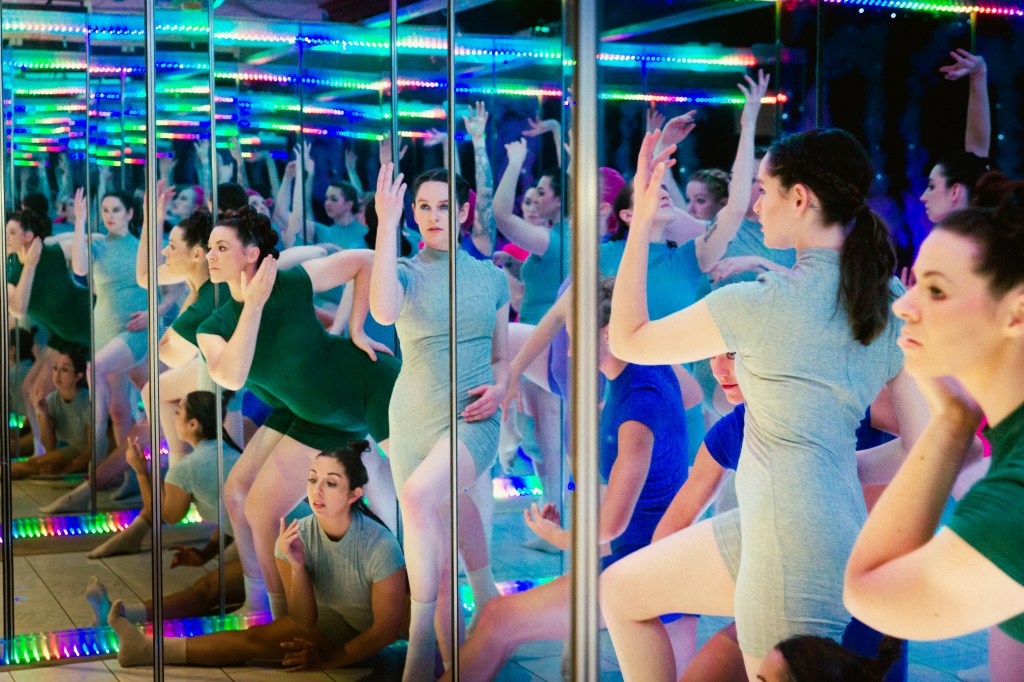
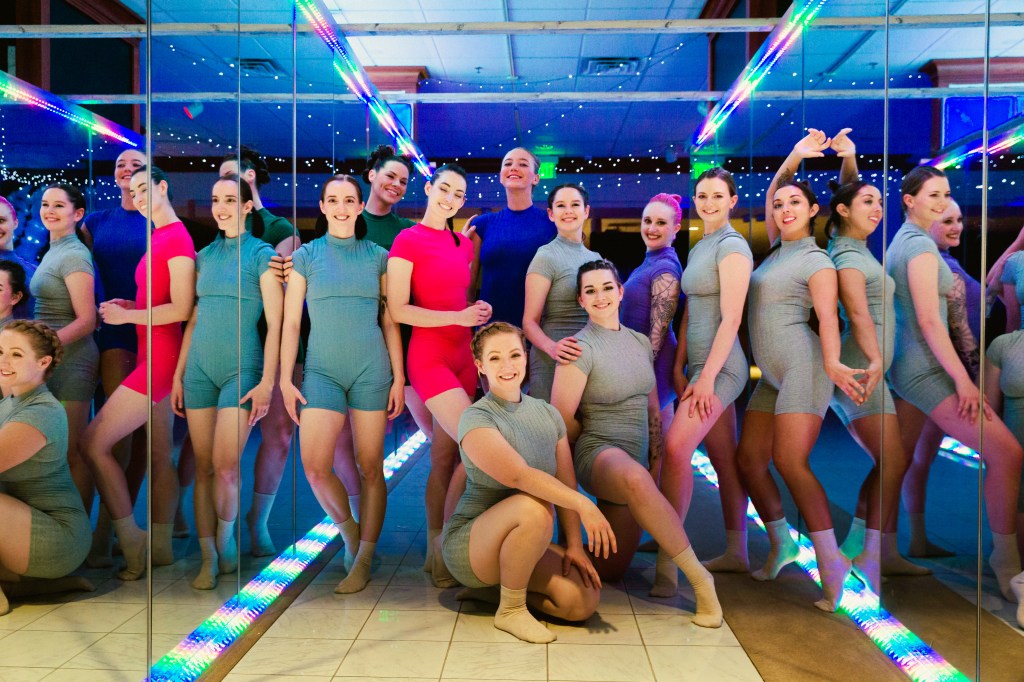
I was very excited to join Myriad Dance Company this summer for a performance at Dreamscapes in the South Towne Mall. Together we built an immersive experience for audiences to experience the unique space and be inspired.
I recently have had the chance to write reviews for loveDANCEmore and reflect on art experiences in Salt Lake. The full review for the performance of Traverse can be found here.
I was very honored to be a part of the Interdisciplinary Arts Collective performance of Vexations by Eric Satie. It was performed 8am July 1 to 10pm July 2, 2022 in the Sugar Space Arts Warehouse with Aaron D. Smith on the piano. I performed for a four hour and then two hour time period and genuinely found so much presence and peace in the repetition of sound and movement. This was an incredible extension of my experience with Vexations in the OSU Spring Concert in April but with the extension of performance time, I found a much deeper connection to how movement and sound define our sense of space.
Embodied Practices for Re-Imagining our Relationship with Nature
Project Overview
Intellectually understanding our physical interdependence with the environment around us is different from actually living in that understanding. Our ability to live differently in our relationship with the environment begins with imagining new ways of perceiving it. This research project developed three different practices for accessing our physical awareness of interconnection with the ecosystems around us and recognizing our relationships with ecosystems where we may not traditionally look for them. Through movement, presence, and intention, we may discover new ways of being and support for our human and non-human communities.
I began this research with the question: how can movement help individuals become more aware of their physical interconnectedness with the environment? Using my experience in dance, intermedia, and Yoga practices, I explored several modes of creative access to this question and collected feedback about the experiences to make them more accessible to diverse audiences. The three activities below are the results of my research and provide grounding experiences that can be listened to or experienced in and around your home or incorporated into your own practices. Each one guides your attention to the connections between your body and whatever ecosystem you are living in (with some focus on urban ecosystems) and provides the space to form a personal connection that may shape new perspectives and actions towards it.
Meditation
This meditation is intended to be listened to in an indoor space where you can be comfortable and relaxed. Before starting the video, please find somewhere to sit or lie down and support yourself with pillows, blankets, or other props as needed. You may want a journal or something to write on nearby.
Audio Walk
This audio walk is intended to be experienced during a walk around your neighborhood, it can be experienced elsewhere but know that it will start and end in the same place. Before starting the video, please collect what you may need to be outside for about thirty minutes and exit whatever building you may be in.
Yoga Asana Class
I designed this Yoga Asana class to focus on the values of interconnection and the Yama of asteya (non-stealing). It incorporates Yoga mythology and stories to illustrate the way that intentional action is connected to sustainability. You are welcome to use the lesson plan as a format for your own Yoga class if you are a teacher or incorporate the prompts into your personal Yoga practice. The class that resulted was taught in February 2022 but was not documented in order to allow the students to experience the class without distraction. An on-demand video of the class is also available to practice at home.
An additional creative practice that came out of this research was a physical grieving process that was necessary for me to be able to create these experiences. As much as it was healing to imagine new ways of being and develop physical practices for those ways of being, I also had to make space to grieve what we have already lost to human disturbance and the suffering that is still to come from climate change. This movement practice is what resulted when I came to terms with my own grief and found faith in the resilience of our planet. It will be showcased on May 5, 2022 in Hopkins Hall.
Supporting Literature
Cahill, Kate, et al. A Field Guide to Ilanding: Research Scores for Urban Ecologies. 53rd State Press, 2017. (link: http://www.ilandart.org/ )
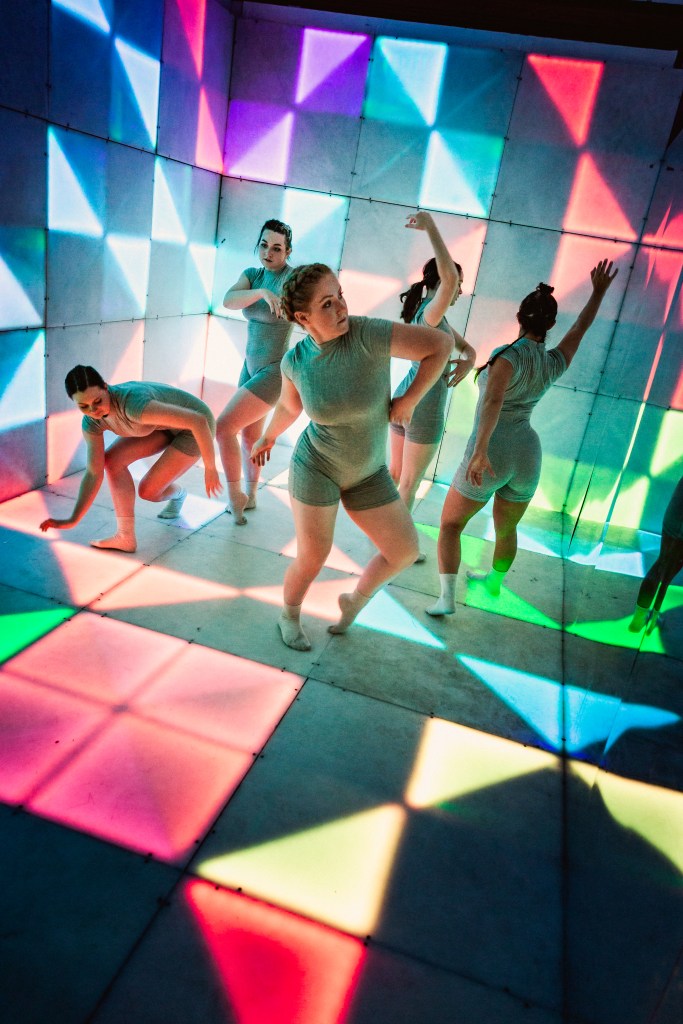
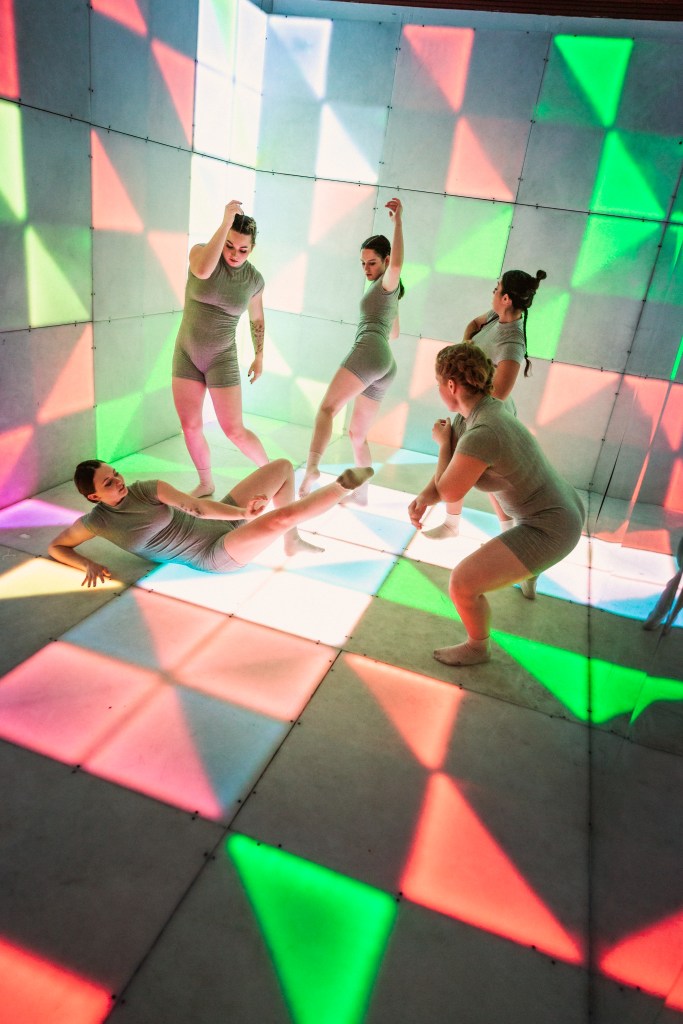
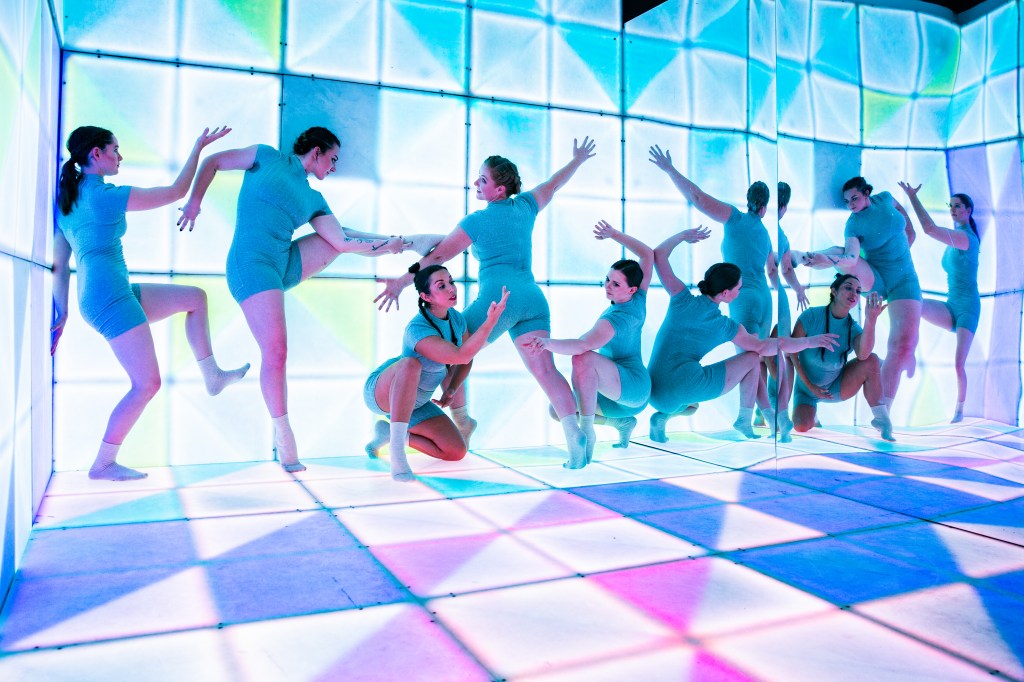
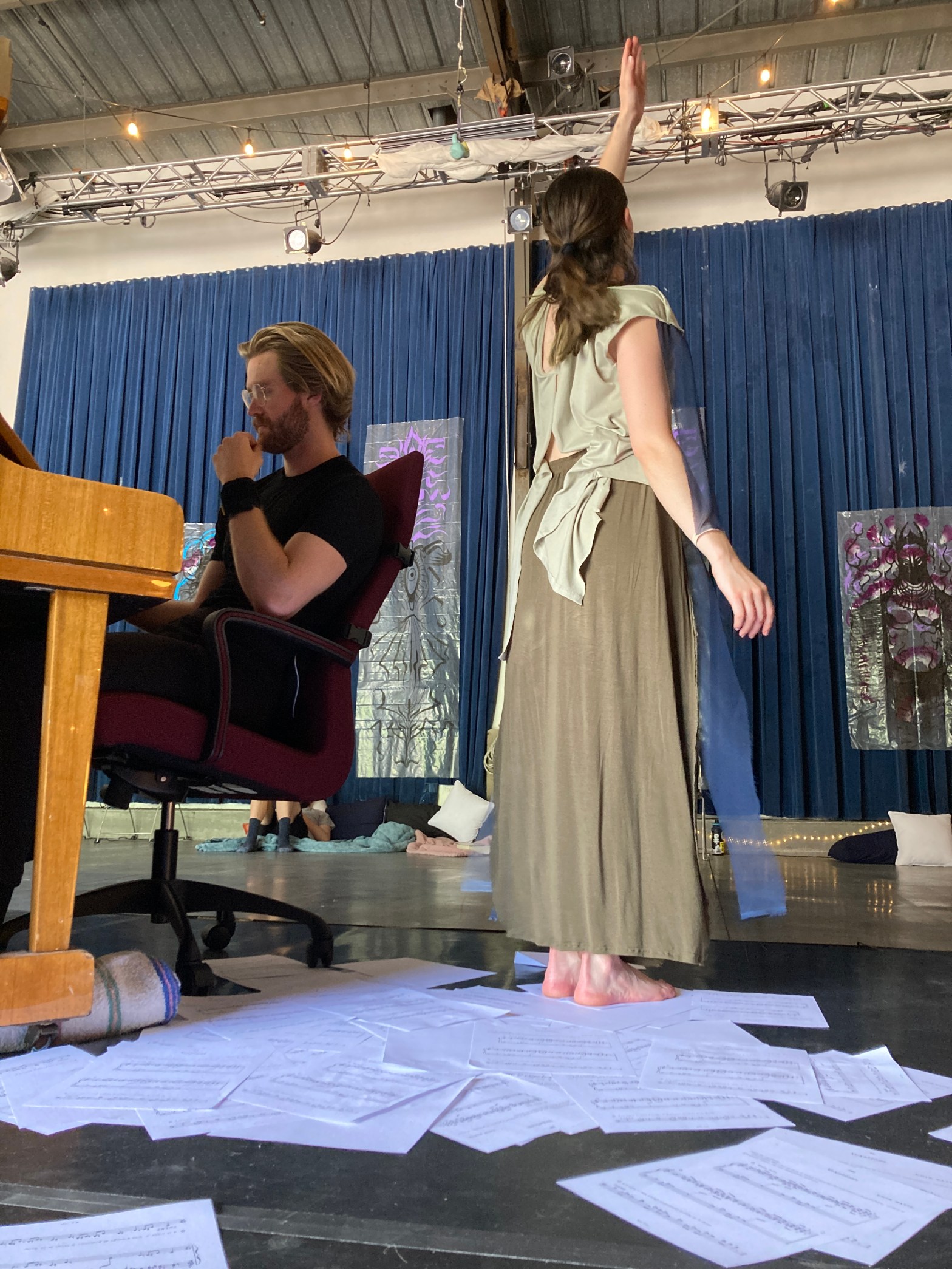
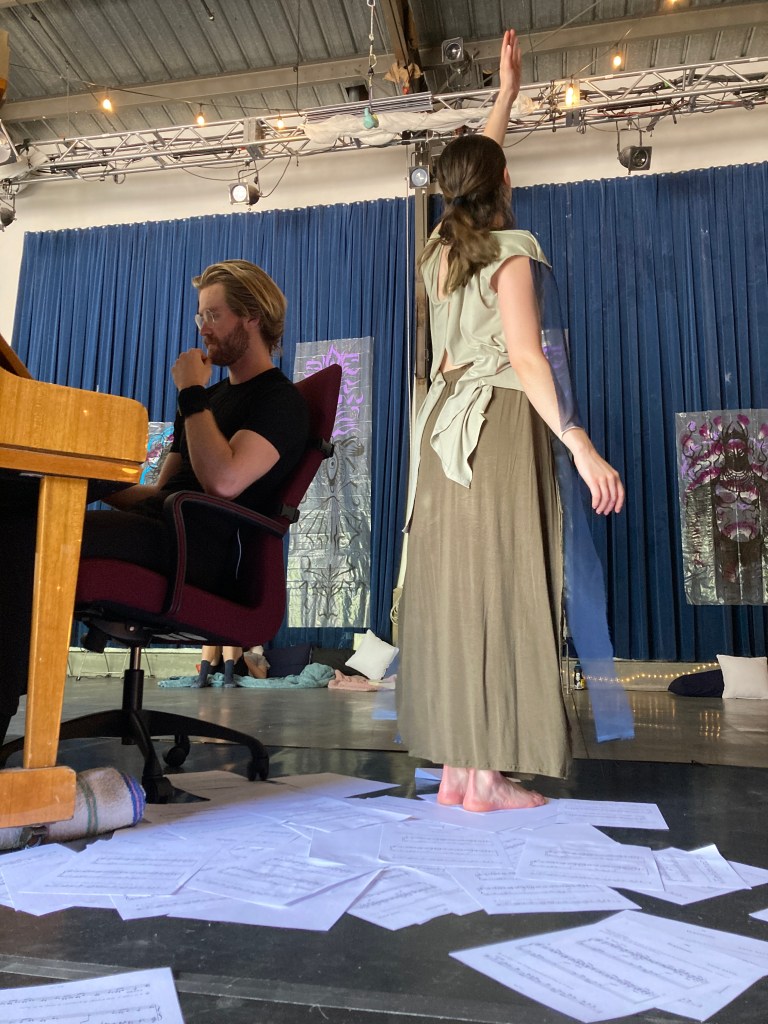
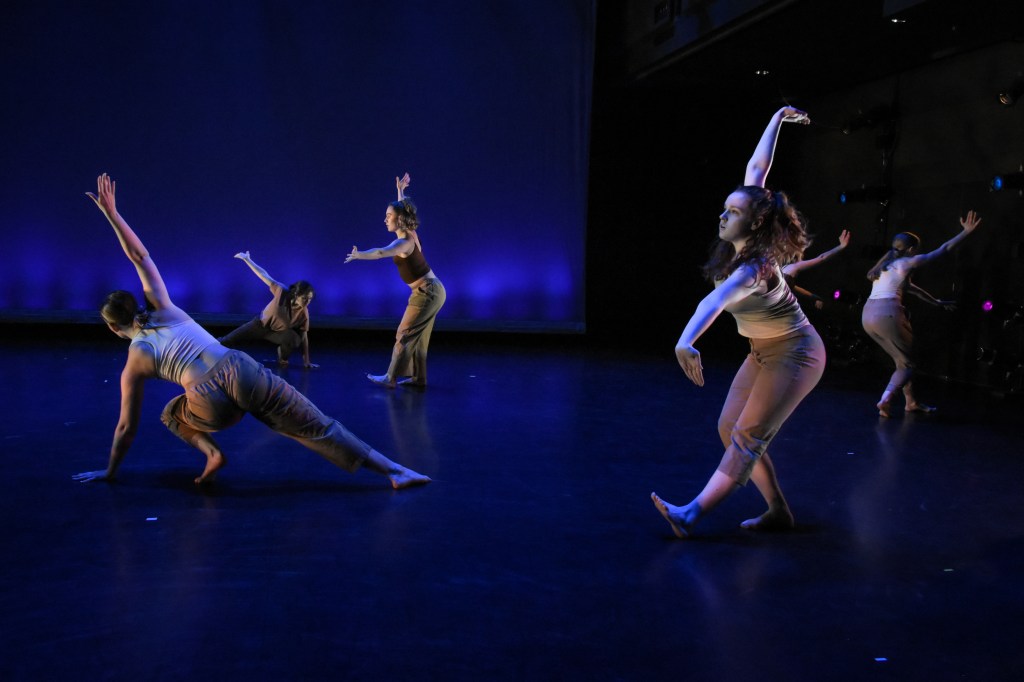
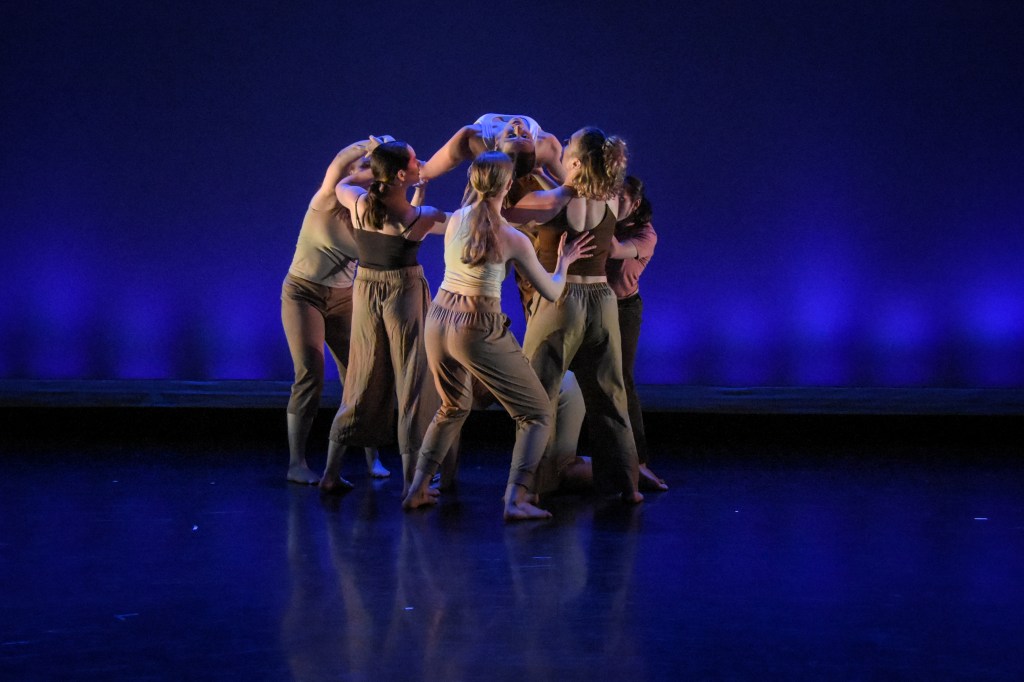
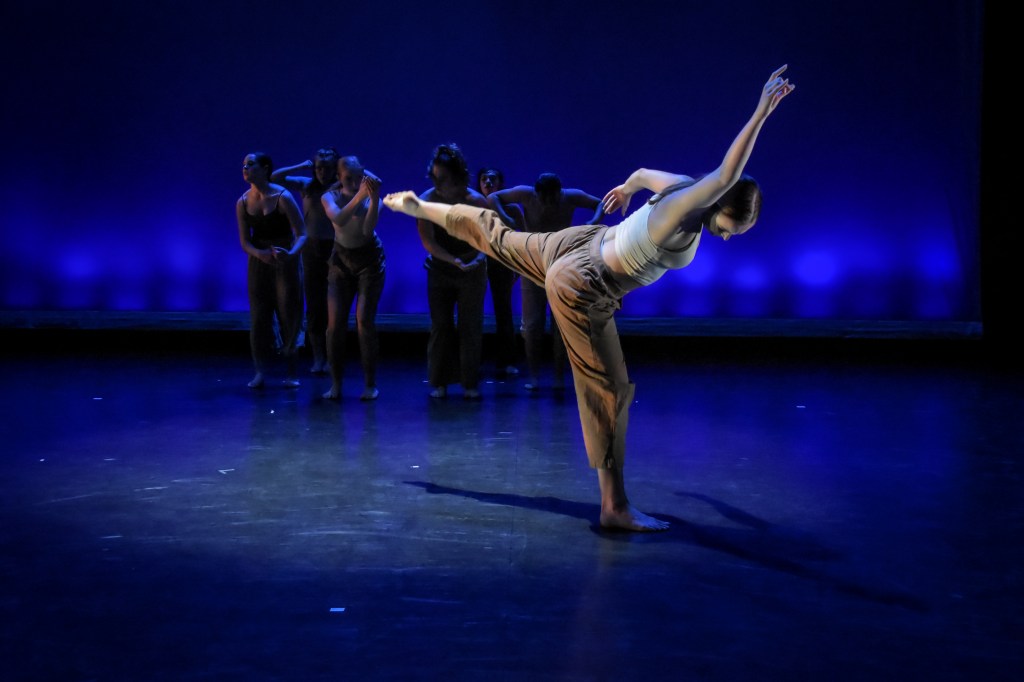
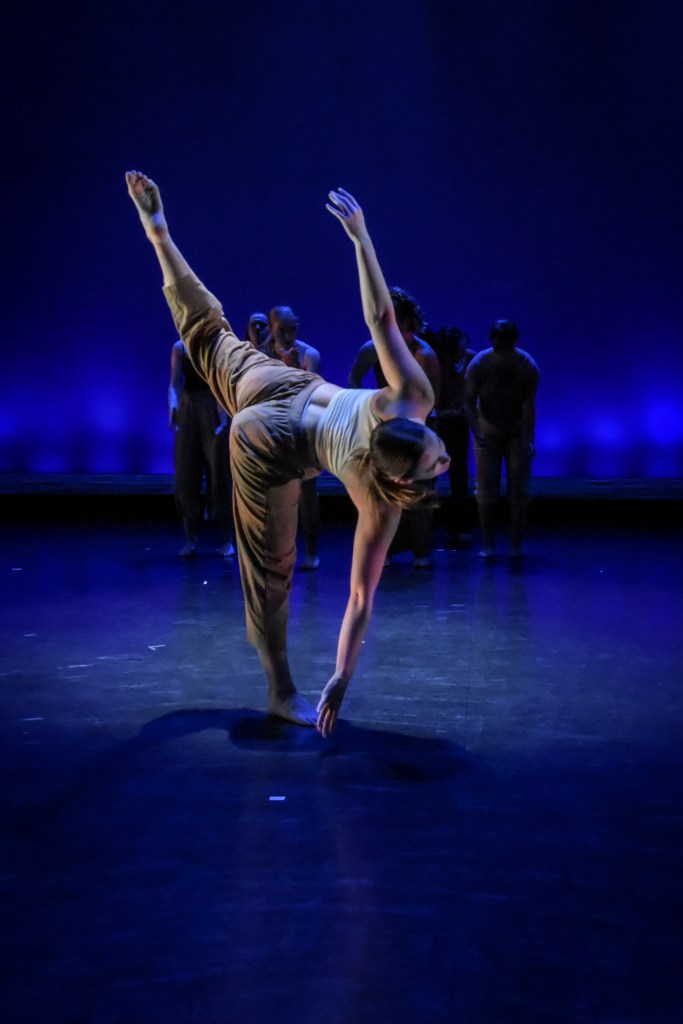
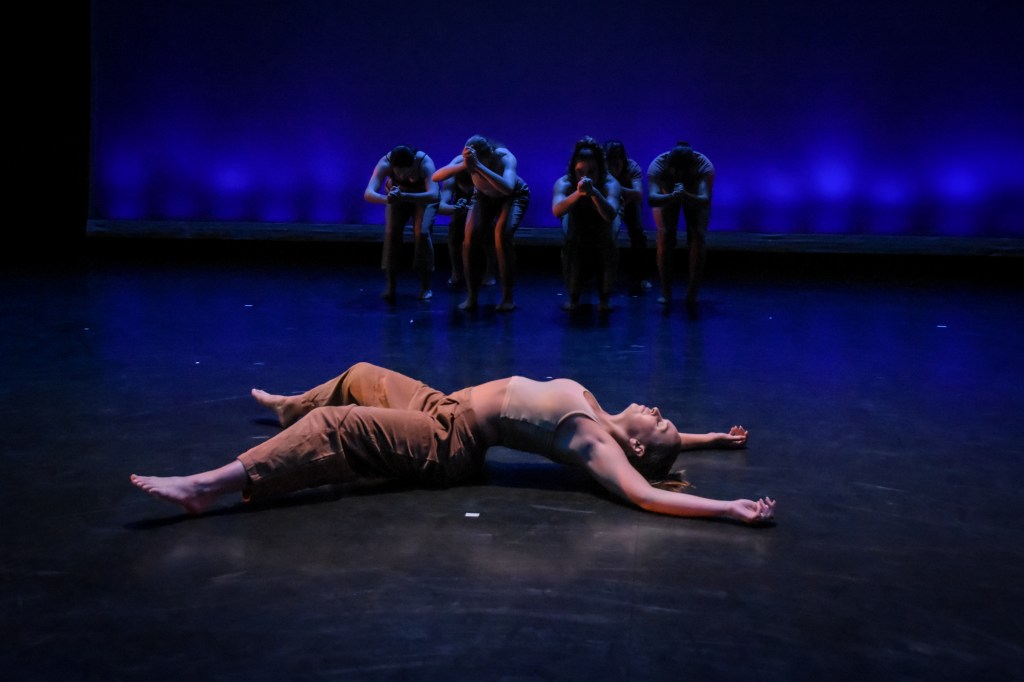
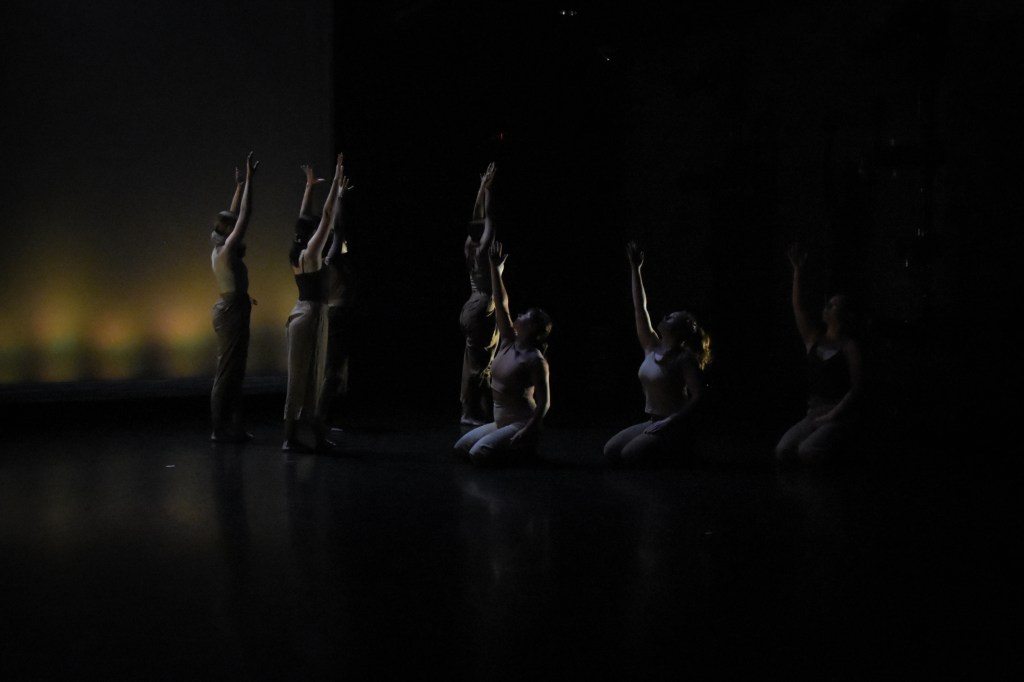
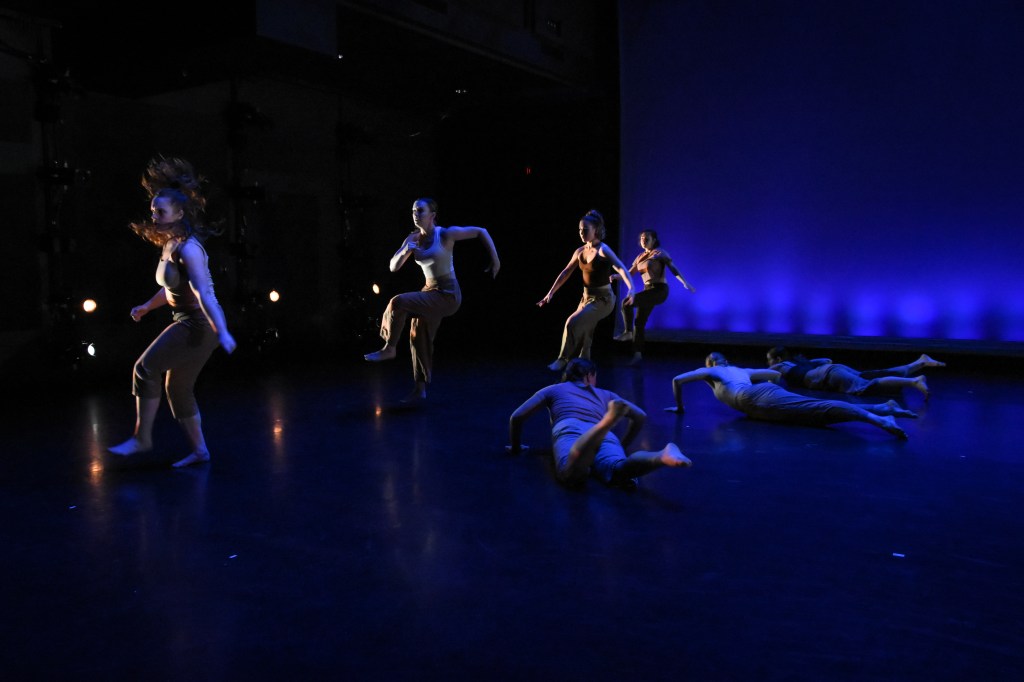
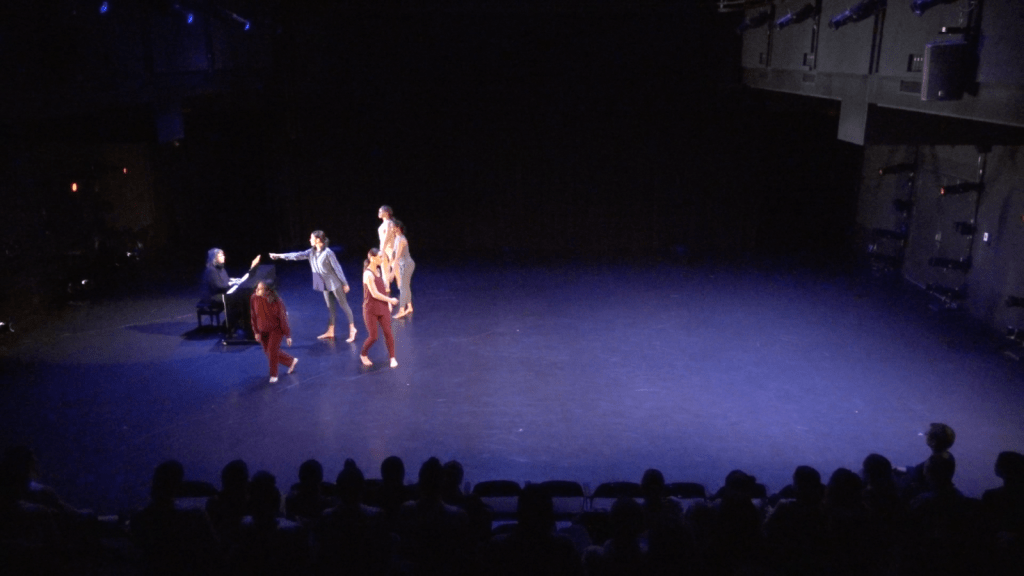
I had the amazing opportunity this semester to work with Israeli artist Alon Karniel. The process involved a lot of conversation, improvisation, and connection to our live pianist Susan Chess. It was closely related to the Feldenkrais classes that he taught each morning and developed a deep sense of how the body is all connected.
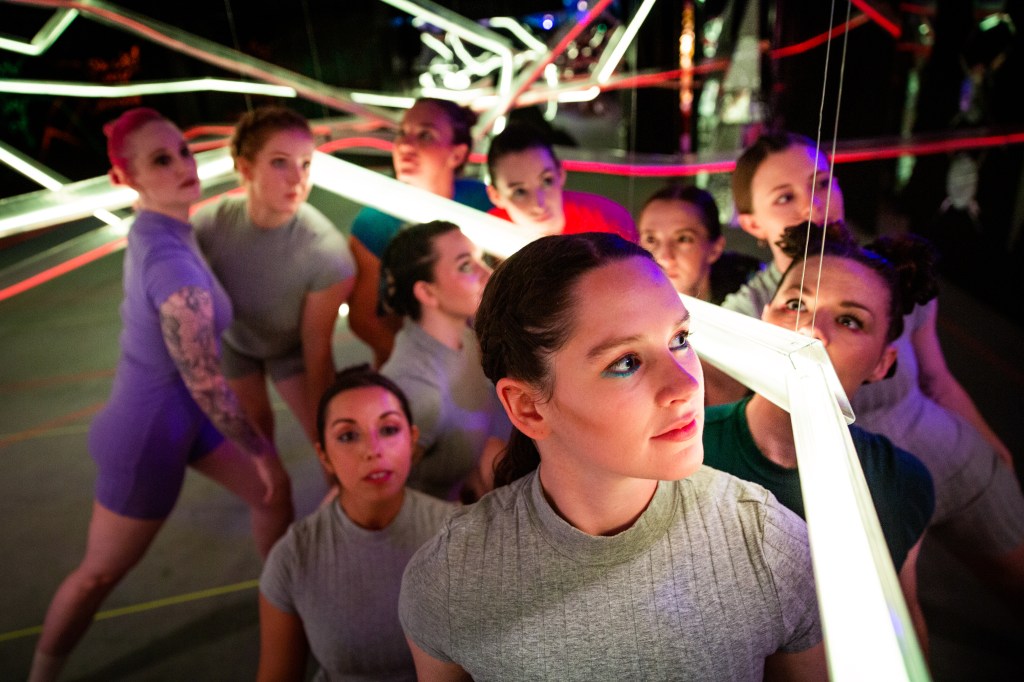
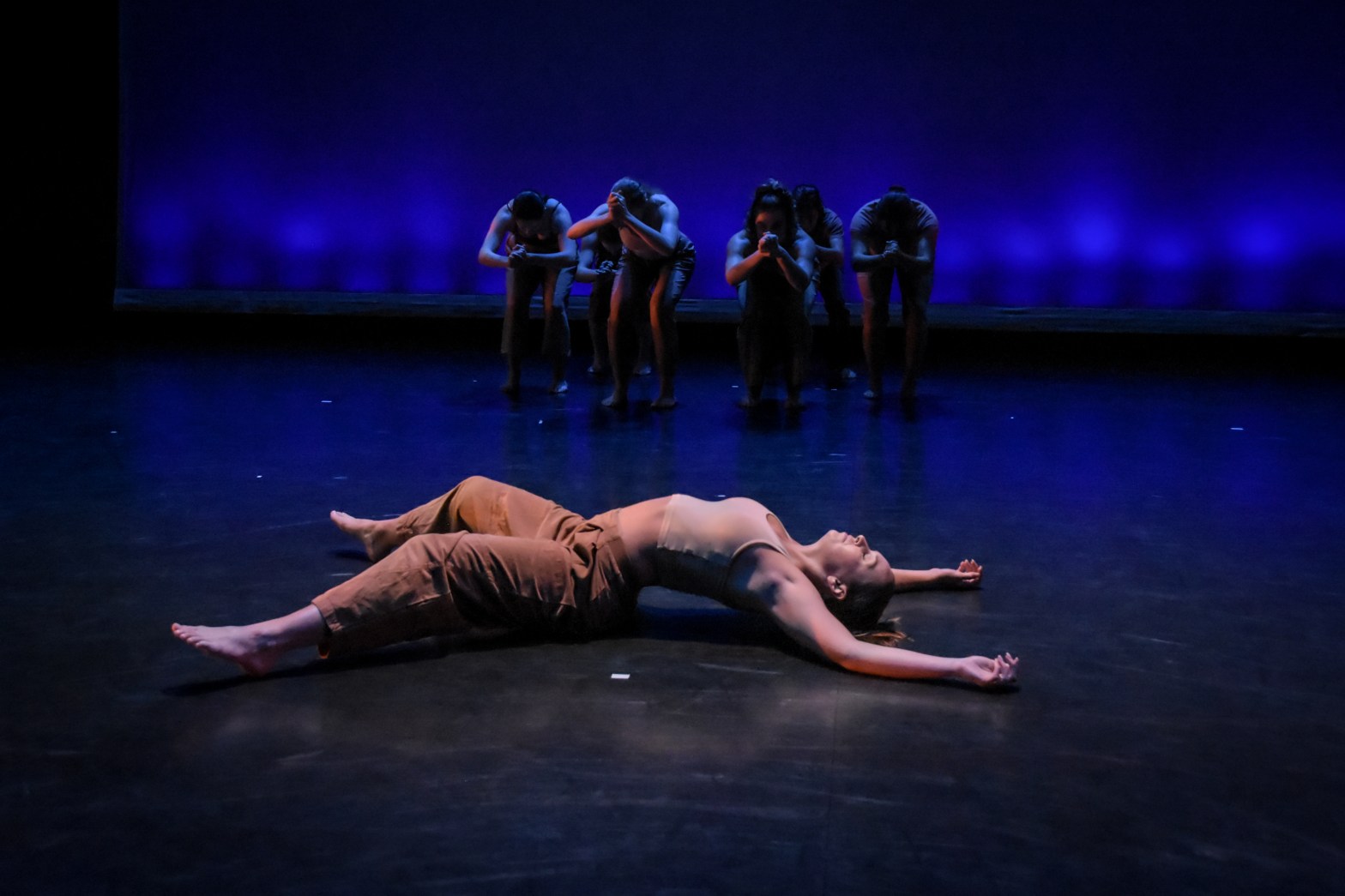
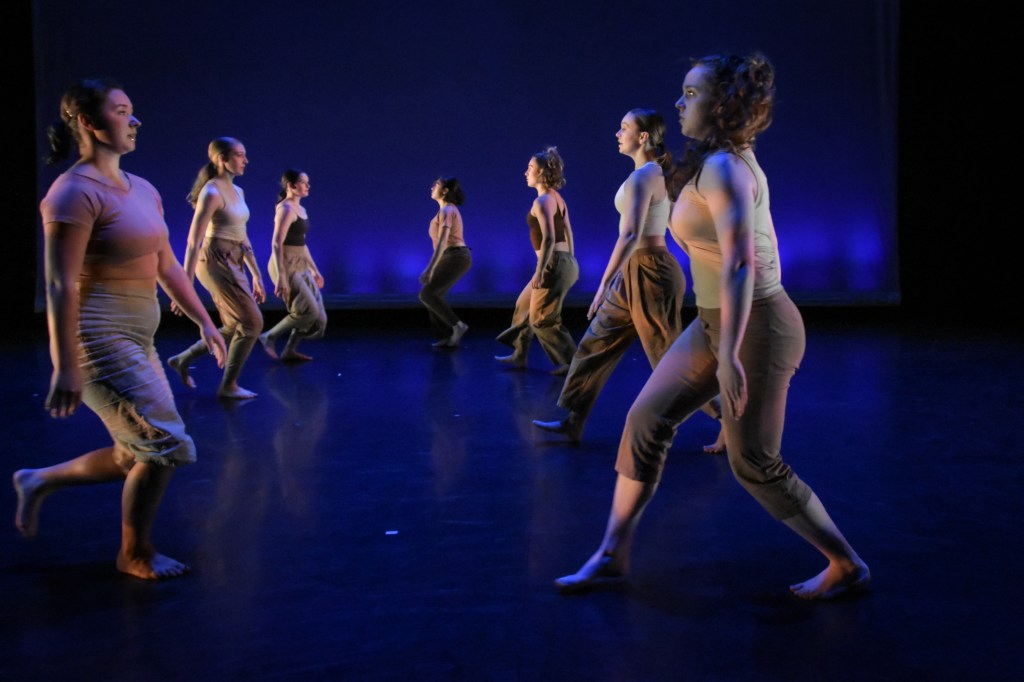
Performance and Movement Generation: Sydney Lettau, Allison Smith, Vivian Corey, Madeline Denman, Heather Lyu, Rosely Polanco, Ava Raczkowski, Emma Carver
Music: Michael Wall, Seth Alexander, Hotel Neon
Advisors: Norah Zuniga-Shaw, Alex Oliszewski
Lighting Design: Oded Huberman
Production Support: Katie O’Loughlin
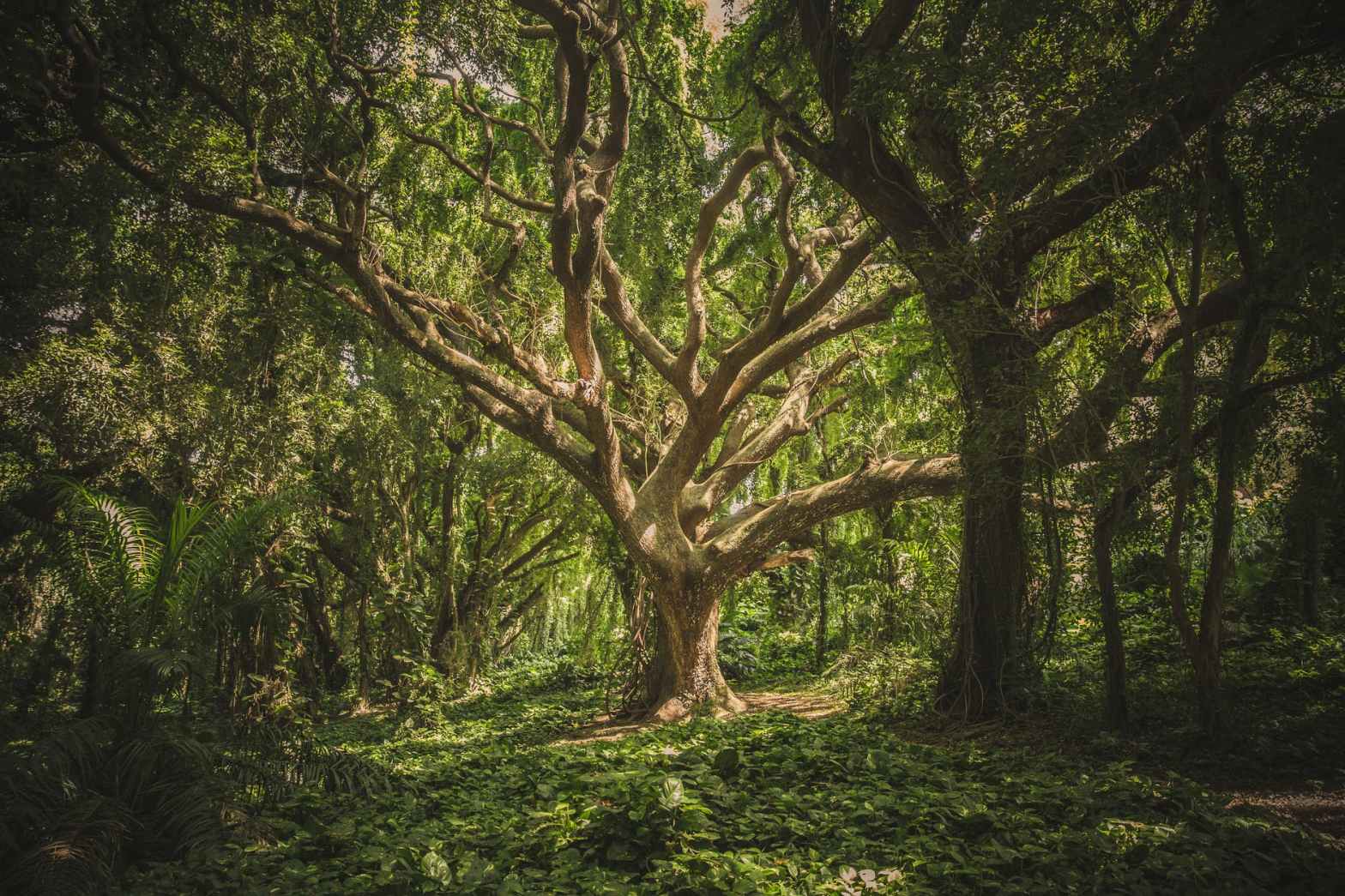
Note: This performance will guide you through three ecosystems, following the pathway that water flows from the mountains into the ocean. The text that you hear will invite you to move around the space and find different perspectives from which to experience these ecosystems, and yourself within them. The boundaries between our bodies and our environment are more permeable than we imagine.
Acknowledgements
I have to first thank my parents for supporting my college endeavors and always believing in what I wanted to create, even if they didn’t understand it.
I want to thank my primary advisor, Norah Zuniga-Shaw for helping me break out of my comfort zone and giving me language for recognizing the unknown. Thank you for guiding me through the longest process I have ever engaged in and providing the space I needed to let go of things that were holding me back. My secondary advisor, Alex Oliszewski, was a fantastic resource on audience interaction and technology. Oded Huberman spent hours with me in the Motion Lab problem solving Isadora and without him there would be no projections or cameras or music. Thank you, Oded, for always saying “yes” to my crazy ideas and putting in the hours to figure them out. I want to thank Katie O’Loughlin for always letting me bounce ideas off of her and giving me space to work out my thoughts before entering the space. Lastly, I want to thank my dancers for their time and honest engagement with this work. Their creativity and commitment to the ideas that I offered them built the movement for this entire piece and gave it the heart that it deserved.
I have to thank the College of Arts and Sciences Undergraduate Research Scholarship for providing the funding that made this project possible.
I also want to acknowledge the Indigenous tribes that historically stewarded the land that we visited and created the dance on. These include the Seminole, Tequesta, Miccosukee, Cherokee, Tutelo, Erie, Hopewell, Shawnee, Myaamia, Kaskaskia, Yuchi, and Moneton tribes. Their historical and contemporary relationships with the land is vital to recognize as we move forward. Whatever ethos we create to realign our relationship with the environment must center their voices if it is to succeed.











 Kara Komarnitsky