Findings and Movement Development
The week after our site visits was the start of the semester so we began rehearsals in separate groups for each ecosystem (for logistical purposes). Keeping with my interest in how the dancers’ bodies responded to the ecosystem, we started with reflections on the site visit, revisiting of our notes (as well as describing the experience to the three dancers that weren’t able to travel with us), and improvisation to respond to the site visit. To keep the improvisation grounded in our experience with the ecosystem, I encouraged the dancers to reference their notes and move from those memories, or, for the dancers that weren’t able to accompany us, to respond to keywords used by those who did visit the site. After about 40 minutes of improvisation, we came together and collected descriptive words, images that came up, and movement motifs that arose as well as ideas/qualities that felt important to keeping the integrity of our experiences alive. This duration was meant to provide time to explore different motifs, deepen explorations, and move outside of habits.
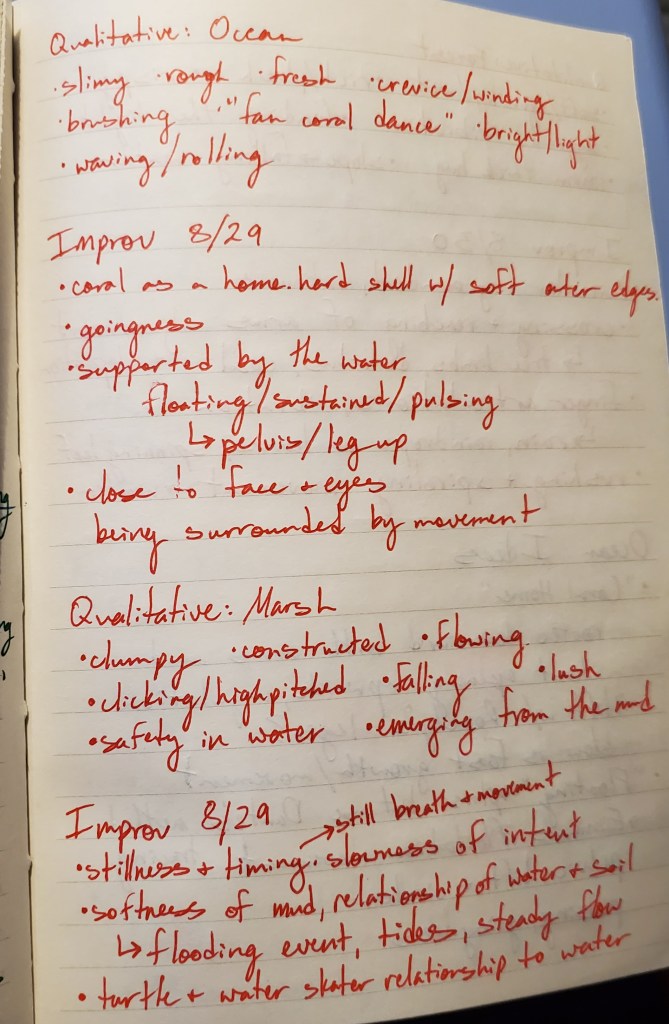
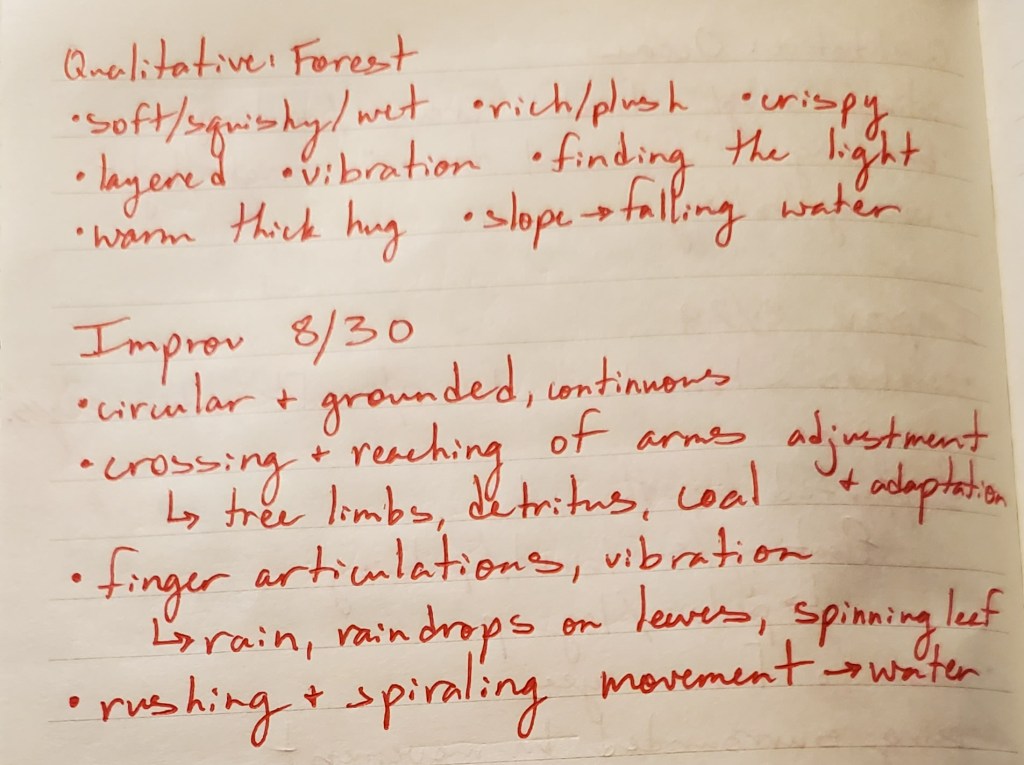
I later went through the footage that was taken of the improvisation and identified motifs that we had discussed and that connected to our conversations about our relationships to the ecosystems.
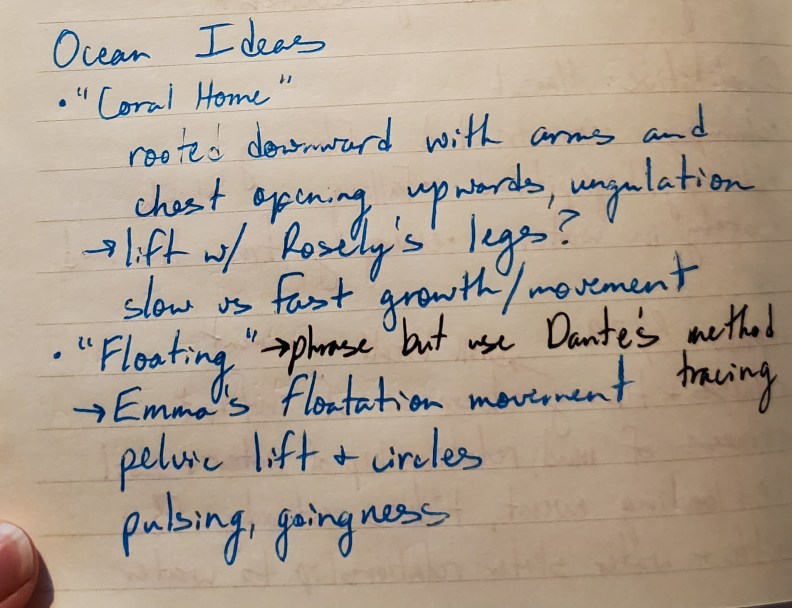
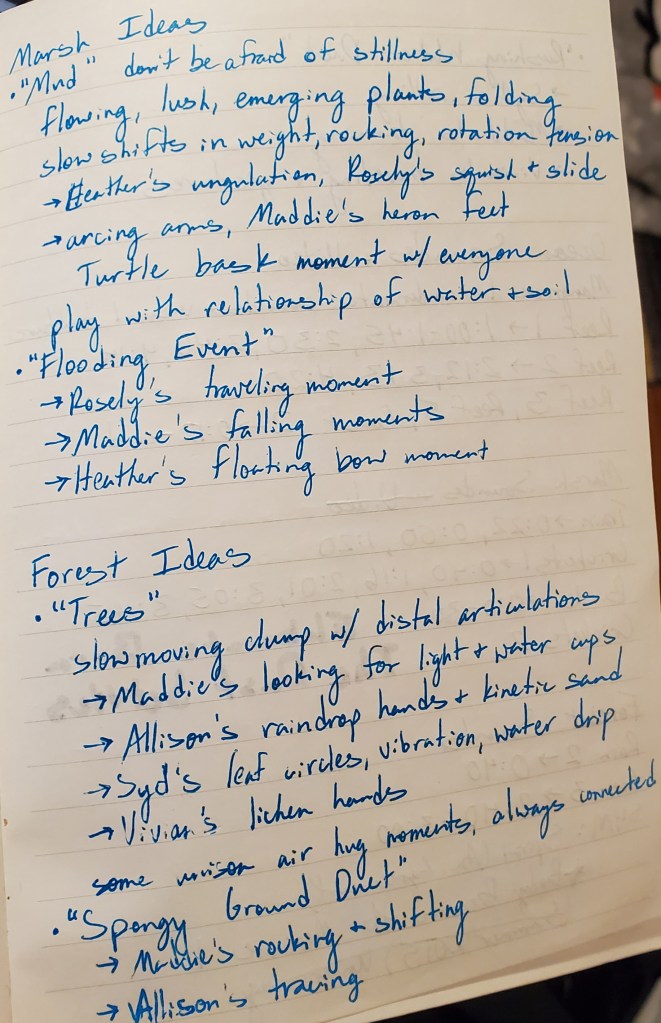
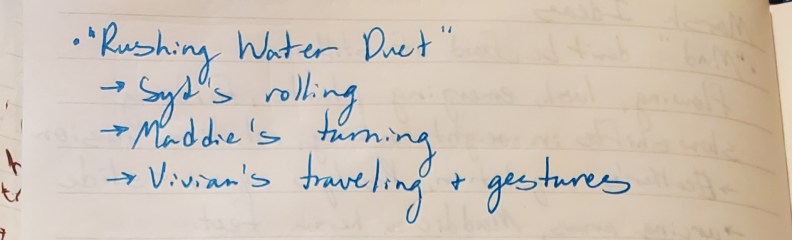
Each section developed a little differently after this point. The marsh section was with the same group of people that I had worked with for Marshland so they were comfortable with using movement motifs to improvise as a group. We defined several motifs/phrases to characterize the movement that were sourced from the improvisation at our first rehearsal:
- Mud: very slow movement on a low level, textured opening and closing of the hands, slow rippling of the spine.
- Frog: quick shifts of weight, undulating of the belly, slides on the stomach, placing of hands on another body
- Lily pad: slow reaching of the hands to the sky, wrists flexed, fingers open
- Water skater: quick jump of the legs away from the body and back in
- Heron: delicate and slow articulation of the feet, undulation of the neck, wide opening and closing of the arms sweeping through space
- Turtle: stable core, flexible and responsive hands and feet, basking in stillness
At times I would define which motifs I wanted the dancers to use but for the most part we would repeatedly improvise with them as a group until the sequence became more set, also leaving some moments for improvisation in the final structure. The progression of the dance that emerged from this process followed the lifecycle of the lilies that we saw in the marsh, rising through the mud and water into sunlight. Part of my research for this section was a wetland ecology course in which I learned that marshes are characterized by seasonal flooding events so another structure that we built into the piece were periodic disruptions in the flow of time to reflect that element of the ecosystem.
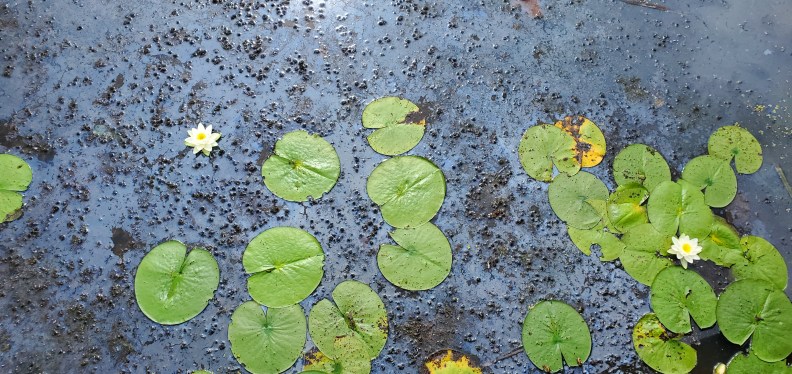
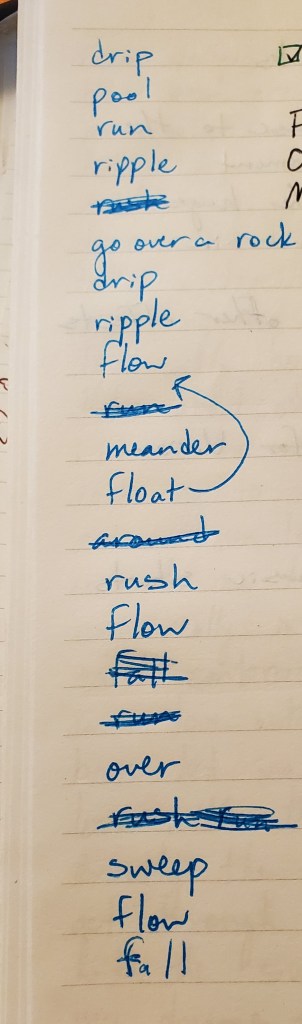
The forest section developed pretty similarly at first, with patterns of reaching, interweaving, and embracing emerging out of close quarters improvisation with their own personal motifs. I decided to create two duets based on similarities within their movement choices but again, the dancers were the source for all of the specific movement. Allison and Vivian improvised on ideas of rocking, shifting of weight, and tracing of the ground to relate to their experiences with the spongey, layered soils in the forest. Sydney and Maddie improvised off of words that related to the movement of water through the ecosystem to create their duet. Ultimately, the progression of this dance came to follow part of the life cycle of a forest that starts as living trees and ends as decomposed soil.
The ocean section was a little more directed on my part in order to coordinate the collective sense of the impact that the currents have on a reef which had emerged within the improvisation as a vital part of the ecosystem’s function but the dancers still sourced their movement from the experience they had in Florida. I did create one phrase (see left) for this section that was a conglomeration of their movement motifs from the improvisation and my own however, rather than teaching it to them directly I used a process called “tracing” that I learned during an intensive with Dante Brown. I showed them the phrase once or twice, explained some elements that mattered to me, and then let them create their own phrase using what their bodies caught from the few times that I performed it. While everything was coming from the same source, each body experienced and expressed it differently, which created some really exciting relationships. This served as the basis for most of the movement. At the end of the process this section ended up starting within the coral itself and expanding to reflect the life and currents that swirl around and through the reef.
 Kara Komarnitsky